
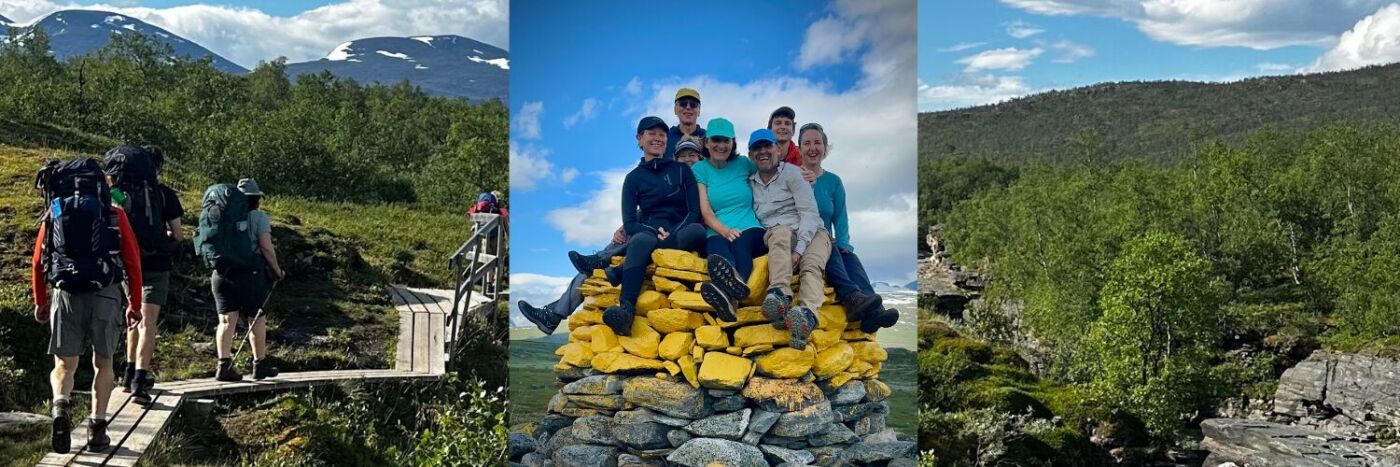
Nordic Hut-to-Hut: Jim’s First Trek Across Swedish Lapland & Norway
This journey began quietly, long before the first boots touched the trail.
Over the years, many of you who’ve joined us on the Kungsleden during our winter snowshoe expeditions asked the same question: “What is this place like in summer?” That question stayed with me. Swedish Lapland has a way of doing that. It really gets under your skin.
I first came here drawn by the vastness and the silence, but I stayed because of what the land offered when you slow down. In summer, these trails reveal a different character. Soft underfoot, alive with colour and light, yet still uncompromisingly wild. This expedition grew from a desire to explore beyond the well-trodden routes, to follow lesser-used paths shaped by centuries of movement, trade and survival. Together with our amazing Arctic Guide, Sofia, I spent time researching old routes and the region’s layered history, including its strategic role during the Second World War, when this remote borderland quietly shaped events far beyond the Arctic Circle.
What excites me most is the simplicity set amdist such large landscapes. You carry what you need. No more, no less. Each day you walk, cook, rest and live entirely within the landscape, in the moment. There’s something grounding about realising how little is required to feel completely immersed. Long days, big skies, empty valleys and the rare privilege of moving through extraordinary places without seeing another soul.
This is a journey shaped by curiosity, feedback from our community, and a deep respect for wild spaces that reward those willing to tread lightly. I’m glad you’re here to follow it.
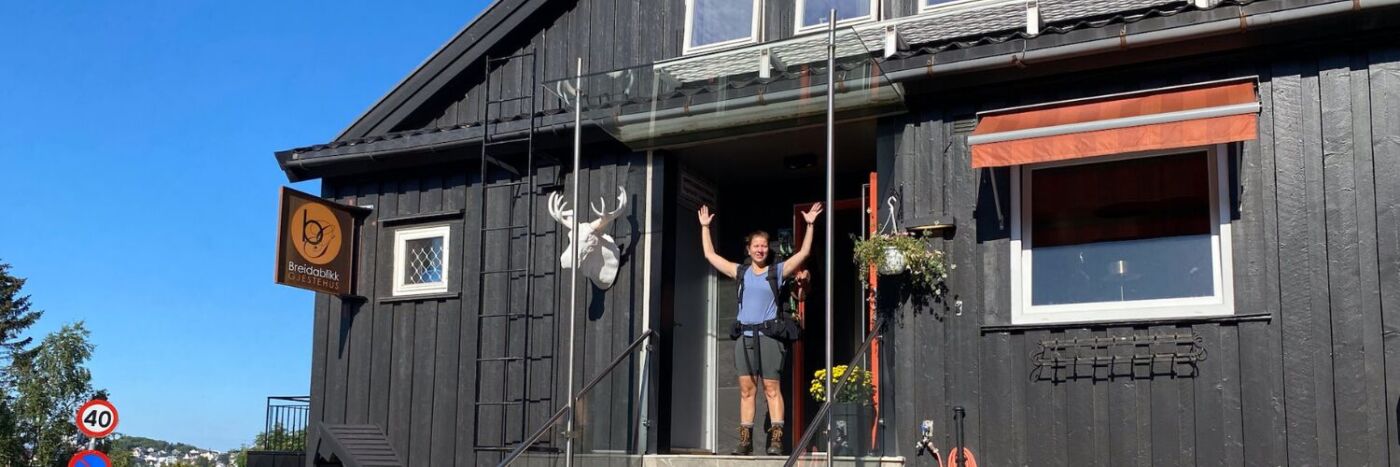
Arrival in Abisko: A Soft Landing into the North
Everyone arrived in Abisko by their own chosen route. Some travelled north by the train from Stockholm, opting for the quiet rhythm of the overnight sleeper as it rolled through forests and across the spine of Sweden. Others arrived by air, transferring onwards through widening valleys and open tundra. However they travelled, there was a shared sense of calm anticipation — that gentle shift that happens when everyday life begins to fall away.
Our first night was spent at STF Abisko Turiststation, tucked into a comfortable six-bed cabin. The evening unfolded easily. Packs were opened, kit checked, food weighed and divided. Conversations flowed as plans took shape around the table, warmed by the glow of the kitchen and the quiet reassurance of being properly on the journey at last.
Abisko National Park is one of Sweden’s true Arctic jewels. Established in 1909, it protects a striking landscape of glacial valleys, open tundra and twisting birch forest. Reindeer graze the slopes above, and the iconic Lapporten mountain gate frames the horizon like a natural threshold to the north. Walking here feels like moving through a living archive of geology and ecology, shaped by ice, wind and deep time.
It was a perfect place to begin, ready for the days ahead.
Day 1: Abisko → Abiskojaure — Rivers, Wildflowers & Clear Arctic Air
I’ve always felt Abisko knows how to welcome you properly, and this first walking day was no exception.
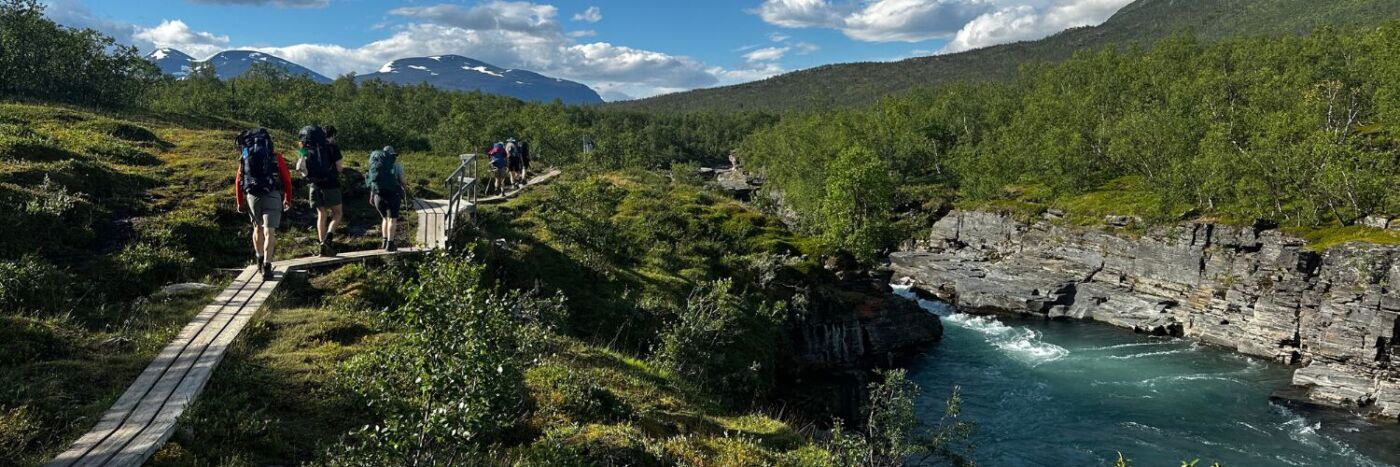
We left the village following the line of the Abiskojåkka River, running full and fast with summer melt. The trail felt generous underfoot, with Sweden’s boardwalks carrying us across marshes and meadows where wildflowers had claimed the season. With being accustomed to seeing this landscape buried in thick snow, the colour and movement was simply breathtaking.
What struck me most was just how alive everything felt. With no upland farming here — no grazing livestock, no fences, no managed pasture — the ecology is allowed to go wild. Flowers grow where they choose, birdsong carries freely through the valley, mosses and shrubs spread undisturbed. Walking through it, I couldn’t help reflecting on how different our uplands at home feel, shaped so heavily by farming and land use, and how much richness is lost along the way.
Reaching Abiskojaure didn’t feel like an arrival so much as a settling in. Hut life took over easily — chopping wood, collecting water, laying out food, cooking together. These small, shared tasks quickly stitch a group together. And then, as if on cue, the sauna by the lake became our first proper ritual of the trip. Steam, cold water, easy laughter. A simple ending to a beautiful day, and the moment the journey really began to feel like ours.
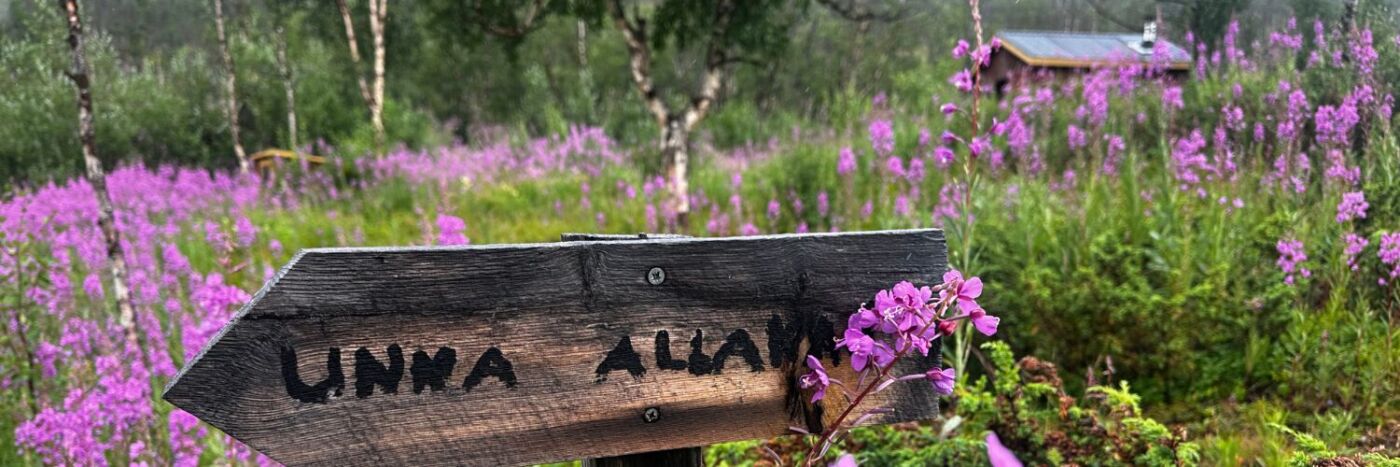
Day 2: Into the Northern Wild – Leaving the King’s Trail Behind
Breaking away from Abiskojaure, I felt that familiar sense of anticipation as we stepped off the Kungsleden and into quieter country. Almost immediately, the atmosphere shifted. The trail narrowed, the land felt less travelled, and the silence deepened in a way that’s hard to describe unless you’ve walked it yourself.
We moved through dense undergrowth and past small Sámi settlements, where modest wooden cabins sat quietly on the hillsides, part of the landscape rather than imposed upon it. Everywhere I looked, the ground was alive with flora — rich, varied and seemingly untouched.
After a long, steady day on the trail, Unna Allakas came into view. Sitting close to the Norwegian border, it’s one of Sweden’s smallest and most characterful huts, and it has a presence that far outweighs its size. This place carries stories — not least its quiet role during the Second World War, when Norwegian resistance fighters moved through these borderlands, using the remoteness of the terrain as protection.
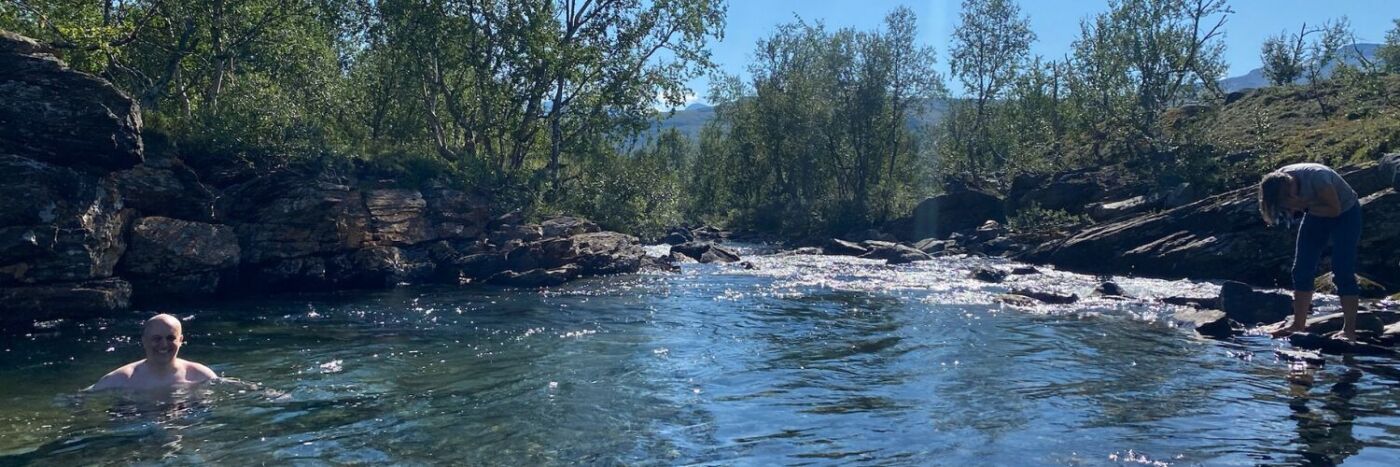
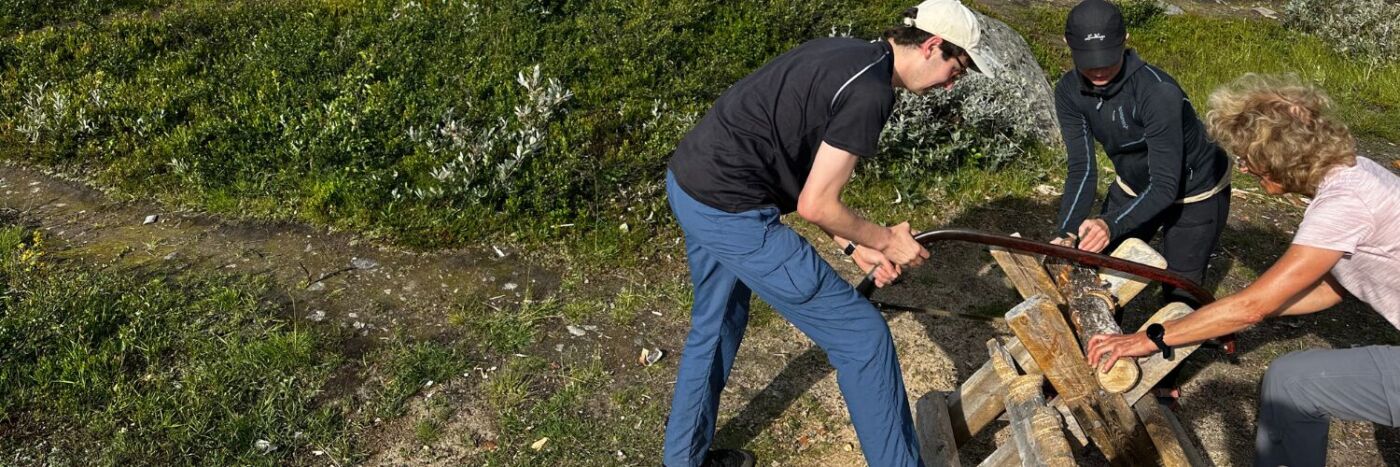
As evening settled in, hut life once again took over. Birch logs were chopped, the stove coaxed into life, and dinner came together from whatever we carried on our backs. Later, we gathered in the small riverside sauna — steam rising into the cool air, tired legs unwinding. These simple rituals became the heartbeat of the journey for me: practical, shared, and deeply grounding. Exactly the kind of rhythm I’d hoped this expedition would find.
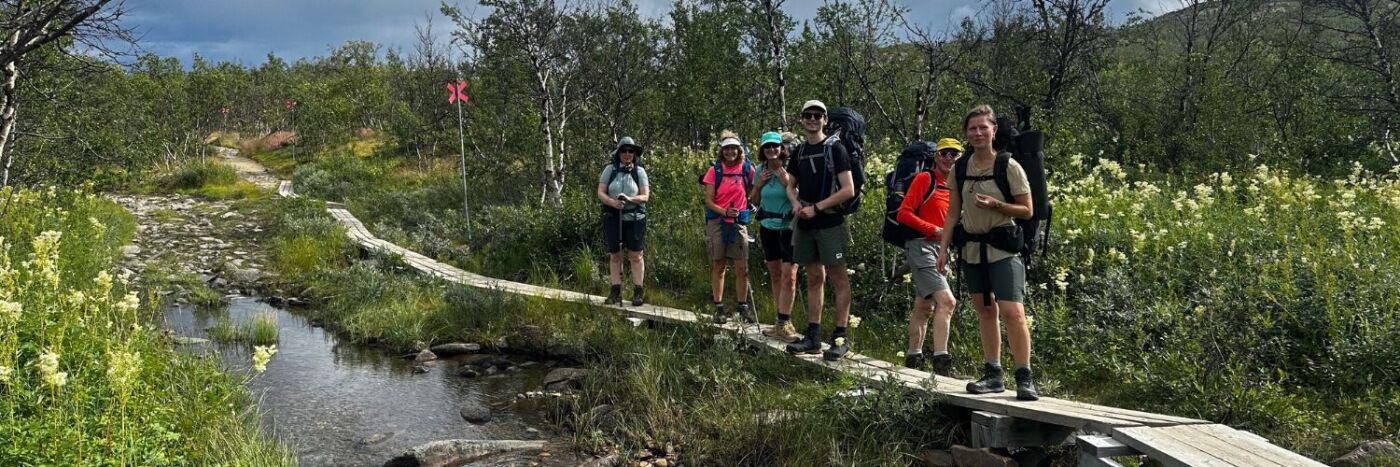
Day 3: Unna Allakas → Cunojávri – A Border Crossing and a Wild Norwegian Welcome
Morning came gently at Unna Allakas. With a shorter day ahead, there was no rush. We took our time — tidying the hut, lingering over breakfast, taking a few final photos — before shouldering packs and beginning the gradual climb towards Norway.
The trail rose easily, foxgloves lining the path as snow-capped peaks began to catch the light in the distance. Reaching the border felt quietly significant. There’s no grand gateway here, just a small marker in the landscape, yet it represents a shift — between two countries, two styles of trail, and two subtly different relationships with the land.
We stopped for lunch beside an Arctic lake, the kind of place that invites stillness. A few couldn’t resist a freezing wild swim, while others wrapped cold fingers around warm mugs and watched the light ripple across the water. It felt like a moment suspended in time.
From there, Norway made itself known quickly. The trail grew rougher, waymarkers more sparse, and crossings required care, balance and a bit of teamwork. It was walking that asked you to stay present and to read the ground. Priceless in this day and age.
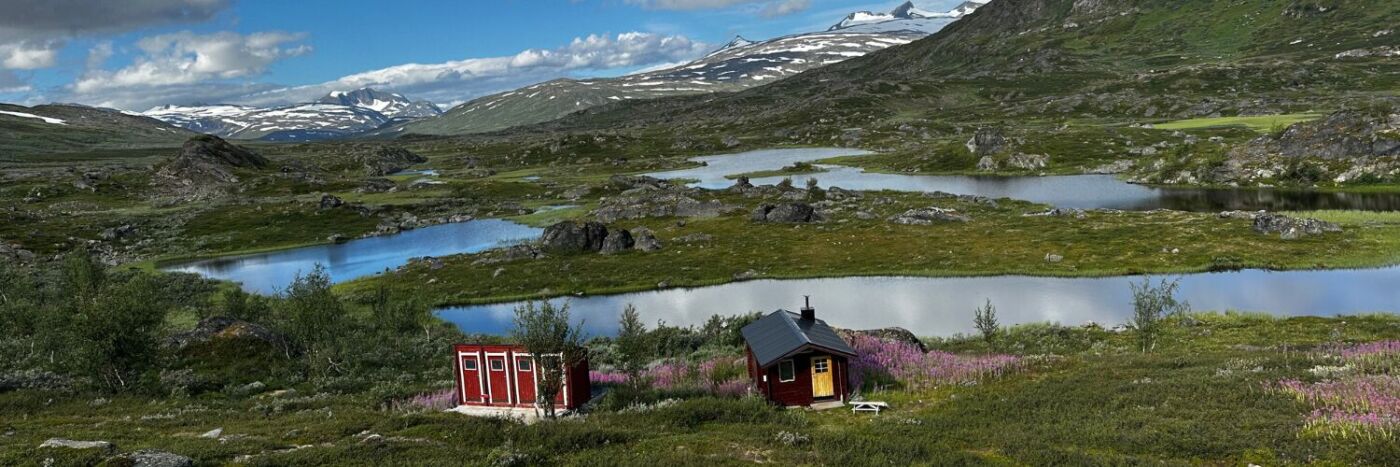
By afternoon, Cunojávri came into view, sitting beside a perfectly still lake. A striking red cabin, reachable only by key and entirely self-catered — simple, remote and deeply rewarding. We lit the stove, cooked our evening meal and let the quiet settle around us. The kind of silence that doesn’t feel empty, but grounding and very welcomed. A proper northern end to a beautiful day.
Days 4 & 5: Glacial Valleys – Wonky Bridges & True Solitude
As we pushed further into Norway, the scale of the landscape really began to open up. These were days shaped by vast glacial valleys and a kind of solitude that’s increasingly rare. Over the entire trek, I reckon we saw no more than five other people. For long stretches, it felt as though the land belonged entirely to us.
The trails here were lightly marked, but I didn’t miss signage. The valleys did the guiding for us — broad, sweeping corridors carved by ice and time, gently funnelling us onward. It reminded me how intuitive travel can be when you trust the terrain and take the time to read it. The land speaks, if you’re willing to listen.
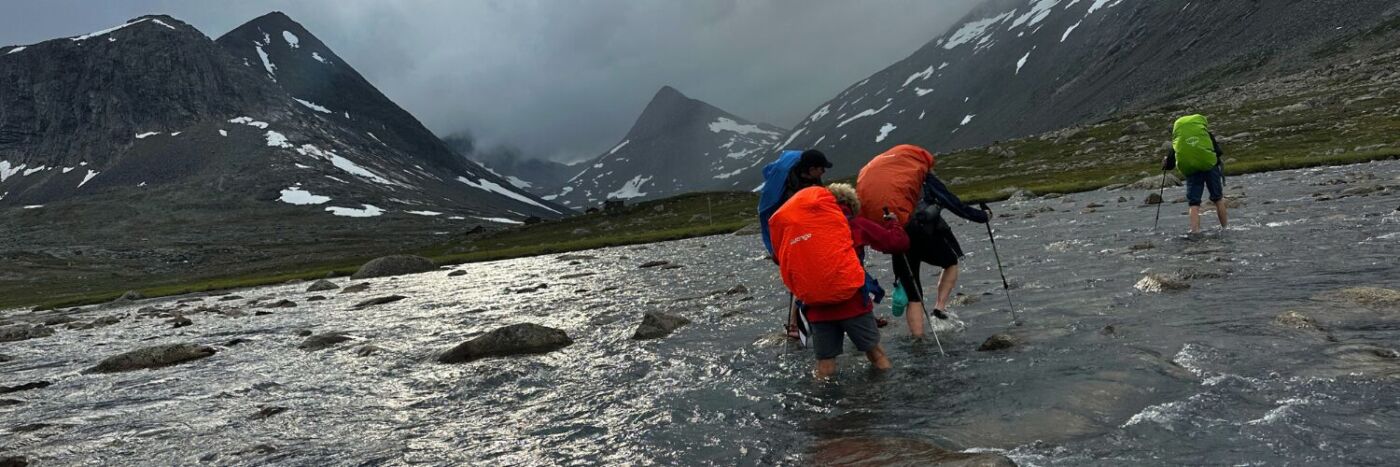
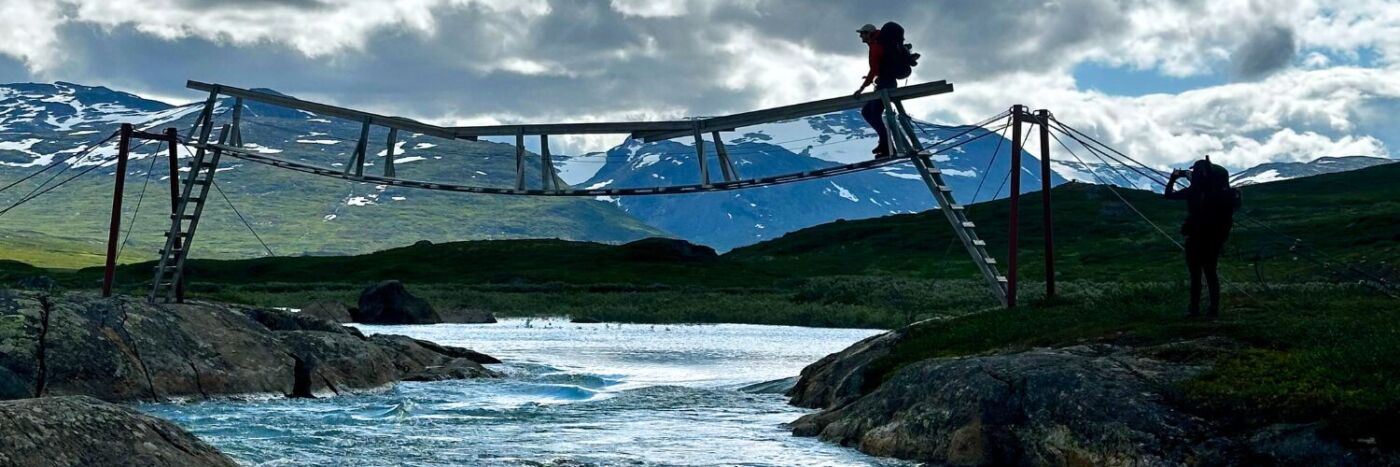
Rivers became the defining feature of these days. On the approach to Hunddalen alone, we crossed at least ten. Some were straightforward, others fast and biting cold, fed directly by glacial melt. Every so often, a wooden bridge would appear — often crooked, sometimes half-submerged — and each one felt like a small gift. This is what remote trekking is all about.
The final crossing before Hunddalen is one that will stay with me for a long time. A wide, powerful torrent, swollen by warm August temperatures and relentless meltwater. We scouted upstream, took our time, chose our line carefully, and crossed one by one. The water was icy, a proper shock to the system, but stepping onto the far bank brought a wave of grins and quiet pride. Those moments — cold, demanding, shared — became some of the most vivid memories of the whole journey.
By the time we reached Hunddalen, the valley wrapped around us like a shelter. Glacial peaks framed the cabin, and the simplicity of hut life welcomed us back once more. Wood chopped, stove lit, a shared meal prepared. Warmth, tired legs, and that deep contentment that comes from moving slowly and honestly through wild places.
Day 6: Hunddalen → Rombaksfjorden → Narvik — Fjords – Shipwrecks & The Stories of the North
Our final day unfolded gently, the trail leading us down through alpine flowers and into forested tracks, the landscape slowly softening as we lost height. Step by step, the mountains opened out and the fjord revealed itself below — a deep, dramatic sweep of water that would carry us onwards towards the end of the journey.
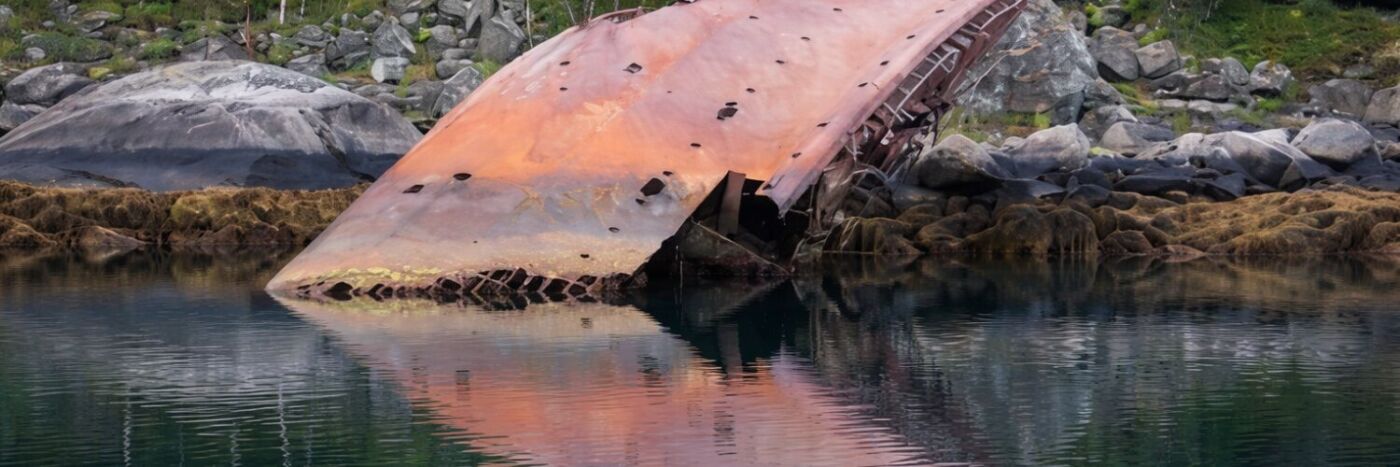
At the water’s edge, a speedboat met us and skimmed us across Rombaksfjorden. It’s a strikingly beautiful place, but one layered with history. These waters were the stage for the Battle of Narvik in 1940, one of the most significant naval engagements of the Second World War. British, French, Polish and Norwegian forces fought fiercely against the German navy here, battling for control of Norway’s vital iron ore routes.
Beneath the surface of the fjord lie the wrecks of ships lost during those days — dark shapes resting quietly below the waterline. Gliding over them in near silence, surrounded by calm and light, felt deeply moving. It was impossible not to reflect on the contrast between the peace of the present and the violence once played out in this very place.
The boat carried us into Narvik, an Arctic town shaped by mountains, minerals and wartime history. That evening brought the simple comforts we’d quietly been craving — hot showers, a celebratory meal, and time to visit the Narvik War Museum, adding deeper context to the waters we had just crossed.
It felt like a fitting conclusion. A journey defined by wilderness and self-reliance, shared effort and quiet moments, all threaded together by the powerful stories held within this landscape. The far north has a way of leaving its mark — not loudly, but with lasting clarity.
Looking back, what stays with me most is just how generous the land feels when it’s allowed to exist on its own terms. The richness of the flora and fauna in these untamed landscapes was extraordinary — plants growing freely, berries ripening quietly without interference. Picking cloudberries straight from the hillside and stirring them into porridge the next morning felt like the purest form of connection between walking and living.
There was a constant sense of the unexpected too — routes shifting with the terrain, rivers dictating the day, weather and light reshaping the landscape hour by hour. That unscripted quality is something I value deeply. It’s rare now to walk through true wilderness, to feel that level of remoteness, where decisions matter and the world feels vast and humbling rather than managed.
None of this would have been the same without our local guide, Sofia. We’ve worked closely with her for over ten years on our Scandinavian trips, and she is very much the heart and soul of many of our expeditions — her knowledge, calm presence, unrelenting strength and deep respect for the land shape these journeys in ways that go far beyond logistics.
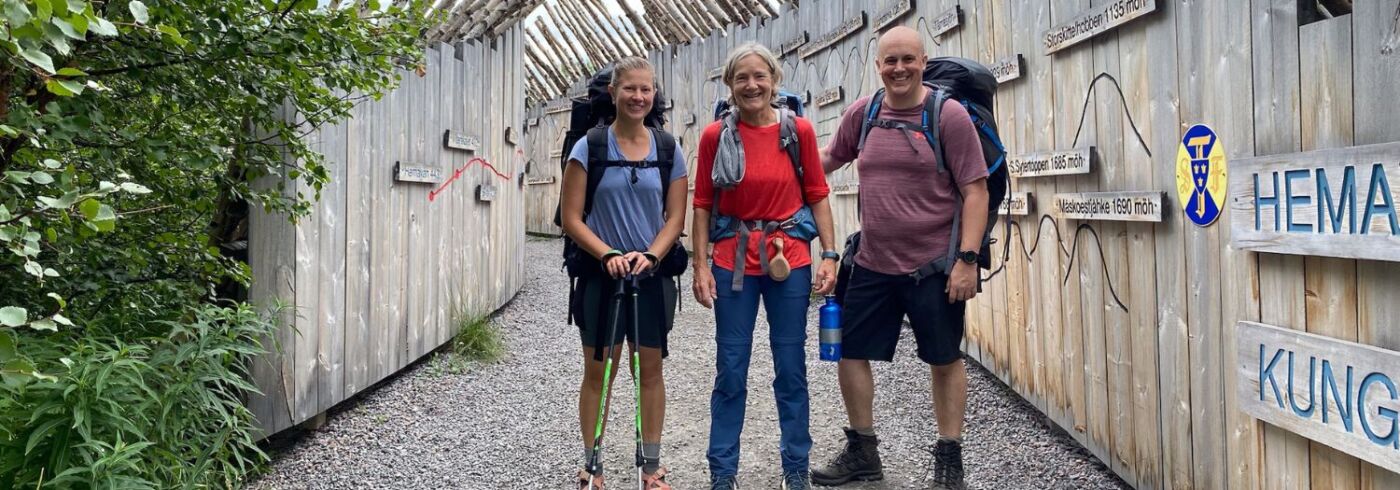
If this way of travelling stirs something in you — carrying what you need, moving slowly, living fully within wild places — I’d love you to join us. You can find full details and upcoming dates for the Nordic Hut-to-Hut Expedition here.
Thank you to everyone who has walked these northern trails with us so far, and to those who feel the pull and will join us in the seasons ahead. These journeys are shaped as much by the people who walk them as by the land itself, and each shared step adds something lasting to the story.
Jim
Founder, Director & Chief Ewe
E: jim@adventurousewe.co.uk
M: +44(0)7747 346 588