- Overview
- Map & Itinerary
- Essential Info
- Pics & Vids
- Dates & Prices
Highlights
- Calling all adventurous-hearted women for Kilimanjaro with 7-summiteer Jo Bradshaw
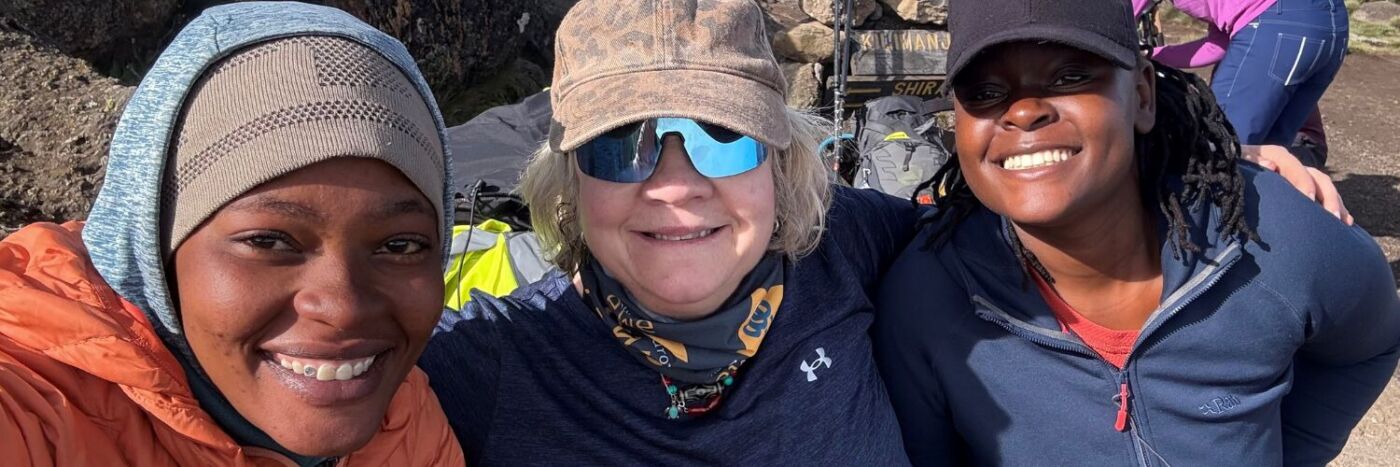
- Join a supportive and empowering all-female team
- Follow the spectacular 8-day Lemosho Route to maximise acclimatisation and summit success
- Experience the mountain during the low season with fewer teams on the trail
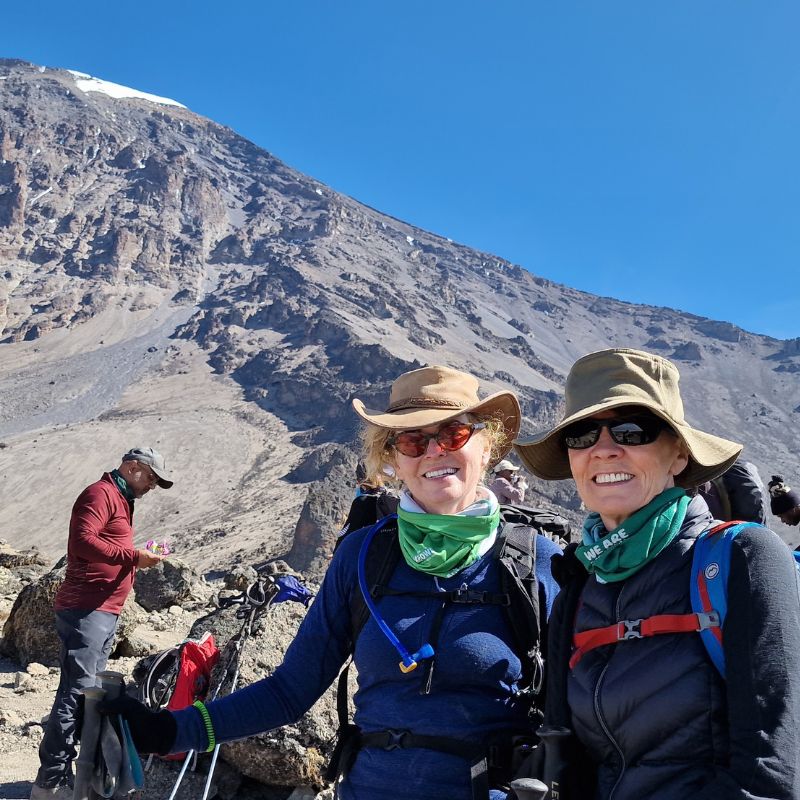
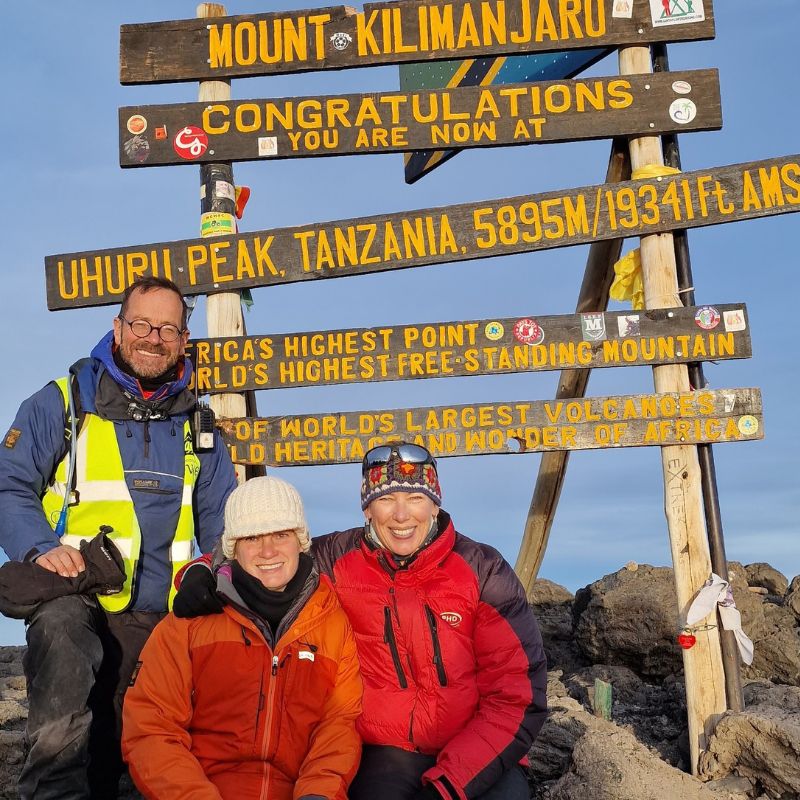
- Reach Uhuru Peak at 5,895m – the summit of the highest freestanding mountain in the world
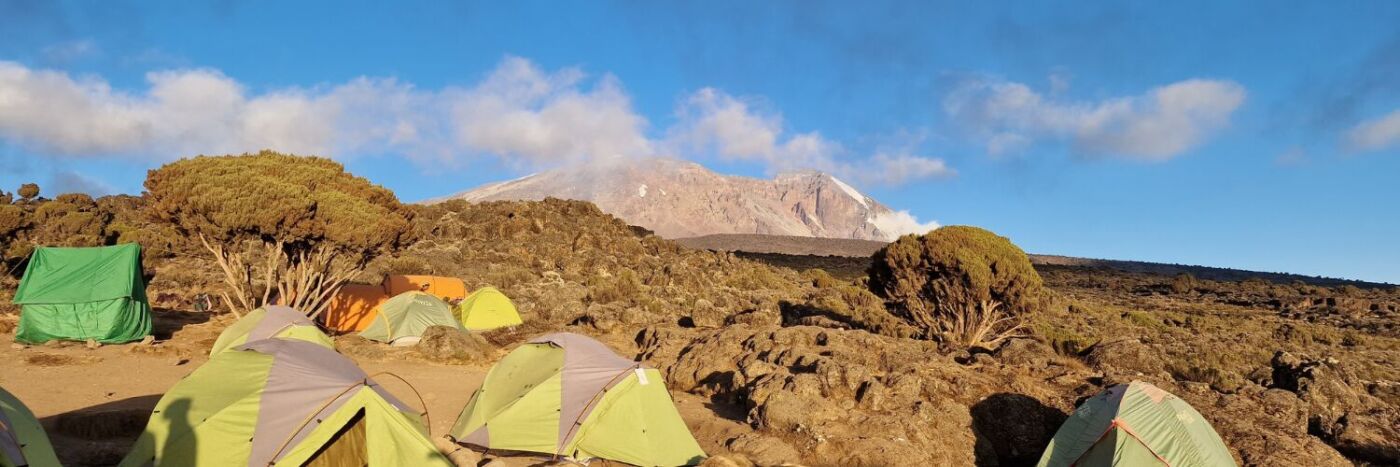
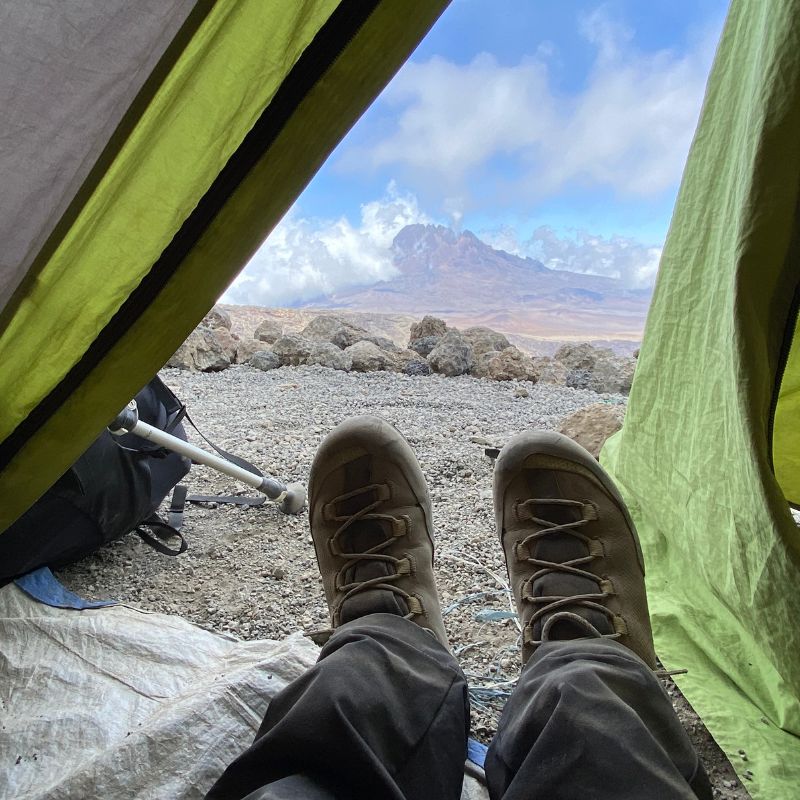
- Camp beneath vast African skies filled with constellations
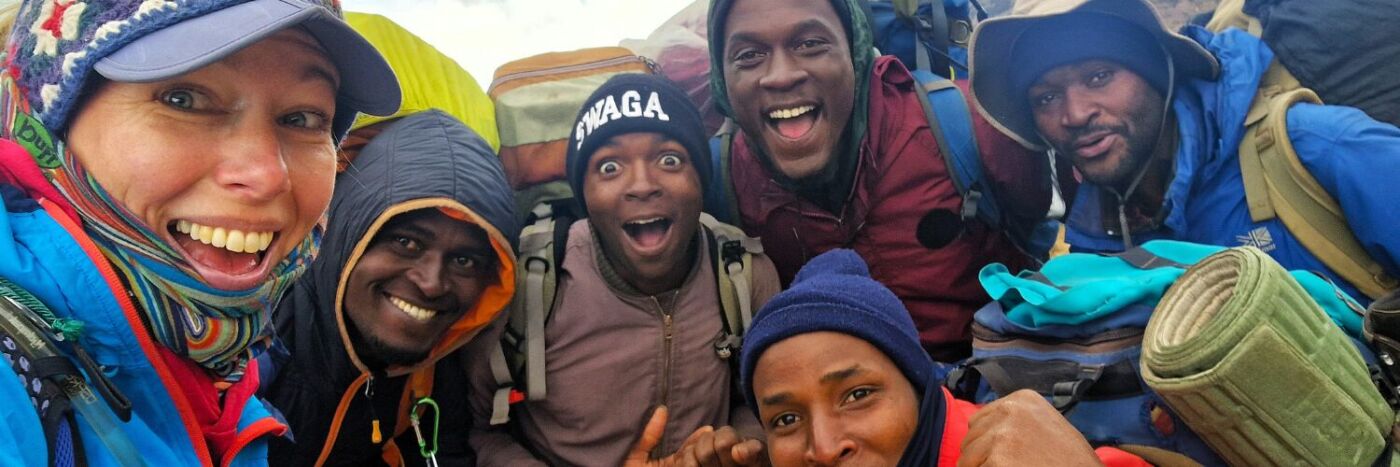
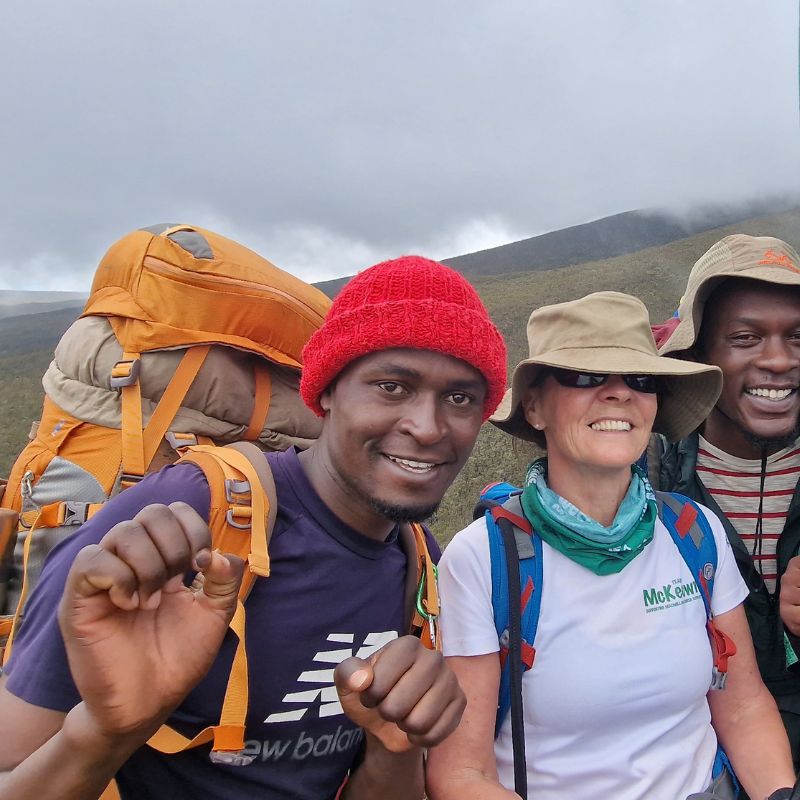
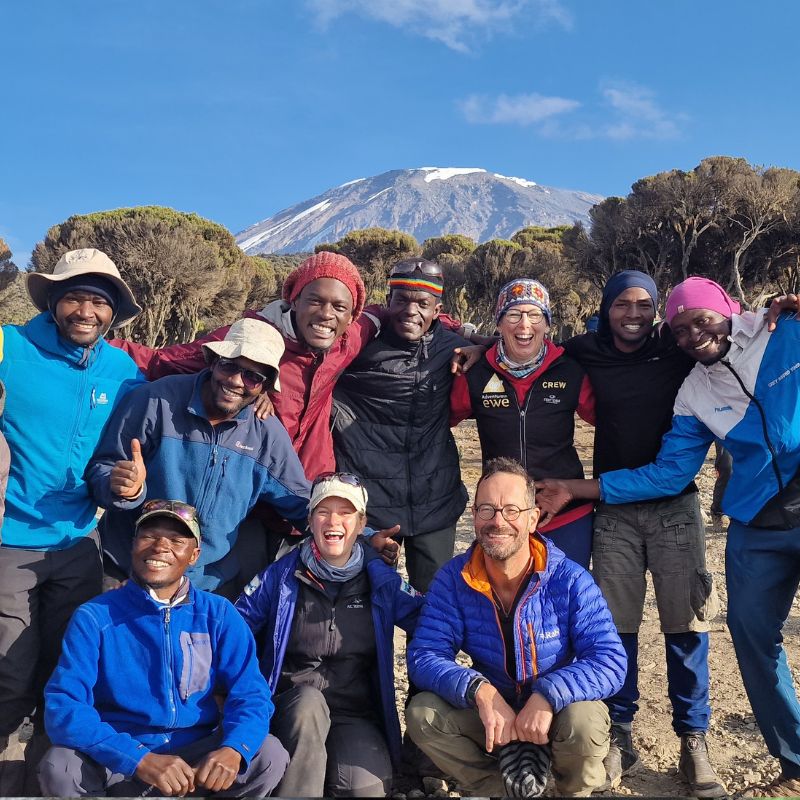
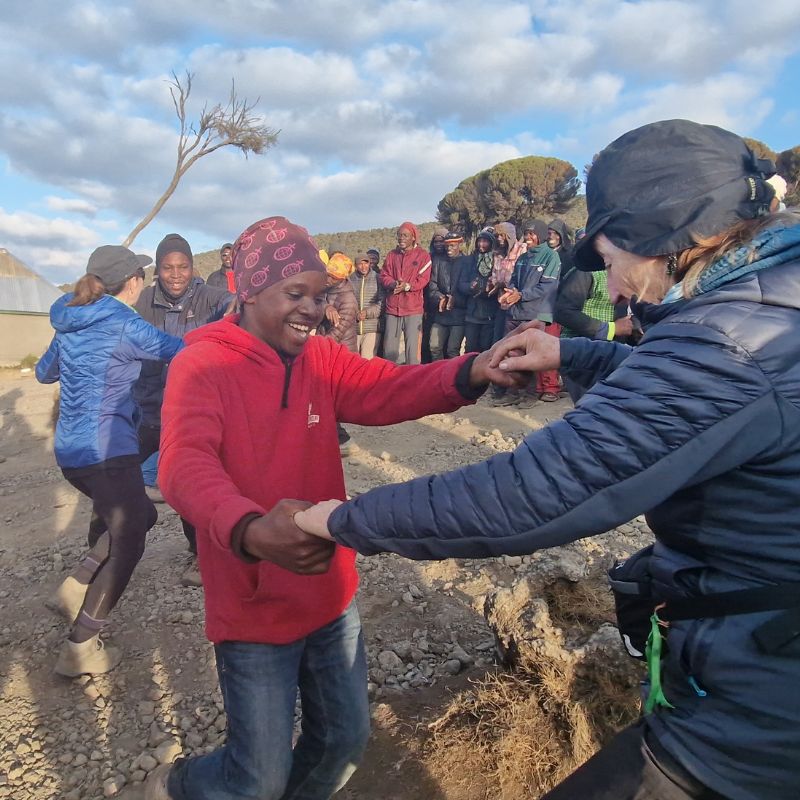
- Feel the incredible energy, encouragement and care of our local mountain crew
- Free Adventurous Ewe Water-to-Go bottle to eliminate our plastic footprint in Tanzania
Overview
Join an inspiring all-female team and trek to the Roof of Africa alongside 7-Summiteer Jo Bradshaw. Together you’ll take on one of the world’s most iconic mountains – Mount Kilimanjaro – following the spectacular Lemosho Route, widely regarded as the most scenic and well-paced way to reach the summit.
Over eight days on the mountain you’ll journey through rainforest, moorland and high-alpine desert, gradually gaining altitude while your body adapts to the thin air. The route is deliberately designed to maximise acclimatisation and increase your chances of standing on the summit at 5,895m.
Along the way, you’ll also learn valuable high-altitude trekking and expedition skills from Jo and our brilliant female guides. From pacing and breathing techniques to managing energy, hydration and life at altitude, this is a fantastic opportunity to build confidence and develop mountain skills while learning from women who have spent years operating in high places.
But this adventure is about far more than reaching the top.
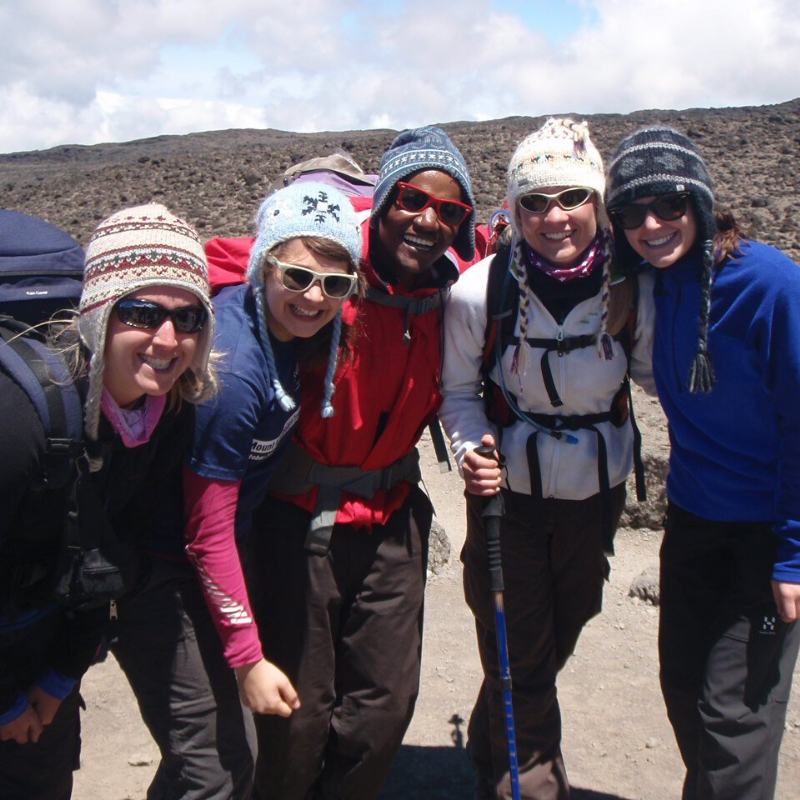
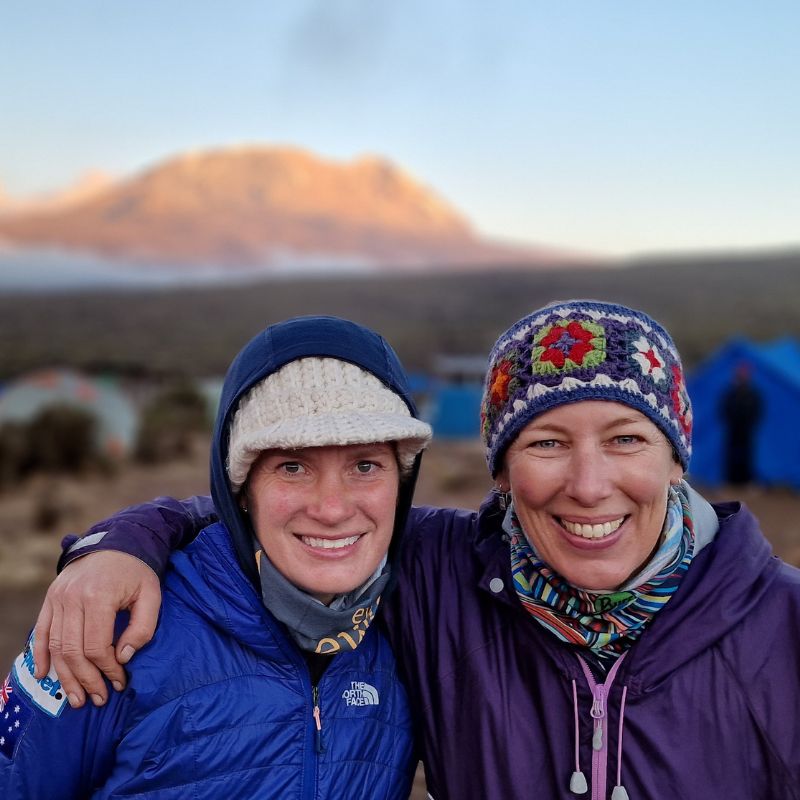
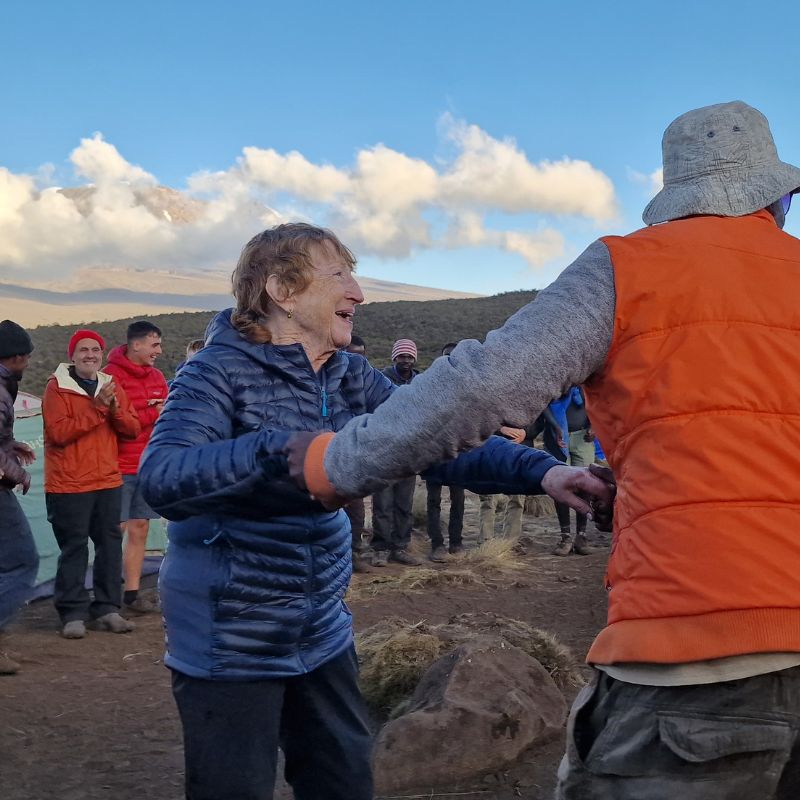
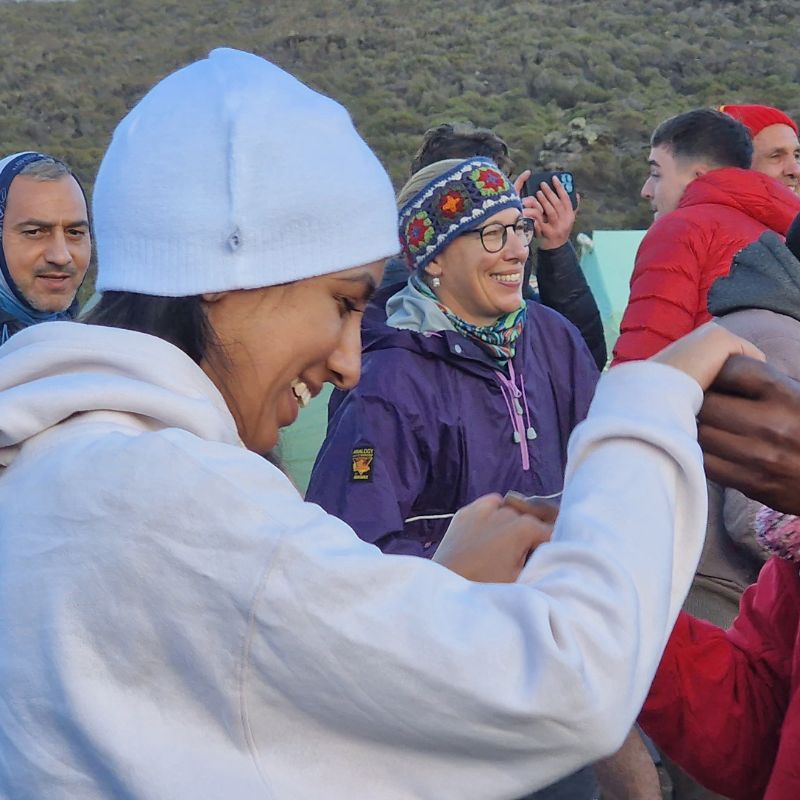
It’s about the energy of a group of women encouraging each other up the trail. The quiet confidence that builds with every step. The laughter in camp after a long day. The sense of perspective that comes from standing beneath a vast African sky alive with stars and constellations.
Travelling in the low season means fewer teams on the mountain and a more peaceful experience on the trail. It also helps support the local guides, porters and mountain crew year-round — the people who make these journeys possible.
From your first step on the trail to summit night and down again, you’ll be supported by an incredible team. Our experienced guides maintain a strong guide-to-trekker ratio, particularly on summit night when you’ll climb slowly and steadily toward Uhuru Peak as the sun rises across the plains below.
And when you finally stand on the highest freestanding mountain in the world, surrounded by glaciers and vast 360-degree views, the feeling is hard to describe.
You’ll know exactly why you came.
Welcome to Kilimanjaro Tanzania
Karibu — welcome to the start of your Kilimanjaro adventure.
Arrive at Kilimanjaro International Airport for the start of your journey to Mt Kilimanjaro. Flights are not included, giving you the flexibility to travel from your nearest airport, use airline points, or extend your stay in Tanzania before or after the trek.
Once your place is confirmed, we will provide the recommended flight details which align with the included group airport transfer to ensure a smooth arrival. If you prefer to arrive earlier or at a different time before the trip begins, you’re very welcome to do so and we can arrange a private airport transfer for you at an additional cost.
After clearing arrivals, your local team will meet you at the airport and transfer you to your hotel in Moshi, located at the foot of Kilimanjaro.
Once settled in, you’ll meet Jo Bradshaw and your local mountain guide team for a comprehensive pre-trek briefing. This is where you’ll talk through the route, safety procedures, daily routines on the mountain and what to expect during the days ahead.
In the evening, gather with your team for your first group dinner in Tanzania — a great chance to get to know your fellow trekkers, meet the crew supporting you on the mountain, and soak up the excitement before the adventure begins.
Included
Transfer: Airport transfer from Kilimanjaro International Airport to your hotel in Moshi
Accommodation: Weru Weru River Lodge (twin-share basis)
Meals: Dinner
Trek Lemosho Glades (2385m) to Big Tree Camp (2780m)
After breakfast at your hotel, you will be transferred to the quieter Londorossi Gate on the west side of Kilimanjaro. The road heads out of town passing between the slopes of Kilimanjaro and the horseshoe-shaped volcanic crater of Mt. Meru.
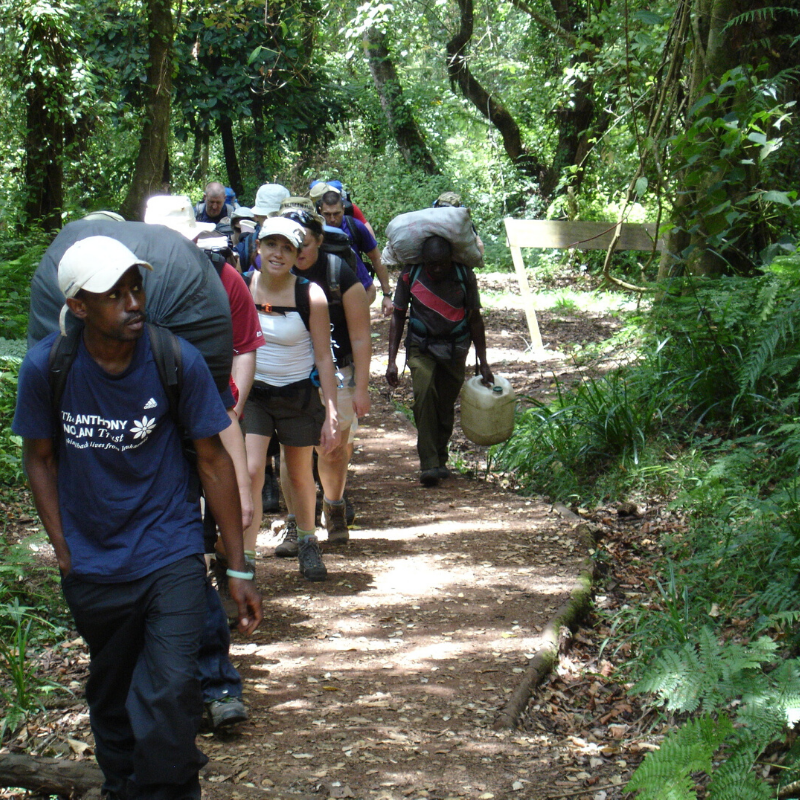
After completing the necessary registration formalities, it’s a short drive through farmland and plantations that thrive in this area with fertile soil of the mountain’s lower slopes to reach the Lemosho roadhead. The last 5km of the road to the park gate is along a track and all part of this great adventure. With meeting the local team and seeing the impressive sight of them organising all the food and kit, you’ll have lunch in the glades before starting your Kili trek. It’s the ideal first day on the mountain with slight gain in altitude taking approximately 4 hours through plantation pine forest and remnant rainforest, to arrive at camp mid to late afternoon. Your first camp on Africa’s greatest peak is at Miti Kubwa (Big Tree) camp at 2780 metres.
Distance covered: approx. 7kms / 4.3miles
Trekking time: approx. 4 hours
Included
Transfers: From hotel to Londorossi Gate
Accommodation: 3 season mountain tents (twin share basis)
Meals: Breakfast, lunch and dinner
Trek Big Tree Camp (2780m) to Shira 1 Camp (3500m)
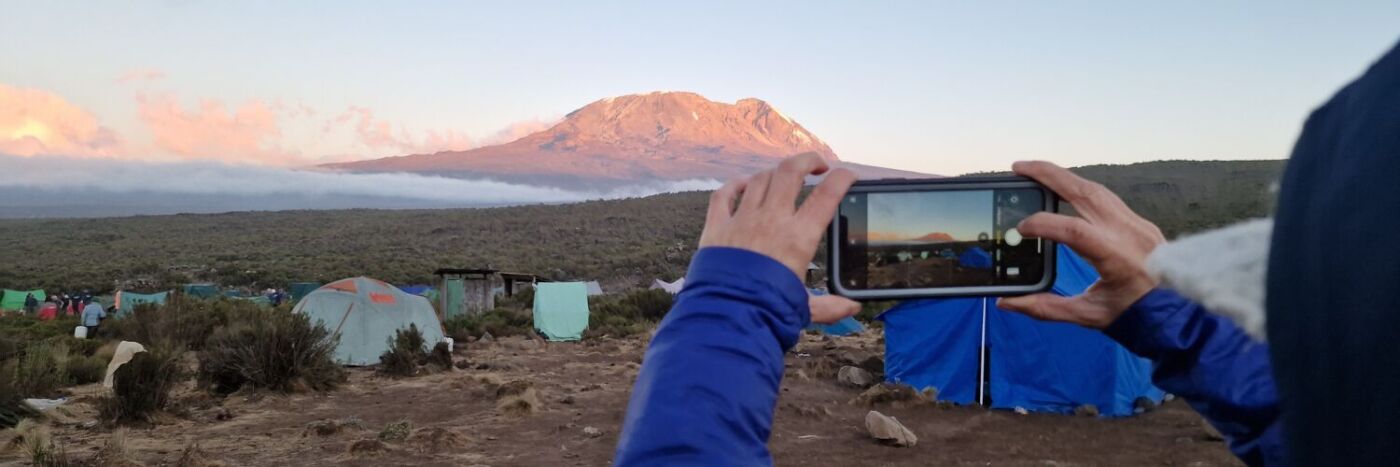
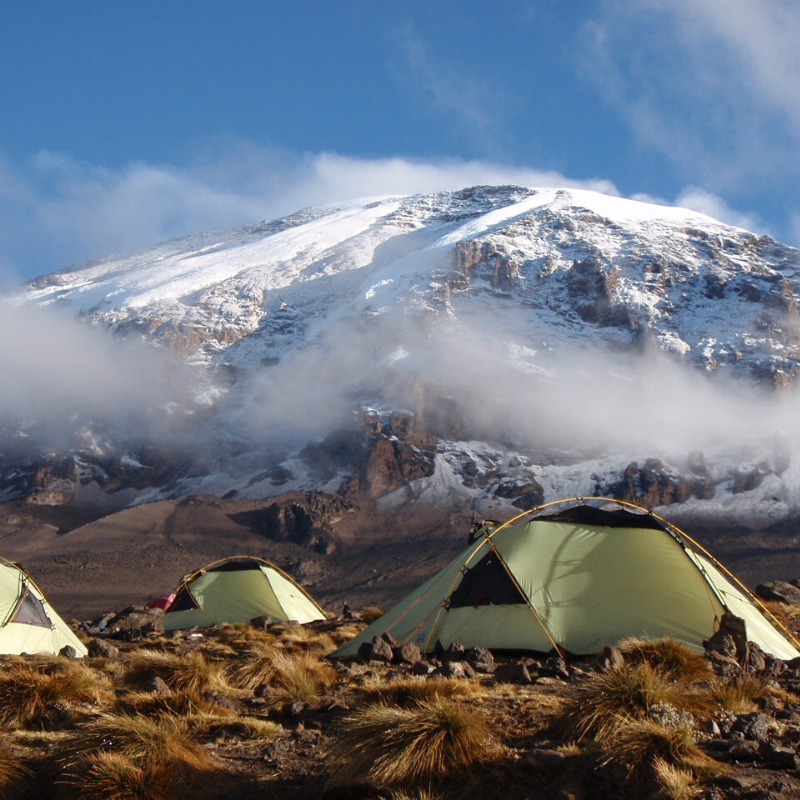
Today your route takes you across a plateau of grassy moorland and heather scattered with volcanic rock formations. Your destination for the day is Shira 1 Camp from where there are often views of Kibo Peak floating above the clouds. There is the chance of seeing some wildlife here, especially birds of prey, including the Auger Buzzard. The team will gain a reasonable amount of altitude on this day and parts of the route are fairly steep.
Distance covered: approx. 8.5kms / 5.3miles
Trekking time: approx. 7 hours
Included
Accommodation: 3 season mountain tents (twin share basis)
Meals included: Breakfast, lunch and dinner
Trek Shira 1 Camp (3500m) to Shira 2 Camp (3900m)
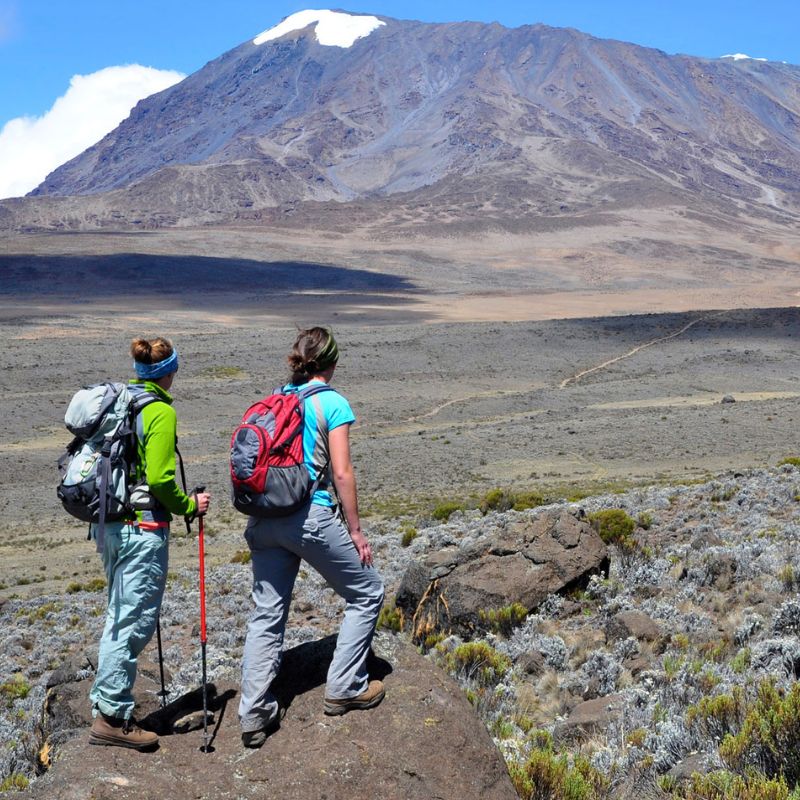
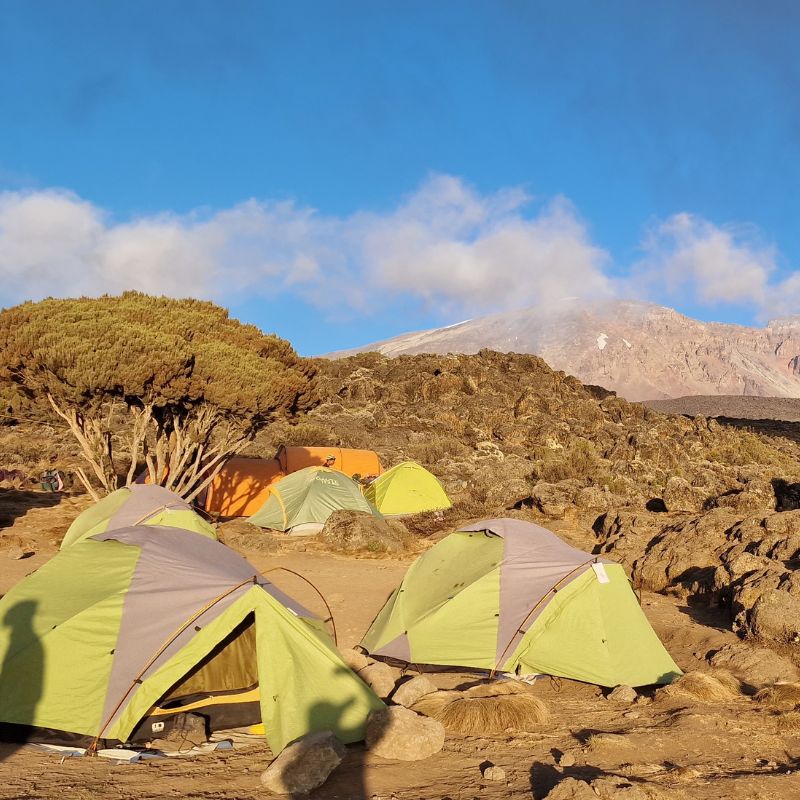
Today you will get the chance to view the Northern Ice fields from the western side of the mountain with some impressive views of Kibo. Your route continues across the Shira Plateau which is the remains of the Shira Caldera, Kilimanjaro’s oldest volcano (which last erupted around 700,000 years ago). This whole area was then submerged by eruptions from the much younger Kibo eruptions of 100,000 to 200,000 years ago. Enjoying a well-paced day of trekking with a steady climb gives you plenty of opportunities to adjust to the demands of hiking at altitude whilst also absorbing the stunning scenery of Africa’s highest peak! You are likely to see some interesting fauna and flora, particularly the White Naped Raven. To further aid your acclimatisation you will do a 200m ascent of Shira Cathedral (3872m), a huge buttress of rock surrounded by steep spires and pinnacles with vast views down to the rainforest below. Today’s destination is Shira 2 Camp where you will have full view of Uhuru Peak.
Distance covered: approx. 8kms / 5miles
Trekking time: approx. 5 hours
Included
Accommodation: 3 season mountain tents (twin share basis)
Meals included: Breakfast, lunch and dinner
Trek Shira 2 Camp (3900m) to Barranco Camp (3960m)
Today you will break the 4000m mark on your ascent as you enter the next climatic zone on Kilimanjaro, the low alpine desert. Your path traverses the lava ridges beneath the glaciers of the Western Breach, where you will be rewarded with far-reaching panoramic views. With reaching the distinct pinnacle of the Lava Tower (4640m), the highest point of the day, you will have lunch nearby to help with your acclimatisation. In the afternoon you will make a steep descent to your camp located at the base of the Great Barranco Valley (3960m) which is sheltered by towering cliffs and with extensive views of the plains far below. This is known as climbing high, sleeping low and is vital to helping with your acclimatisation.
Distance covered: approx. 10kms / 6.2miles
Trekking time: approx. 7 hours
Included
Accommodation: 3 season mountain tents (twin share basis)
Meals included: Breakfast, lunch and dinner
Trek Barranco Camp (3960m) to Karanga Camp (3963m)
A short steep climb up the famed Barranco Wall following a line in this rock barrier will take you up onto the southern slopes of Kibo. Whilst the ascent is not technical there are a few sections where the Guides and support team will be there to help you negotiate some of the steeper areas. On a clear day you will be rewarded with some of the greatest views on Africa’s highest peak. Your path then leads along an undulating trail on the south-eastern flank of Kibo, with superb outlooks of the southern icefields. Passing underneath the Heim and Kersten glaciers, you will then head towards the Karanga valley to camp at Karanga set at 3963m. For those feeling strong there is a mid-afternoon acclimatisation trek to around 4200m before descending back to camp for the night.
Distance covered: approx. 5.5kms / 3.4miles
Trekking time: approx. 5 hours
Included
Accommodation: 3 season mountain tents (twin share basis)
Meals included: Breakfast, lunch and dinner
Trek Karanga Camp (3963) to Barafu Camp (4640m)
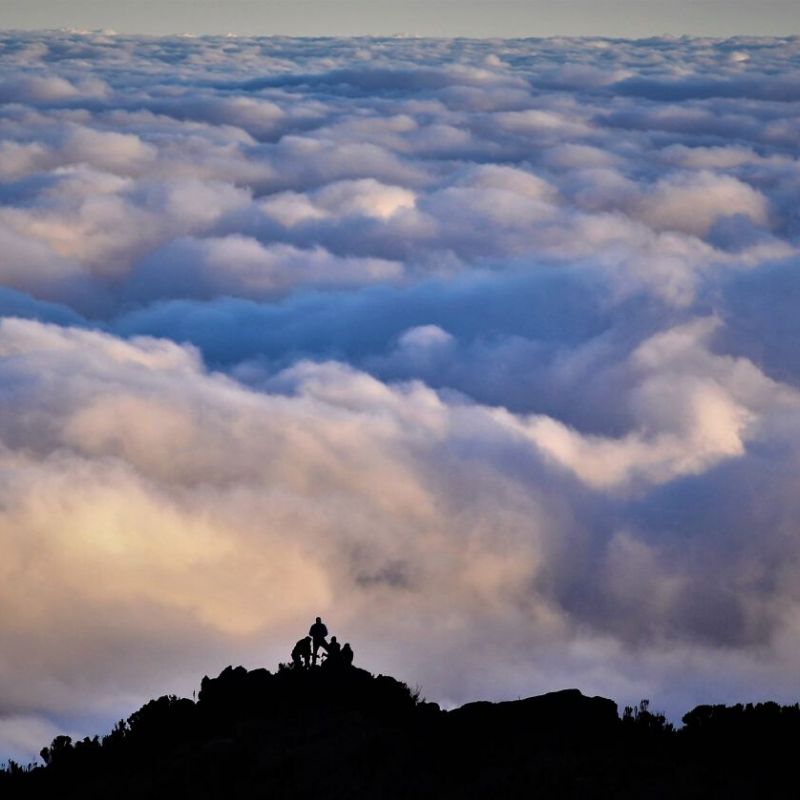
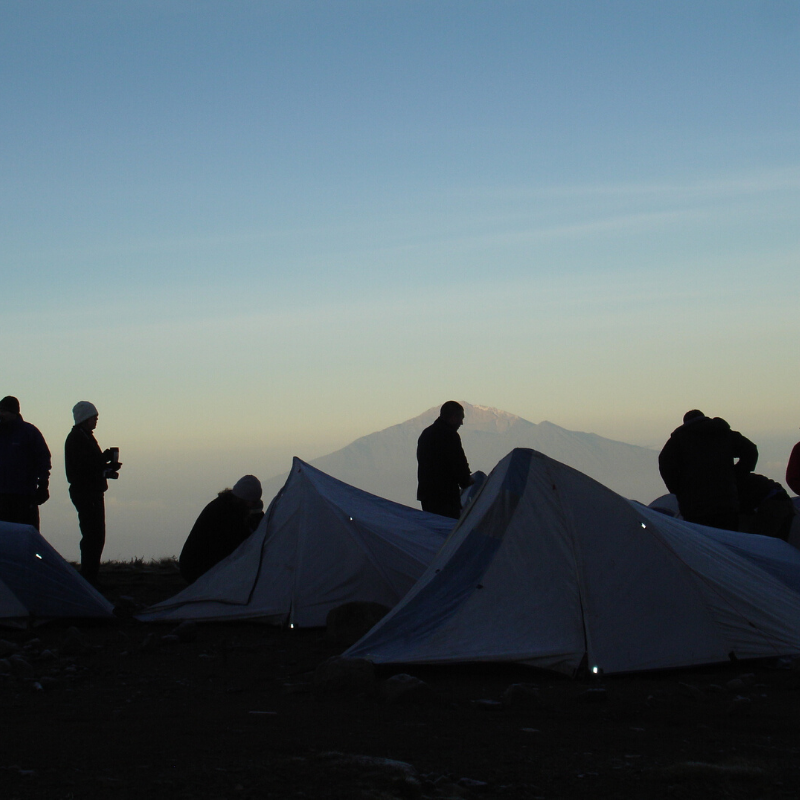
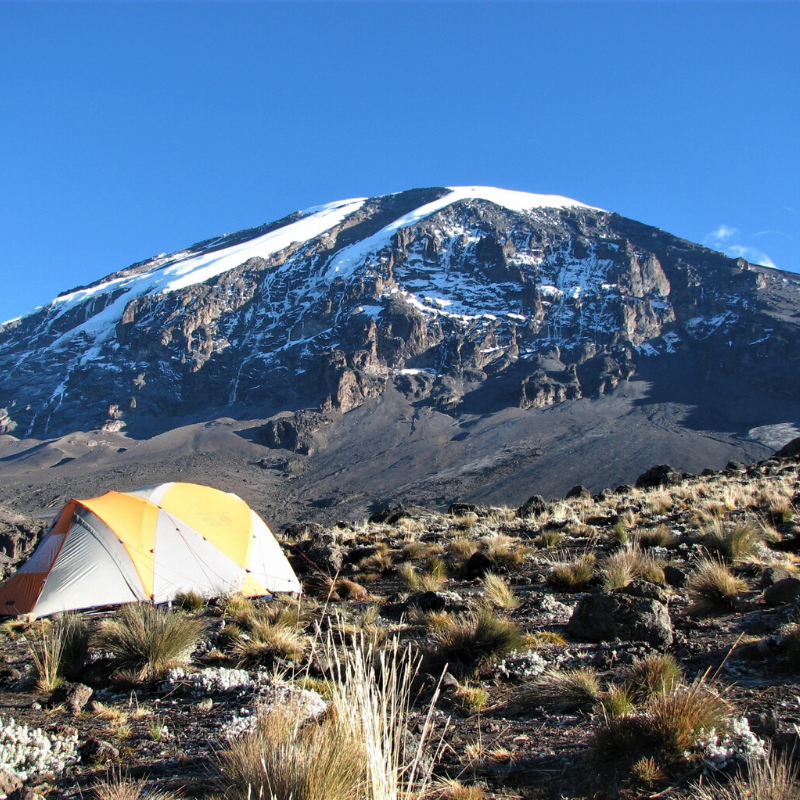
After a good night’s rest and breakfast, you will set off across the rugged volcanic wilderness to Barafu camp at 4640m. The climb takes you across desolate scree slopes with no vegetation. The views become more spectacular with the height gain above the clouds. You will overnight at Barafu camp. With Kibo rising above you to the north and good views of Mawenzi Peak, the eastern-most summit of Kilimanjaro it’s certainly a memorable camp location and will be your base for the final push to the summit. On arriving at camp you will have lunch and spend the afternoon resting as you prepare for a long night and day ahead. It is important to keep hydrated and warm. You will have an early dinner and then try to get some sleep as you will be getting up between 11pm and 12am to start the climb to the summit.
Distance covered: approx. 3kms / 1.9 miles
Trekking time: approx. 3 hours
Included
Accommodation: 3 season mountain tents (twin share basis)
Meals included: Breakfast, lunch and dinner
Trek Barafu Camp (4640m) to UHURU PEAK (5895m) & down to Millennium Camp (3790m)
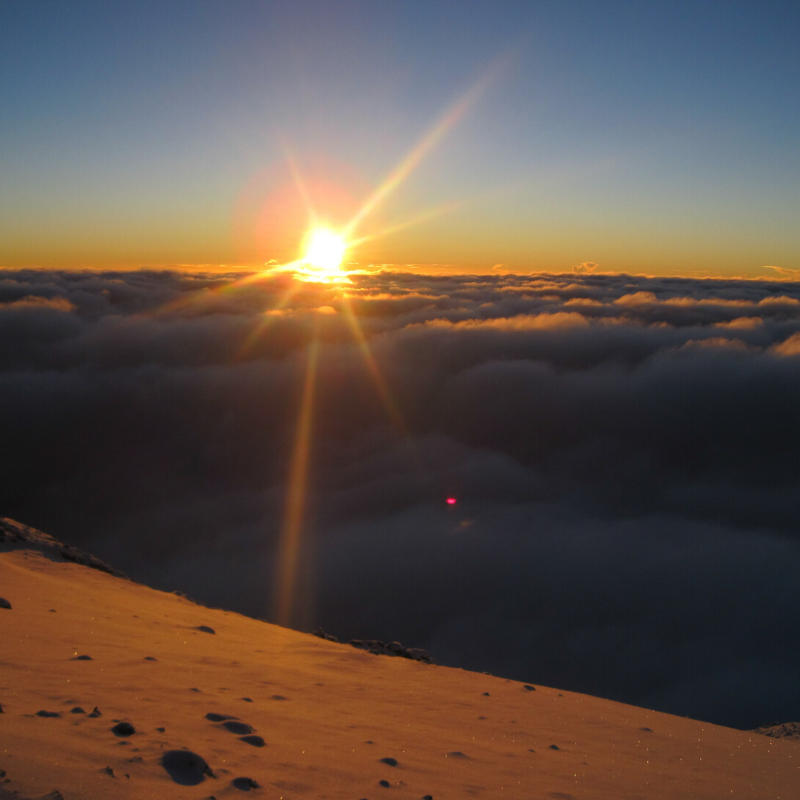
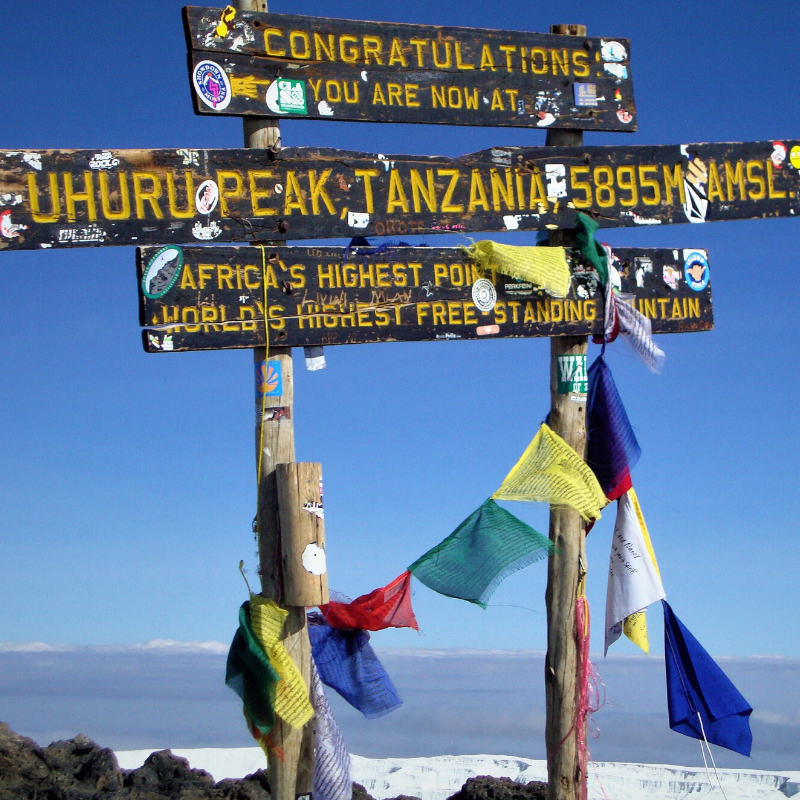
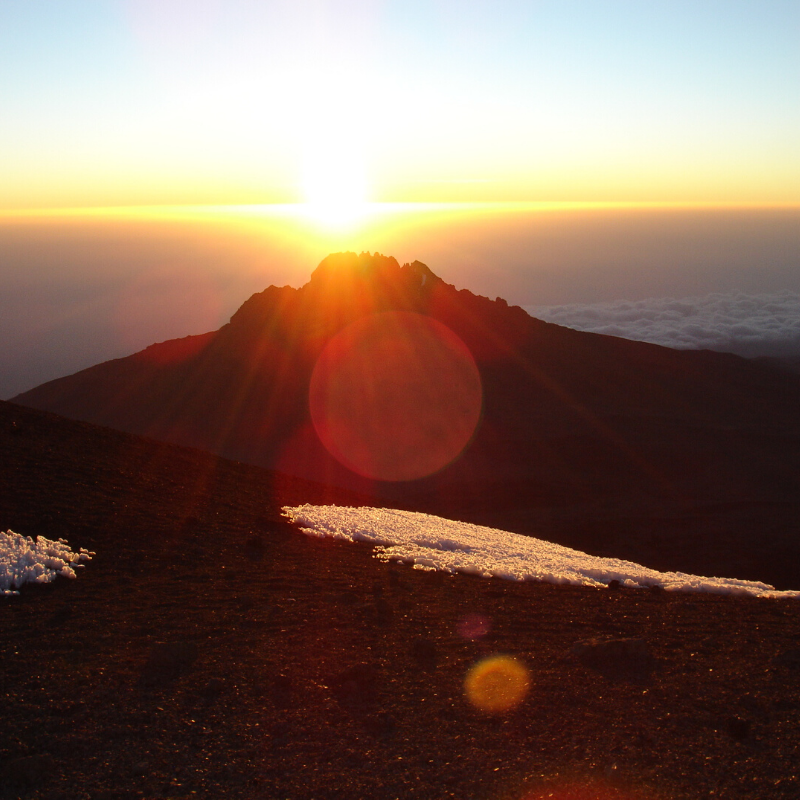
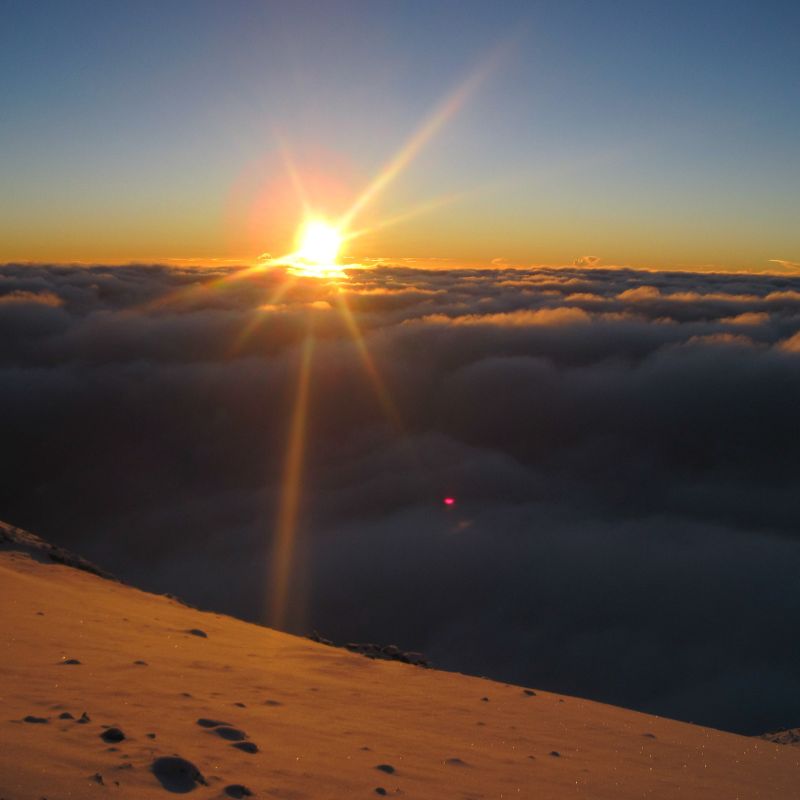
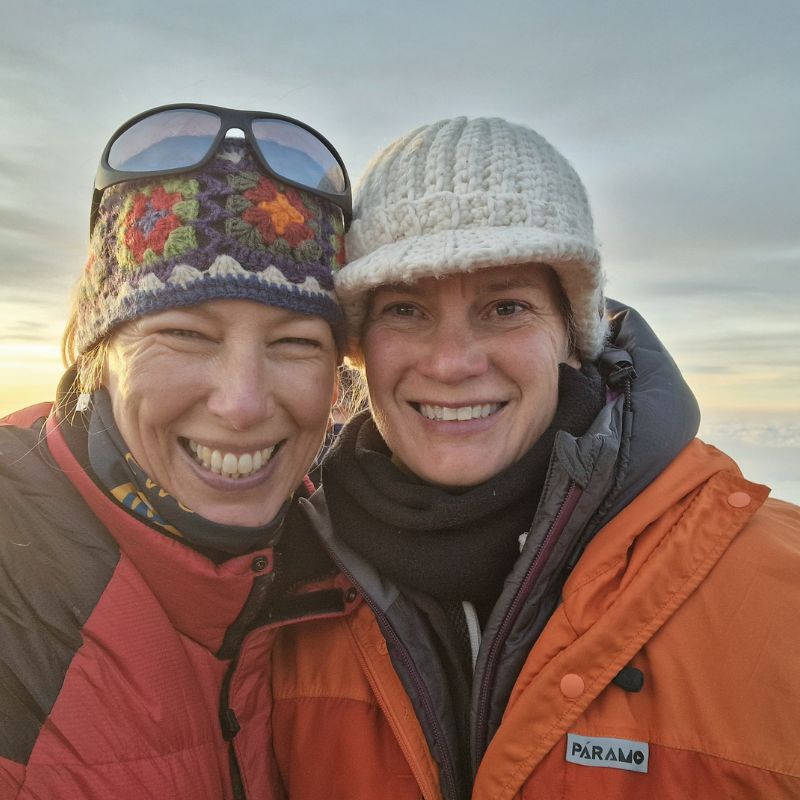
In the early hours of the morning under a star filled sky you will start your final push to the summit glaciers. Taking advantage of the best surface conditions (frozen scree and possible snow), your path will climb via some well-graded zigzags at a slow but steady pace reaching the iconic Stella Point (5735m), in around 5 – 6 hours. This is one of the toughest parts of your ascent but your torchlight trek will be rewarded with a spectacular sunrise over the jagged Mawenzi peak. With the bright white ice cliffs in the crater turned golden by the early sun, you will follow the crater rim for about an hour on easier terrain to ascend to the highest point in Africa – Uhuru Peak (5895m). Congratulations! You’ve reached the Roof of Africa on IWD!
After enjoying your epic summit achievement and taking the obligatory photo, you will begin your descent by returning to Barafu camp for breakfast before continuing down to Millennium Camp for a well deserved rest.
Distance covered: approx. 13.4kms / 8.3miles
Trekking time: approx. 12 – 16 hours
Included
Accommodation: 3 season mountain tents (twin share basis)
Meals included: Breakfast, lunch and dinner
Trek Millennium Camp (3790m) to Mweka Gate (1630m)
Before your last day on Kilimanjaro you will bid a fond farewell to your trusty local crew of porters who been a fundamental part of the team for the past week. Then a long yet gentle descent on a well-constructed path takes you down through lovely tropical forest alive with birdsong and the chance to catch a glimpse of Colobus monkeys. On arrival at Mweka Gate you will complete park formalities and receive certificates of ascent before being transferred back to your hotel. A shower and a beer (not necessarily in that order) will be a welcomed sight plus time to reflect on your Kili adventure amongst some new-found friends. That evening you’ll enjoy a celebratory dinner with your Guides and a well-deserved sleep in a hotel bed!
Distance covered: approx. 12.1kms / 7.5miles
Trekking time: approx. 6 hours
Included
Transfer: From Mweka Gate to hotel
Accommodation: Hotel (twin share basis)
Meals included: Breakfast, lunch and celebration dinner
Farewell Tanzania (Kwaheri)
Your Kilimanjaro adventure comes to an end today.
After breakfast, you may wish to relax by the hotel pool or take the free shuttle bus into Moshi town for a wander. A long-standing trading post, Moshi is known for its lively, colourful markets and an appealing blend of African and Asian influences. The town has a self-sufficient, prosperous feel, largely thanks to its role as the centre of one of Tanzania’s major coffee-growing regions. It’s a lovely place to pick up a few souvenirs or simply enjoy a coffee while reflecting on the journey you’ve just completed.
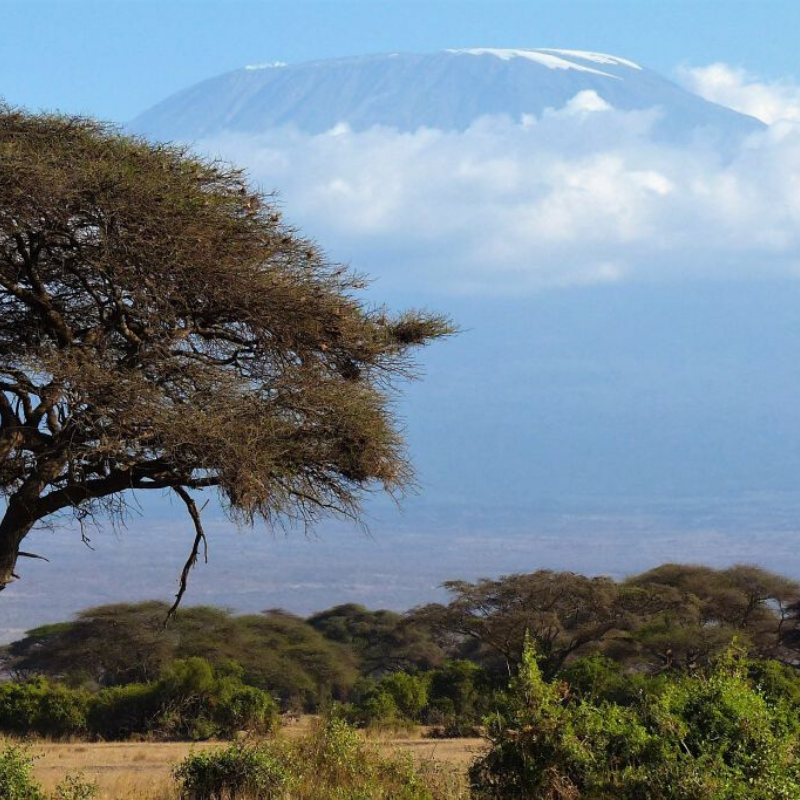
At the designated time, transfer to Kilimanjaro International Airport for your onward flight. As you leave Moshi behind and catch your final views of Mt Kilimanjaro rising above the plains, there’s time to reflect on the experience of standing on the Roof of Africa and everything it took to get there.
From rainforest trails and high-altitude camps to summit night beneath a sky filled with stars and constellations, the memories, friendships and shared moments on the mountain often stay with you long after the journey home.
Kwaheri Tanzania — farewell for now.
Included
Transfer: From hotel to Kilimanjaro International Airport for group flight schedule
Meals: Breakfast
*If you’d like to extend your time in Tanzania, we’d be delighted to help. Why not continue the adventure with a two or three-day safari in one of Tanzania’s spectacular wildlife reserves, or head to the white-sand beaches of Zanzibar to relax and recharge after the climb. Just let us know and we can help you plan the perfect extension to your journey.
Climbing Kilimanjaro is one of the world’s great mountain trekking challenges — but doing it as part of an all-female team adds a powerful and inspiring dimension to the journey.
Led by renowned 7-Summiteer Jo Bradshaw, this expedition brings together adventurous women who want to challenge themselves, support each other and experience the mountains in a meaningful way. Along the route, Jo shares valuable insights from her years of high-altitude climbing, helping you build confidence and develop practical expedition skills as you journey toward the summit.
Travelling during the low season offers a quieter, more immersive experience on the mountain. With fewer teams on the trail, you’ll enjoy a quieter ascent and a stronger connection to the landscape. At the same time, your presence helps provide valuable year-round work for the guides, cooks, porters and drivers who depend on responsible tourism to support their families and communities.
By travelling with Adventurous Ewe, you help keep your impact low and your contribution meaningful. We operate in small groups, provide every trekker with a Water-to-Go bottle to reduce single-use plastic on the mountain, and work closely with trusted local partners in Tanzania who share our commitment to responsible travel.
If you’d like to hear what this experience is really like, you can also read the story from Adventurous Ewe trekker Jane Ainslie, who summited Kilimanjaro with an all-female team on International Women’s Day — a powerful reminder of what can happen when women come together in the mountains. Read Jane’s Kilimanjaro story here
As a small family business, we take great pride in offering a personal, friendly and knowledgeable service for your Kilimanjaro Trek. Every adventurer arrives with different motivations, experience levels and curiosities — and we’re here to support you from the moment you join the flock to long after you return home.
Our close-knit team brings years of experience in crafting and leading adventures across the world’s most captivating landscapes. With first-hand knowledge of Jordan and trusted partnership with our Bedouin guides and local operators — who also hold the Travelife Partner sustainable tourism award — you’ll receive accurate and up-to-date advice as you prepare for your journey.
Whether you’re wondering about kit, training, cultural etiquette, flights or desert conditions, you’ll always receive tailored guidance from people who genuinely care about your experience. Your preparation matters — and we’ll help you feel ready, confident and excited for the adventure ahead.
With being a small family business we pride ourselves with providing personal, professional and friendly service. We appreciate that everyone has different levels of experience and reasons for wishing to embark on this Mt Kilimanjaro Trek and therefore require varying levels of support and guidance. We’re here to help you every step of the way from the moment you join the flock all the way through to completing the trek and beyond. Jim and Sue’s knowledge and expertise stems from dozens of years of travelling and exploring the destinations that we visit in order to fully support you in the lead up to your adventure. Plus with over 35 successful summit achievements between them, they are best placed to answer any of your questions, no matter how big or small.
We’ve crunched the numbers to work out the total carbon footprint of the Kilimanjaro Trek.
What’s the number?
It works out on average at 251kg of CO2 emissions per person, including all local transport, accommodation, food, activities, leaders, crew and office operations.
The only thing not included is travel to Tanzania. Given that our beloved guests travel from all parts of the UK for this adventure we have no way of reliably knowing their travel plans therefore we’re unable to include an individual number in the figure on display here.
What does the number mean?
To give you a snapshot of the numbers:
- Driving 1000miles/1609km would be approx. 281kg of CO2 in an average car (or 140.5kg per person if there was 2 of you).
- A return economy class flight London – New York would be approx. 1,619kg (1.66 tonnes) per person.
- 10 trees in a temperate forest are estimated to remove approx. 250kg of CO2 from the air over a period of 5 – 10 years.
What are we doing about it?
Our adventures are relatively low-carbon by design, and we’re working to develop long term carbon reduction plan. Following much research into climate change organisations, we carefully selected to support the environmental charity, Cool Earth. They’re a sustainable operation and work with rainforest communities across the globe to halt deforestation and it’s impact on climate change. We invest 1% of our revenue into supporting critical conservation projects world-wild with Cool Earth.
Flights are not included in your Kilimanjaro adventure giving you the flexibility to depart from the airport of your choice, use any of your frequent flyer points or extend your stay in Tanzania if you wish.
We will provide you with the recommended flights for this trip in order for you to take up the airport transfers included in Tanzania. Alternately, you can book your flights directly through our Flight Agent who is ATOL & ABTA protected.
If you arrive outside of our recommended flight times, you will need to make your own travel arrangements in Tanzania. We can help you with this if you need and we recommend:
- Public transportation which is considerably less expensive than taxi
- Public transportation leaves a much smaller environmental footprint
- Or if there is 3 or more of you, then taxi-sharing is also an option to help with costs and reduce separate journeys and a higher carbon footprint.
All nationalities require a full passport that must be valid for 6 months beyond the intended length of stay in Tanzania. Airlines may not carry passengers holding passports with less than 6 months validity.
UK passport holders do require a visa to enter Tanzania. The visa application process is now an electronic visa system. You’ll need to apply for a single entry visa which has a validity of three (3) months with effect from date/day of issue and a maximum period of stay of ninety (90) days.
You will need the following items for your application:
- Original, signed passport valid for 6 months beyond stay, and with at least two adjacent blank passport pages available for the Tanzania visa stamps. Amendment pages in the back of the passport are not suitable for Tanzanian visas.
- One Tanzanian visa application form.
- Two recent, identical, 2 x 2 passport photographs, in colour, front view and with a plain/light background.
- A letter of invitation from sponsor (either host company or individual) in Tanzania explaining the relationship to the applicant and the purpose of travel to Tanzania. In addition, the letter must indicate the length of stay, place of stay, and contact information in Tanzania. (We’ll provide this).
- Letter from employer or sponsoring company in the UK, on company letterhead, introducing the applicant, indicating the applicant’s employment status/position held in the company, clearly stating the purpose of visit to Tanzania, and requesting the Tanzanian visa. All letters must displays a U.K. mailing address. (We’ll provide this).
Also, please visit the UK Foreign & Commonwealth office website, or your respective nationality governing website, for the latest travel information on Tanzania at:
https://www.gov.uk/foreign-travel-advice/tanzania
Travel Insurance
Travel Insurance is an important part of any booking. It is compulsory that everyone who travels with us has taken out adequate travel insurance which includes, among other things, cover for the full value of your trip, medical (emergency, evacuation and repatriation) arrangements, trekking to an altitude of 5895 metres, personal liability, cancellation, curtailment and loss of luggage and personal effects, flight delays and pandemic travel cover.
For UK residents we have partnered with Campbell & Irvine Direct to provide you with a travel insurance. If you would like to obtain cover for your trip please feel free to contact specialist Insurance Brokers, Campbell Irvine Direct for a quote.
You must send your Travel Insurance Policy to Adventurous Ewe no less than 8 weeks prior to departure.
Global Rescue Membership
For peace of mind whilst trekking in the mountains, Global Rescue provides short term membership giving access to travel, security, medical advisory and evacuation services up to $US500,000. They’re a specialised field rescue company, and assist from the point of illness or injury by getting you to the closest and most appropriate medical facilities to get stabilised. Once fit to fly if you require additional inpatient treatment Global Rescue will further evacuate and repatriate to your home hospital on record. These services are all covered through their upfront membership fee with no claims process. For more info, please click here.
Vaccinations
For the most up to date info on vaccinations, please consult with your GP or travel healthcare practitioner 8 weeks in advance of travel.
Yellow fever vaccination certificate required for travellers arriving from countries with risk of yellow fever transmission and for travellers having transited for more than 12 hours through an airport of a country with risk of yellow fever transmission, this includes the airports of Nairobi (Kenya) and Addis Ababa (Ethiopia).
Recommended vaccinations are: Polio, Tetanus, Typhoid, Hepatitis A. Malaria prophylaxis is essential and we suggest that you seek advice from your GP or travel health clinic about which malaria tablets to take. Dengue fever is a known risk in places visited. It is a tropical viral disease spread by daytime biting mosquitoes. There is currently no vaccine or prophylaxis available for Dengue, and therefore the best form of prevention is to avoid being bitten. We recommend you take the usual precautions to avoid mosquito bites.
If you will be travelling with medication (including over the counter medication) you should check for any restrictions on medications before you travel. You can do this by contacting the Tanzanian embassy.
For up to date vaccination information please check the NHS government website ‘Fit for Travel’.
Severe allergies
If you have a severe allergy please inform us at the time of booking. We will do all we can to help, but unfortunately we are unable to guarantee an allergy free environment on this trip. You will need to carry your own treatment for the allergy with you, as ‘adrenaline auto-injectors’ are not carried as standard by AE leaders and crew. Whilst your leader is aware of our trekkers medical history, please also inform your leader on arrival of your allergy, and let them know where you keep your adrenaline pen.
Adventurous Ewe puts the safety and well-being of you, our leaders & crew and the communities we visit at the centre of all our operations, always. Your safety and well-being is our top priority. The Kilimanjaro Trek is intentionally challenging and requires individual preparation as the trip is designed to take you out of your every-day comfort zone and achieve something extraordinary. Rest assured we have a thorough Safety Management System, indepth risk assessments and risk management systems in place.
You will be accompanied by local qualified Mountain Guide/s and a UK High Altitude Mountain Leader for groups over 8 people. All our Guides are Remote First Aid trained and have extensive experience in leading teams in this region. They will be ultimately responsible for your safety on this trip.
There will be ICOM radio contact between Adventurous Ewe Mountain Leader, Local Leaders & crew and the Office Base in Moshi Town at all times during your trek. Your Mountain Leader will also carry a Satellite phone for emergencies only and have 24-hour contact with Adventurous Ewe office in UK. In the unlikely event evacuation be required the Tanzanian National Park rescue service have emergency vehicles on standby at exit routes from the mountain. All staff are highly trained with the evacuation procedures. A member of our staff will be carrying medical supplies and oxygen, should it be required.
If for any reason you need to leave the group early and come off the mountain, local staff will assist you with your descent and will arrange transfers, accommodation and medical care if necessary. All costs incurred due to an early descent will need to be covered by the individual before departing the hotel.
Many national governments provide a regularly updated advice service on safety issues involved with international travel. We recommend that you check the Foreign & Commonwealth Office Travel advice website for their latest travel information before departure and ensure that your travel insurance covers you for all areas your itinerary covers.
Please visit: https://www.gov.uk/foreign-travel-advice/tanzania.
We also ask that you please ensure you use your alcohol-based hand sanitiser at all times to minimise the spread of any germs throughout your fellow flock of trekkers!
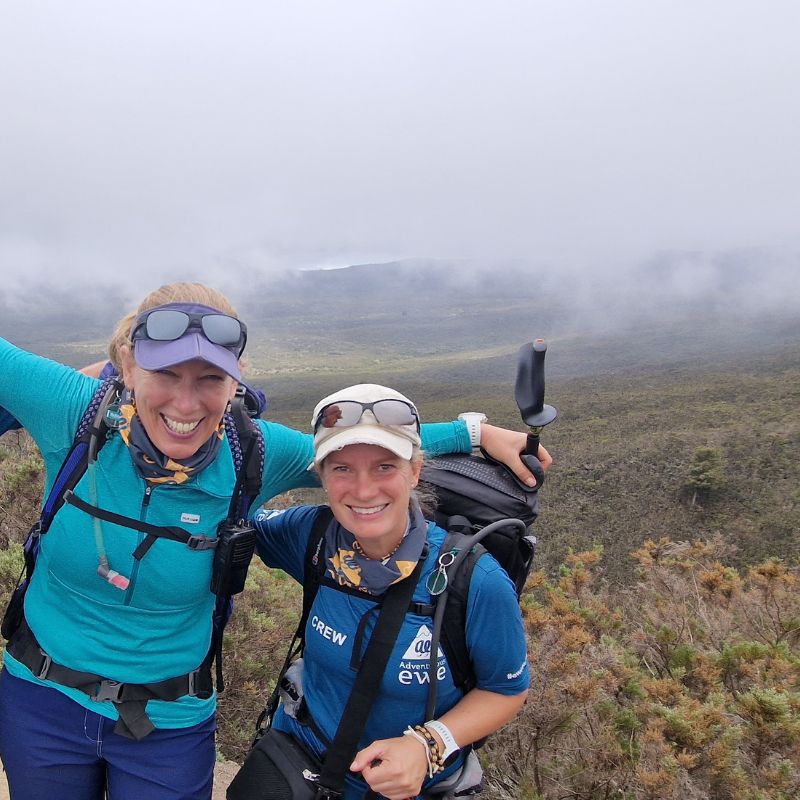
Your UK Mountain Leader for this expedition is Jo Bradshaw, one of the UK’s most accomplished high-altitude climbers. Jo has many years of experience leading teams on Kilimanjaro and around the world’s highest mountains, including successfully summiting Mount Everest and multiple peaks above 6,000 metres.
Jo brings a huge depth of experience to the team and is passionate about helping others thrive in high mountain environments. Throughout the trek she’ll share practical knowledge and expedition skills — from pacing and altitude awareness to camp life, equipment choices, mountain safety and wellbeing. Her calm leadership and encouraging approach help create a supportive team atmosphere as everyone works together toward the summit.
Jo also holds remote wilderness first aid qualifications and extensive expedition leadership experience, providing an additional layer of expertise and reassurance throughout the journey.
Alongside Jo, your Head Local Guide will be one of our highly experienced female guides from Tanzania. Our local guiding team is exceptionally knowledgeable, professional and deeply passionate about Kilimanjaro. For them, working on the mountain is far more than a job — it’s something they take great pride in sharing with trekkers from around the world.
Our guides are trained and certified through organisations including the Kilimanjaro National Park Authority and international training partners. Their experience, attention to detail and positive energy ensure every member of the team feels supported throughout the journey.
Guide Ratios & Safety
We operate with a strong guide-to-trekker ratio to maximise safety, support and summit success.
The standard guide ratio on Kilimanjaro is 1 guide for every 4 trekkers. On summit night, when the climb becomes more demanding, we increase support significantly with approximately 1 assistant guide for every 2 trekkers.
Your guiding team maintains regular communication with base through satellite phones, radios and mobile networks where available, ensuring constant contact with the local office in Moshi and Adventurous Ewe’s UK team.
Our Mountain Crew
The porters, cooks and mountain crew are the true heartbeat of every Kilimanjaro expedition. Their dedication, care and tireless work behind the scenes make the entire journey possible.
We are committed to fair treatment, proper equipment, good nutrition and ethical working conditions for all members of the crew. Supporting the wellbeing and development of the team — including opportunities for training and career progression — is a fundamental part of how we operate.
On the mountain, everyone works together as one team. Trekkers, guides, porters and crew share the same environment and the same goal — supporting one another safely all the way to the summit and back down again.
We pride ourselves in small group travel to minimise the impact on the environment and to make your experience more authentic and safe.
The minimum group size for the Kilimanjaro Trek to run is 6 people and the maximum group size is 12 people.
You are most welcome to join this all-female mountain trek as a solo traveller or with friend/s or family member/s. You are also welcome to use this trip as a fundraiser for the charity of your choice.
Trekking experience and trip grading – ‘Extreme’
This is a tough trek, reaching an altitude of 5,895m, but one that is very achievable with the correct preparations. It requires a reasonable level of strength, stamina, endurance and determination. Even if you consider yourself fit, you may still find the climb very challenging, depending on how well your body acclimatises to high altitude. There is no scientific way to determine how easily you acclimatise, and the acclimatisation process can also differ from climb to climb.
Having been operating Kilimanjaro treks for many years now, we strongly recommend the 8-day Lemosho route due to maximising time for acclimatisation, experiencing the beautiful and varied scenery and also for it’s quieter path. You will be trekking high and sleeping low on some nights to help with acclimatisation as well.
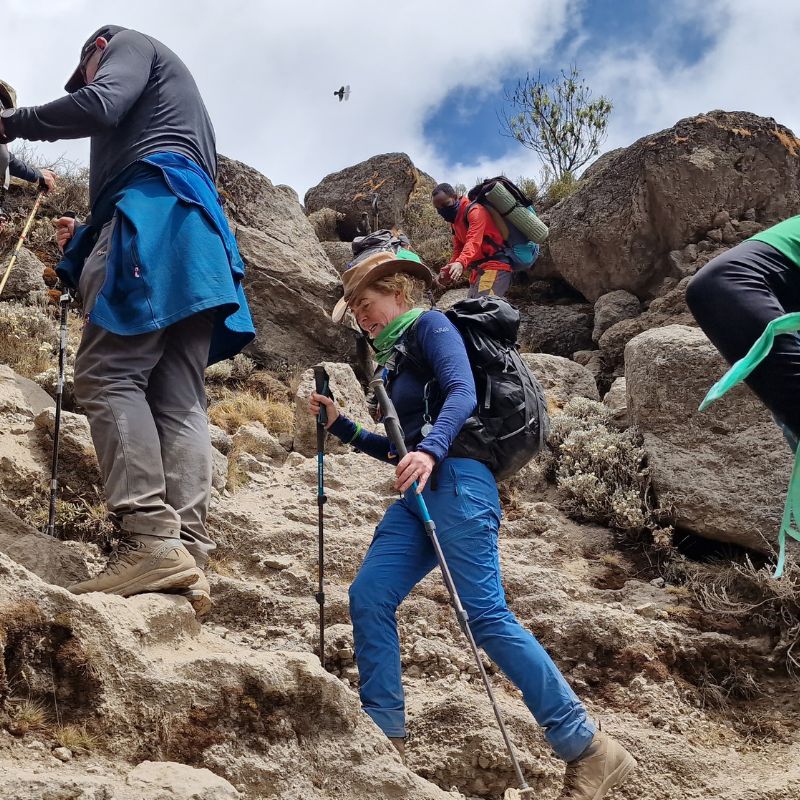
Most of the trails on Kilimanjaro are well defined and of good quality but some forest sections can be slippery particularly in poor weather conditions so good boots and trekking poles are ideal. There is a short rock scramble on Barranco Wall which rises 843 feet (257 meters) above the Barranco Valley. Steep, narrow paths cut back and forth along the rock face, making the Barranco Wall one of the more challenging sections of the mountain, though you don’t need any technical climbing skills for this section. Most trekkers are thrilled that they get to experience the Barranco Wall and it is often a highlight of the ascent! Your guides will position themselves at strategic points on the Wall for support. The final push to Uhuru peak is almost entirely on scree and loose rock without permanent footpaths however you will be accompanied by Assistant Guides during the section at a ratio of 2 people to 1 guide. Their relentless support and encouragement will make a dramatic difference to your summit bid.
Please also be prepared for varied conditions and temperatures especially as you ascend. You are likely to be cold, washing facilities are minimal, the loos are different from the luxuries at home and your appetite may be affected by altitude. Camping and sleeping proves more difficult as you ascend too. You should be prepared for an early start every day on Kilimanjaro and a long night/day of trekking for the summit bid. Though please remember that everyone on your trek will be experiencing the same and as a team pursuit, we encourage strong teamwork and support.
A bespoke training programme will be provided when join the team for Kilimanjaro to help you with your preparations. Your training should incorporate aerobic (endurance building), anaerobic (strength building) exercises and some good long walks! Training in your trekking kit with your ruck-sack on consecutive days in the outdoors is ideal to help with your preparations too. The training programme includes info, videos and an exclusive discount code for a 28 day kettlebell training programme which is ideal for strength and endurance training. The more you are prepared, the more you will enjoy the experience.
Our motto is: Train hard, smile harder and enjoy the journey!
06.00 – 06.30 start the day with bed tea followed by a hot breakfast. Hot water in bowls will be available most days for washing your hands and face. Following breakfast and filling your water bottles, you will start trekking as a team. Your trek leader will set a slow pace, with assistant leaders and UK Leader walking amongst the group to offer support. There will be regular short breaks to rest and refuel on snacks and water and a longer stop for lunch.
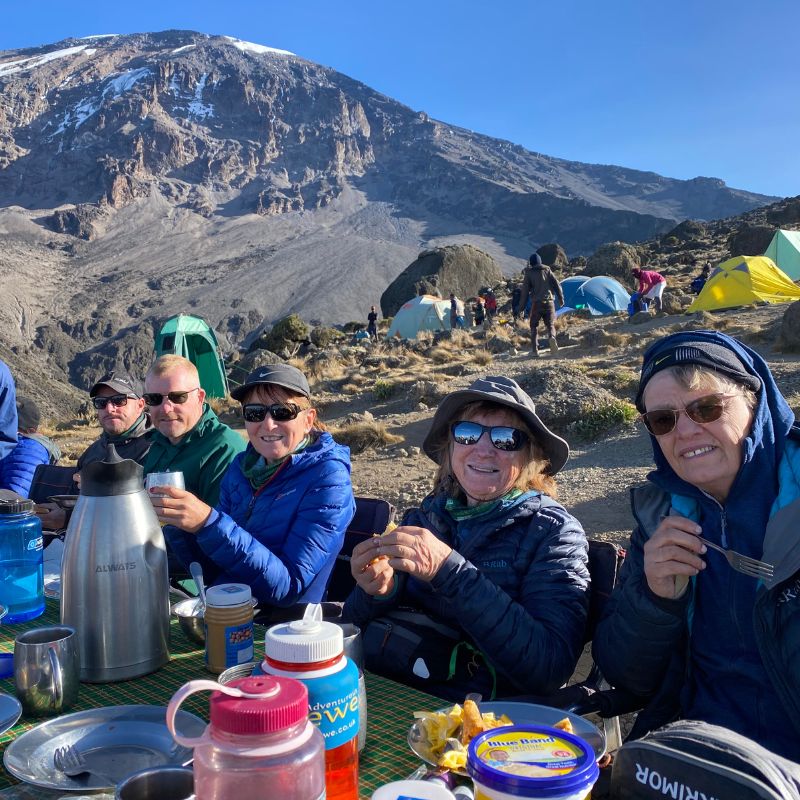
On arrival into camp, there will be time relax and enjoy a hot drink, before sitting down together for dinner and a briefing by your leader for the following day. Your main kit bag, tents and camping equipment will be carried by porters and will be set up each evening as you arrive into camp. All main meals – breakfast, lunch and dinner are prepared, cooked and served by your kitchen crew. It’s an amazing operation to watch unfold as you journey up & down Kilimanjaro.
The trek to the summit of Kilimanjaro is graded Tough/Extreme, and good preparation will make the journey far more enjoyable.
Over 8 days you’ll trek through rainforest, moorland and high-alpine terrain, gradually gaining altitude as you move higher on the mountain. Daily walking hours vary, and summit night is the most demanding stage of the expedition, involving a long overnight ascent to Uhuru Peak at 5,895m.
You don’t need to be an elite athlete — but you should feel comfortable hiking for several hours at a time on consecutive days, carrying a daypack and tackling sustained uphill and downhill terrain. Strong fitness, steady pacing and a positive mindset are the key ingredients for success.
What to Focus On
Endurance walking
Regular hikes of 5–8 hours on hilly terrain are the best preparation. Aim to build up gradually and include back-to-back walking days where possible to mirror the rhythm of the trek.
Leg & core strength
Exercises such as step-ups, lunges, squats and hill walking will strengthen the muscles needed for long ascents and descents.
Cardiovascular fitness
Running, cycling, swimming or brisk hill walking will help build stamina and improve your overall endurance.
Carrying weight
Train with a 20–30 litre daypack carrying around 5–7kg. This replicates what you’ll carry on Kilimanjaro — water, warm layers, snacks and personal essentials.
Hill training
The more time you can spend walking uphill, the better. Long steady climbs help prepare your legs and lungs for Kilimanjaro’s gradual but sustained ascent.
Altitude awareness
Altitude affects everyone differently, regardless of fitness. The key is slow pacing, good hydration and allowing your body time to acclimatise — which is exactly why we follow the longer 8-day Lemosho Route.
Mental resilience
Multi-day trekking at altitude is as much a mental challenge as a physical one. A steady mindset, positive attitude, patience and supporting each other as a team are all part of the experience.
Training Support from Us
Once you book, you’ll receive a detailed Kilimanjaro Training Guide to help you prepare. This includes weekly training suggestions, hill training ideas, strength exercises and practical advice on preparing for high-altitude trekking.
You’ll also have the opportunity to learn valuable expedition skills on the mountain itself from Jo Bradshaw and our experienced guiding team — from pacing techniques and breathing strategies to managing energy and hydration at altitude.
The more prepared you are, the more you’ll enjoy the journey.
We have a variety of tailored training weekends available to ensure you’re fully prepared for your mountain trek. These training weekends are the perfect way to help you gauge your fitness and training progress under the careful guidance of our experienced leaders. Plus the leaders will chat through your specific trip and also provide guidance and tips relating to clothing and equipment, health and wellbeing, packing, camping, trekking skills (walking on different terrain/at altitude/at night/using trekking poles), teamwork and much more to ensure you are fully prepared and ready for your adventure ahead.
We predominantly host our training weekends in Snowdonia given the wide variety of terrain available to practice and where Chief Ewe’s, Jim or Sue, can meet you too. It’s a great way for you to meet fellow members of the flock and ask any questions, no matter how big or small. We’re here to make sure you’re ready. For further info, please email info@adventurousewe.co.uk or call 01492 588 069.
A full kit list will be provided when you register for this trip. Good kit can make the difference between a fantastic adventure and an uncomfortable one. Well worn in waterproof hiking boots are essential together with a good quality waterproof jacket AND trousers and a very warm sleeping bag.
We appreciate that good kit can be expensive and some items you may not use again such as sleeping bags and down jackets, therefore we have a number of Kilimanjaro rental packages available through Expedition Kit Hire. More info will be provided when you join the team.
An exclusive Adventurous Ewe discount code will also be provided for independent UK specialist outdoor retailers on booking for this trip.
To help you get the very best from your expedition we will provide you with an exclusive Adventurous Ewe discount code will also be provided for independent UK specialist outdoor retailers both online and in store. They offer a large choice of kit that the staff themselves use while climbing, hiking, mountaineering, running, travelling or enjoying expeditions across the globe and they pride themselves on sharing their experience and knowledge of equipment so you can choose the right gear to suit you and your Kilimanjaro trek.
We also have an exclusive discount code for Expedition Kit Hire for any kit packages you wish to hire.
When you ascend above 2500 metres your body has to acclimatise to the decreasing amount of the oxygen available. To allow your body to adjust we have structured your Kilimanjaro Trek so that you ascend slowly, allowing acclimatisation to occur. However, during the acclimatisation process, you may experience some of the following symptoms – headaches, tiredness, disturbed sleep, shortness of breath, cough, loss of appetite, nausea, palpitations and swelling of the hands and face.
Individuals acclimatise at different rates and we would expect the majority of the team to notice the effects of being at high altitude, and while most will only feel discomfort and headaches, it is not uncommon for a small number of people to need extra care which will be provided by our leaders and crew. During your pre-trek briefing, altitude sickness will be discussed in more detail and advice on how to best cope with it. The most important thing is not to fear it, but to respect it. Know the signs & symptoms of AMS (Acute Mountain Sickness), be aware of how it affects the body and report any illness to your leader straight away. Our leaders and crew are there to help and are fully experienced with high altitude conditions and all the scenarios that trekking at these altitudes bring. You’re in good hands.
In most cases, AMS can be avoided following these guidelines:
- Drink around 3-5 litres each day to achieve suitable hydration levels. Try and avoid tea & coffee and definitely no alcohol
- Walk slowly, even when in camp
- Keep warm, especially at night
- Eat well, even when you don’t feel like eating
All our trips that spend time at High Altitude follow our standard altitude safety measures. A number of medical conditions or medications can also reduce your body’s ability to acclimatise, and thus will affect your performance at altitude and make you more susceptible to AMS. If you are worried about any pre-existing condition (e.g. heart problems), or unsure of your physical ability, you must seek medical advice prior to booking. There are a number of untested herbal remedies which claim to prevent mountain sickness. However, only one drug is currently known to have a useful role in preventing AMS and to be safe for this purpose: acetazolamide (Diamox). We recommend that you carry Diamox in your first aid kit for treks where you spend an extended period above 4000m. Diamox can only be obtained from a medical professional on prescription and it is important that you first consult your own doctor so that you know there are no contra indications with other medicines you may be taking and that you do not have an allergy to acetazolamide. Diamox commonly causes some minor side effects, such as tingling fingers and toes, or a metallic taste in the mouth, but more severe reactions are rare. If you intend to take Diamox, you must familiarise yourself with the appropriate dosage and regime prior to coming on this trip. We recommend trialling it first in the safety of your home environment prior to the trek.
Please note that while we endeavour to assist you with achieving your personal goals, however there may be times when your leader makes the decision to either delay or stop your ascent based on your medical conditions and AMS symptoms. Please respect this decision for it is for your own safety and welfare.
This trip includes five or more overnight stays over 3500 metres/11500ft, where there is a genuine risk of being affected by Acute Mountain Sickness (AMS). If left untreated AMS can be life-threatening.
Trekking Kilimanjaro is unique for many reasons, and one of these is that from origin to summit, you will weave through 5 distinctive climate zones. It is said that the journey from the gate to the peak is like walking from the equator to the North Pole in a week! Each zone is subject to a corresponding decrease in rainfall, temperature and flora/fauna as the altitude increases.
January and February are the warmest months, April and May are the wettest months, June and July are the coolest months, and August and September are the driest months.
Subzero nocturnal temperatures are normal throughout the year at higher altitudes, often exacerbated by wind. Nevertheless, October is a very good month to climb, with relatively dry and warm weather, and it is generally less busy than August or September.
Due to its proximity to the equator, Mt Kilimanjaro does not experience wide temperature changes from season to season. Instead, the temperatures on Kilimanjaro are determined more so by the altitude and time of day. At the start of the trek, at the foot of the mountain, the average temperature is around 21°C to 27°C. From there, the temperatures will decrease as you trek through Kilimanjaro’s ecological zones. At the summit, Uhuru Point, the temperatures at night can range between -7°C to -29°C.
Also due to Kilimanjaro’s great height, the mountain creates its own weather systems. Conditions can be extremely variable and difficult to predict. Therefore, it is essential that you are prepared for all types of conditions including rain, snow, wind and the very cold plus warm conditions in the rainforest at the start and finish of your trek. A comprehensive clothing and kit list will be provided once you have booked onto this trek.
We recommend that you check the mountain weather forecast in the days leading up to your trek by visiting here.
9 nights: Hotel (2 nights), camping (7 nights)
At the start of your expedition you have one night at a comfortable hotel near Moshi town with swimming pool and views of Kilimanjaro. You will return to this hotel for your final night of accommodation at the end of the trek.
Whilst on the mountain there are 7 nights camping. We use high quality, spacious 3 person mountain tents which are of expedition quality. Only 2 people and their bags stay in each tent to help with warmth and also that most altitude related symptoms manifest themselves at night therefore sharing a tent is highly recommended. If you are travelling by yourself, you will be paired up with another single member of the team of the same sex. Single hotel rooms and single tents are available for a supplementary cost. You will need to bring your own sleeping bag and matt, although you can hire these items if you prefer. We also have a dining tent with a table and chairs for meal times. The crew will set up and pack down all tents so you will be looked after very well.
We take along our own portable toilets and toilet tents. These are kept nice and clean, and loo roll is provided to help us provide the best levels of hygiene that we can on the mountain. There are long drop toilets at each campsite which are maintained by the National Park Authority – but we recommend its best to avoid these!
For more info or to request a single room and or tent, please get in touch with us at info@adventurousewe.co.uk.
All meals are included within the trip cost apart from lunch on your last day where you have some free time. With this expedition, being hydrated and having a well-balanced diet are important elements to summiting success. Your head chef and cook crew work hard to ensure that the menu is carefully planned as you ascend, especially as it’s not unusual for people to lose their appetites at altitude. It’s amazing what this team are able to produce on the side of the mountain with all the ingredients having been carried up by porters.
The menu has a high liquid and carbohydrate content; the two important elements for successful high altitude mountain ascents and all using local produce wherever possible. At breakfast you’ll have a hot drink (tea, coffee or hot chocolate) with porridge, or eggs, sausages and toast with jam, marmalade or honey. Lunch is usually three courses; starting with soup, followed by a hot meal such as cheese toast or chicken and ending with some fresh fruit or sometimes a muffin. Afternoon tea is served at camp shortly after your arrival, usually around 1500-1600, which is a hot drink and snacks such as peanuts, popcorn, or biscuits. Dinner is usually three-courses starting with soup, then a carbohydrate such as rice, pasta or potatoes, with beef, chicken, sausage or corned beef and cheese followed by fresh fruit or something sweet. Vegetarians will have beans or a vegetable mix with different sauces. Please inform us at the time of booking if you have any special dietary requirements. Please note, you should bring your own trail snacks for the trek and some favourite snacks high in energy for summit night which you can have easy access to in your pocket. We also recommend bringing water flavouring such as electrolytes, berocca or similar.
Fully purified and treated water is provided whilst trekking. All other drinks whilst at the hotel/restaurant will need to be paid for on an individual basis. It is not recommended to drink untreated water from the taps or streams enroute. You should take purification tablets or a filter bottle (such as a Water-To-Go bottle) to treat your water. We do not encourage the purchasing of single use plastic bottles. You will receive a free Adventurous Ewe Water-to-Go bottle when you depart on this trek. For further info please click here.
Adventurous Ewe has partnered with Water-to-Go, a filtration system that eliminates over 99.99% of all microbiological contaminants from any non-salt water source – for more info please click here. Adventurous Ewe trekkers will receive a free Water-to-Go bottle when departing for our Kilimanjaro Trek, and better still, 15% of the purchase value for replacement filters will be donated to our environmental charity partner, Cool Earth.
Please note that if the water freezes it will clog up the filter – in this event, defrost before use by sitting the filter in lukewarm water for 10-15 minutes.
Please help us reduce the volume of single use plastic in this pristine environment.
You need two bags for your Kilimanjaro adventure. The first being a soft material ‘duffel style’ bag or rucksack (no hard bodied case) with your mountain kit. This will be will be carried by porters on the trek and should not weigh more than 12kgs-14kg. This weight allowance is strictly enforced as porters will also need to carry their own kit as well as other items. Their maximum weight limit is 20kgs per porter. It is possible to leave clothes and other items not required for trek at the hotel in a foldaway bag clearly marked with your name. Your second bag is your 30 – 35 litre rucksack which you can take on the flight as hand luggage. This bag is for you to take each day of your trek containing items such as wet-weather jacket & trousers, a warm layer, beanie hat & gloves, snacks & water, first aid kit, personal medication, sun-screen, camera, etc.
For international flights please check your baggage allowance with your airline.
Please be aware that plastic/polythene bags are illegal in Tanzania. The Government of Tanzania have made it official that from 1st June 2019 all plastic carrier bags will be prohibited from being taken into mainland Tanzania. Plastic or plastic packaging for medical services, industrial products, foodstuff, sanitary and waste management are not prohibited at this stage.
Visitors to Tanzania are prohibited to carry plastic carrier bags at any time including for packing items in their main luggage or hand luggage before embarking on a trip or flight to Tanzania.
Plastic ‘ziplock bags’ that are specifically used to carry toiletries will be permitted as they are expected to remain in the permanent possession of visitors and are not expected to be disposed of in the country.
Registration fee: £295 per person. Payable on booking and is non-refundable.
Balance: £2890 per person. Due 8 weeks prior to your trip departure date. This can be paid via monthly instalments.
Total ground cost: £3185 per person
Please note, this trip has been specially designed for the Adventure Queens community and fellow female trekkers wanting to experience Mt Kilimanjaro in a supportive environment. There is an additional day in the itinerary to help with acclimatisation, the team has one of the best female high altitude UK Mountain Leaders, Jo Bradshaw together with one of the best female Local Guides on Kilimanjaro as well. We pride ourselves in the fair treatment and pay of all our crew on the mountain ensuring they are well fed, equipped, paid and cared for which is part of our Making it More Meaningful Sustainable Travel Policy that has attained the Travelife Sustainable Tourism Partner Award.
Your Adventurous Ewe Leader/s and Crew will have a satellite & mobile phones and radios communications in case of emergencies. The team are trained to deal with these situations. Please ensure you listen to your Leader during these times and refrain from putting any posts on social media. Should you find yourself unable to continue with the trek, your Leader and crew will make the necessary arrangements.
Your Emergency Contact at Adventurous Ewe HQ is Jim Young on +44(0)7747 346 588.
Cool Earth
We are very excited to have teamed up with leading climate change charity Cool Earth, who share our mission to protect the planet’s precious environment in a sustainable manner. The future of rainforest protection is where everyone makes a difference to climate change! We invest a % of our revenue into supporting critical conservation projects around the world through Cool Earth. You are most welcome to help make a difference too by sparing a few pennies. Please give what you can and help save the world’s rainforests today by clicking here. Just £2.50 will save 10 trees and lock up 10 tonnes of CO2. Together, we can all make a difference in helping preserve this precious and wonderful planet. Thank-ewe
| Departure & Return | Duration | Availability | Deposit | Total Cost* | (*Total cost includes the deposit) |
| Jun 12, 2027 Jun 21, 2027 |
10 Days | Available | £295.00 | £3185.00 | Book Now |
What's Included?
Pre-trip:
- Personalised support
- All trip info supplied via our free mobile travel app
- Training guide
- Discount on personal kit from independent outdoor retailers both in shop and online
- Online prep & info sessions
- Financial Travel Protection through ABTOT
- Public liability insurance
- Risk assessment and emergency management planning
- Monthly payment plan available.
Trip:
- Adventurous Ewe High Altitude Mountain Leader – Jo Bradshaw
- Local female Head Guide
- Qualified Local Mountain Guides and Assistant Guides (ratio of 1 Guide per 2 trekkers on summit night/day)
- All other crew including porters and kitchen crew
- Garmin InReach and radio communications between crew and the office base in Moshi town
- Pre & post trek accommodation near Moshi town (twin share basis)
- All campsites on the mountain with 3 Season mountain tents (2-person tents)
- Breakfast, lunch and dinner during your trip
- Katadyn filtered water throughout the trek
- Transfers as outlined in your itinerary
- All applicable local taxes, park fees, camping fees & rescue fees
- Luggage transfers each day of the trek via porters
- Portable flush toilets with a toilet tents
- Supplemental Oxygen & Pulse Oximeter
- Full back-up support including first-aid qualified staff and first-aid supplies
- Fair wages for the mountain crew as approved by the Kilimanjaro National Park Authority (KINAPA), Kilimanjaro Association of Tour Operators (KIATO)
- All safety management, risk management and emergency evacuation
- Complimentary shuttle transfer to Moshi town on your free day
- All trip management and hygienic cleaning procedures of equipment before, during and post trek.
What's Not Included?
Items not included
- Travel insurance – mandatory
- Visa – Tanzanian single entry tourist visa currently $US50
- Vaccinations
- Kit and equipment as listed on your kit list (kit hire available)
- Tips for local crew – recommended minimum of $US350+pp
- Single room supplement
- All meals are provided other than one lunch
- Personal spending money for hotel drinks, souvenirs, boot cleaning, etc.
- Any associated costs with leaving the expedition early including any airline surcharges if you opt to change flights
- Any increases in government taxes or park fees. This will be at the trekkers expense
If anyone needs to leave the group at any point during the trip (for reasons such as an early descent from Kilimanjaro due to altitude sickness or other reasons), all expenses incurred until re-joining the group on the itinerary described in these Trip Notes are the responsibility of the individual(s) concerned and must be paid to our local operator before leaving Tanzania. Adventurous Ewe will provide as much assistance as possible for anyone needing to leave the group at any stage.
Thoughtful and Responsible Travel
Responsible travel is at the heart of every Adventurous Ewe trip. When you travel with us to Mt Kilimanjaro, you’re not just taking on one of the world’s great mountain trekking challenges – you’re helping support the people and environments that make these journeys possible.
We work closely with trusted local partners in Tanzania to ensure the benefits of tourism are shared fairly with the communities who live and work on the mountain. From the guides who lead you safely to the summit to the porters and cooks who keep the expedition running smoothly, our local crew are the heartbeat of the experience.
We are committed to fair wages, ethical working conditions and respectful treatment for all mountain staff, alongside ongoing training and development opportunities for guides and porters.
Travelling during the low season also plays an important role. With fewer teams on the mountain, you’ll experience quieter trails and a more peaceful journey — while helping provide valuable year-round work and income for local guides, porters, cooks, drivers and the wider community who rely on responsible tourism.
Throughout the trek we also take practical steps to reduce our environmental footprint. Each participant receives a complimentary Water-to-Go bottle, helping eliminate single-use plastic on the mountain while ensuring safe drinking water throughout the expedition.
Some of the responsible travel principles embedded in this adventure include:
• Working with experienced local guides, porters and crew who bring deep knowledge of the mountain and its environment
• Supporting fair wages, ethical treatment and ongoing development for porters and mountain staff
• Travelling in the low season to help support year-round employment for mountain teams and local communities
• Staying in locally owned accommodation and supporting local businesses where possible
• Purchasing locally sourced food and supplies to benefit the regional economy
• Reducing plastic waste through the use of Water-to-Go filtration bottles
• Managing limited water and energy resources carefully on the mountain
• Promoting genuine cultural exchange and connection with the local team
• Following a strict leave-no-trace approach throughout the trek.
Also, as a Travelife Partner, Adventurous Ewe is recognised for its commitment to sustainable tourism and continuous improvement in sustainability across all areas of our operations.
We are also proud to support the environmental charity Cool Earth. Through this partnership, we contribute to projects that work alongside rainforest communities to help protect vital ecosystems and tackle climate change at its roots.
Together, through thoughtful travel choices, we can help ensure places like Kilimanjaro remain wild, protected and thriving for generations to come.
 Difficulty