What’s It Really Like to Climb Yala Peak in Nepal?
By Sue Blunt, Adventure Travel Director & Head of Sustainability at Adventurous Ewe
Fifty years after Junko Tabei became the first woman to summit Everest, I found myself heading to Nepal with a fabulous group of women to celebrate her legacy. Our destination was Yala Peak, a mountain Junko had led an expedition to in 1977, two years after her historic Everest ascent.
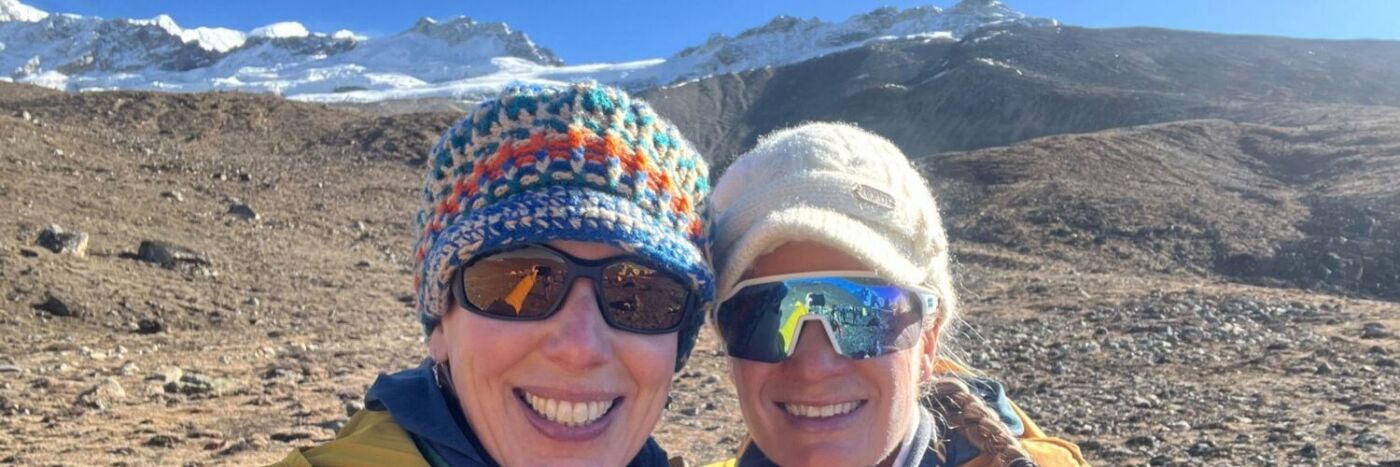
In April 2025, our all-female team set out together, led by Everest summiteer Jo Bradshaw and joined by fellow Everest summiteer Tori James. We came from different backgrounds and walks of life, each bringing our own reasons for joining and our own story to tell. Junko’s pioneering journey was the thread that brought us together.
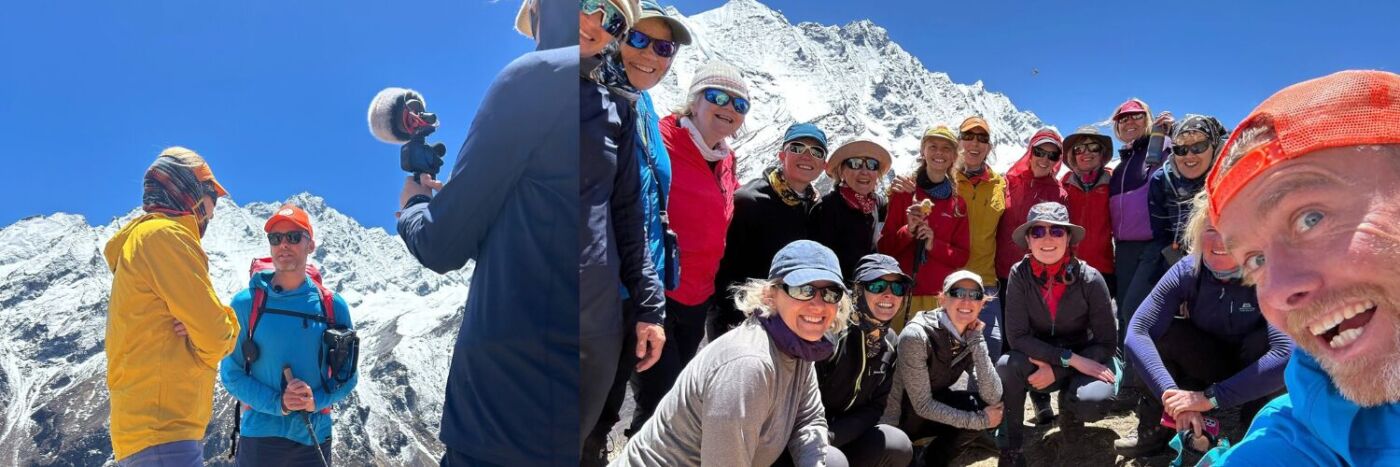
I joined to help film and document the women’s experiences, and climbed Yala alongside them. As we travelled through the Langtang Valley towards the summit, their stories became part of the journey we shared. Capturing those experiences while being part of the team made this expedition particularly personal and hugely humbling for me.
Incredibly that journey became our award-winning documentary, More Than a Mountain, sharing the women’s experiences and celebrating a mountaineer whose achievements deserve to be more widely known.
Having stood on Yala’s summit with this team, I want to give you an honest sense of what the journey and climb involves. Perhaps you’re comfortable on mountain trails but have never worn crampons. Maybe the thought of a Himalayan summit excites you, while the altitude makes you hesitate. Or maybe you’ve never heard of Yala Peak before.
Drawing on my own experience, I’ll take you through the journey: the preparation, the demanding days, everyday mountain life and the people who make it possible. If you’re wondering whether Yala could be your next adventure, I hope this helps you picture yourself on the trail and understand what it takes to get there.
Firstly, Where is Yala Peak?
Yala Peak rises within Langtang National Park, north of Kathmandu and close to Nepal’s border with Tibet.
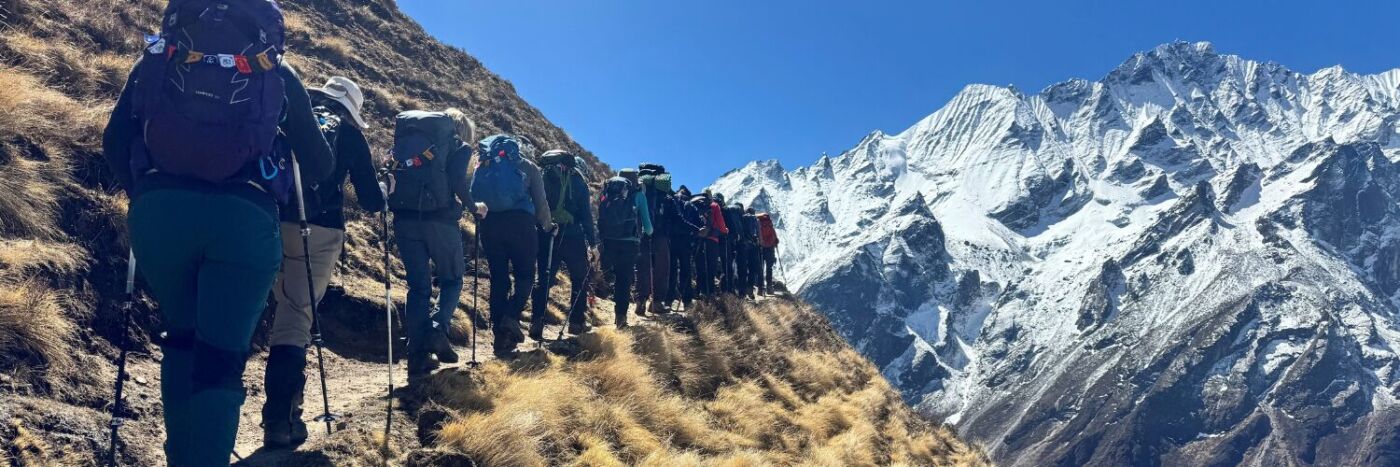
The journey unfolds in two stages: trekking through the Langtang Valley’s forests, welcoming villages and high mountain pastures to base camp at around 4,600m, then climbing to the summit at approximately 5,500m. Part of the journey incorporates learning to use fixed ropes and, depending on conditions, crampons and an ice axe, with instruction from your climbing guides before the final ascent.
In clear weather, the summit opens onto a panorama of jagged Himalayan peaks stretching into Tibet, including Shishapangma (8,027m) – an extraordinary setting for your first Himalayan summit or a new adventure in Nepal.
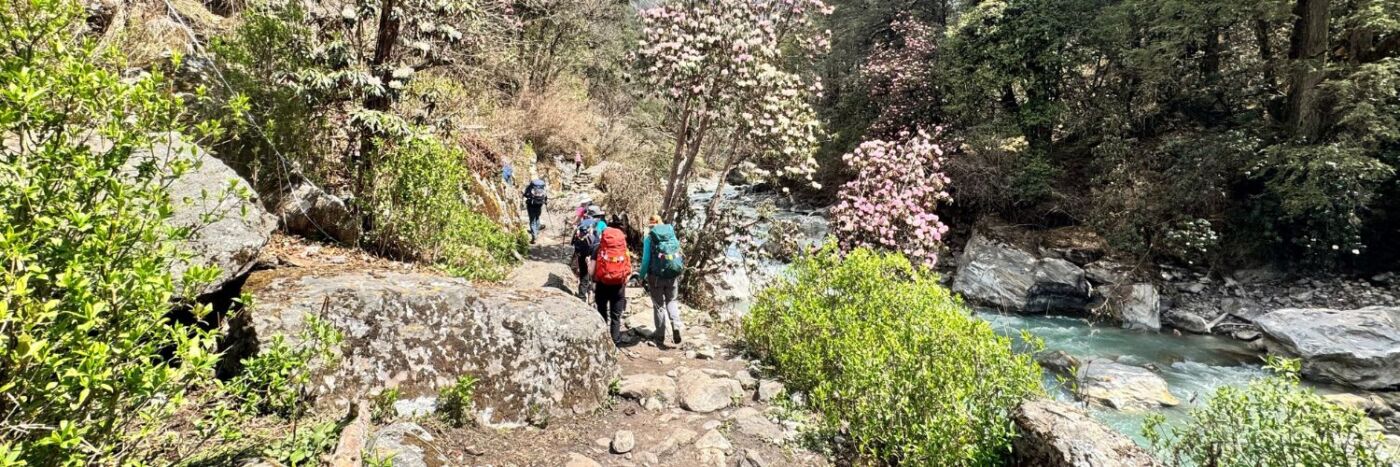
Walking into the colours of Langtang
Before you reach the snow and rock of Yala Peak, your trek starts with walking through a valley full of life and colour.
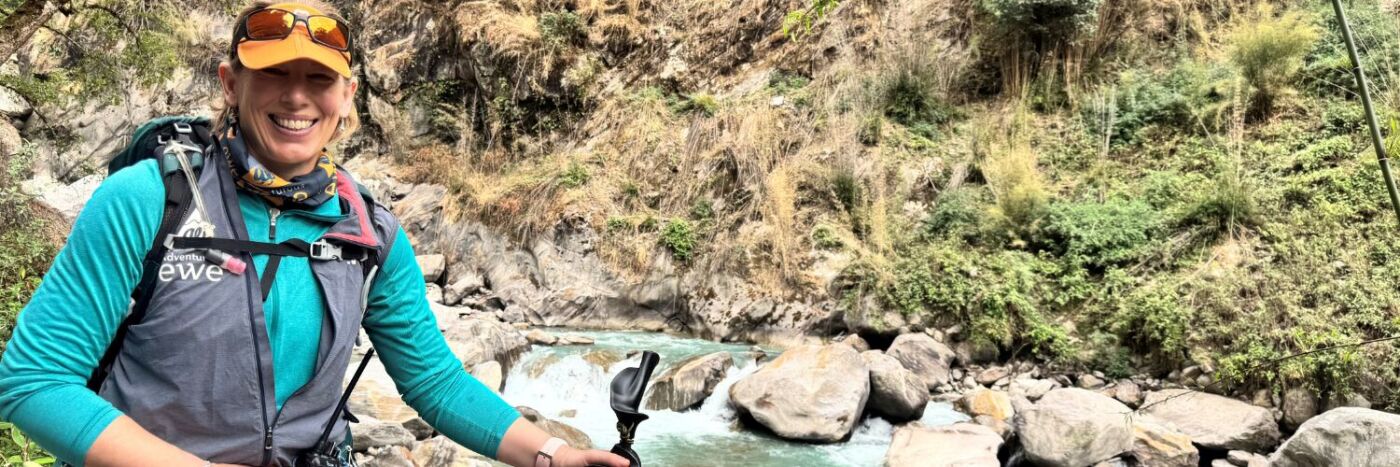
The lower trails take you into woodland, following the sound of the Langtang Khola river. Its pale turquoise water tumbles between boulders, sometimes close beside you, sometimes far below a suspension bridge. There’s shade, birdsong and the earthy smell of the forest. We were there in spring where flowers brighten the trail, with rhododendrons bringing splashes of colour between the trees.
The trail passes through settlements, lending to different aromas of food cooking, woodsmoke drifting from lodges and the welcome prospect of something warm to eat. Prayer flags flutter above the path, their blue, white, red, green and yellow standing out against stone walls and mountain slopes. Temples, prayer wheels and mani walls remind you that you’re walking through a landscape with deep spiritual meaning for the people who live here.
Those early days gave our team time to get to know one another. We’d arrived with different backgrounds and reasons for joining, and walking together created space for those stories to emerge.
I was helping to document the expedition, but I was also sharing it. The women I was filming were becoming the people I walked, ate and climbed alongside. Many of them now lifelong friends.
My advice is to give yourself time to soak in all the finer parts of the valley. Look beyond the next uphill stretch and where the trail travels. There’s so much to take in before you reach the higher slopes of the mountain.
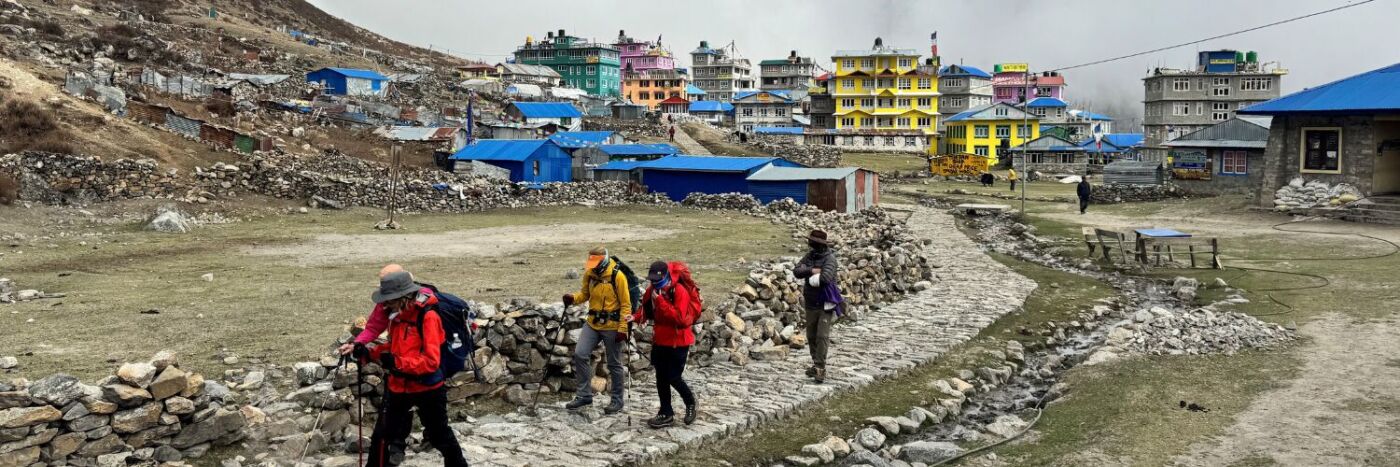
A pause in Langtang village
Walking through Langtang also brings you face to face with the valley’s history.
In April 2015, the earthquake triggered a devastating avalanche that buried much of the original Langtang village. Moving across the site is so surreal. Knowing what happened here changes how you see the ground beneath your feet and the mountains above you.
For our expedition, taking place ten years later, that remembrance was an important part of the journey.
Further along the trail, the rebuilt village brings you back into the everyday life of the valley. People welcome walkers into lodges, prepare meals and continue the work of making a home here. The loss remains part of Langtang’s story, alongside the lives being lived today, yet the resilience of the people is something to behold.
We stayed in a lodge run by a woman who had lost her husband in the disaster. Being welcomed there gave a very personal meaning to something you might otherwise know only through news reports.
As a visitor, you need to let people choose what they want to share. Listen when invited, respect their privacy and remember that this is their home. Staying in locally run lodges is one practical way your visit supports the people who make this journey possible.
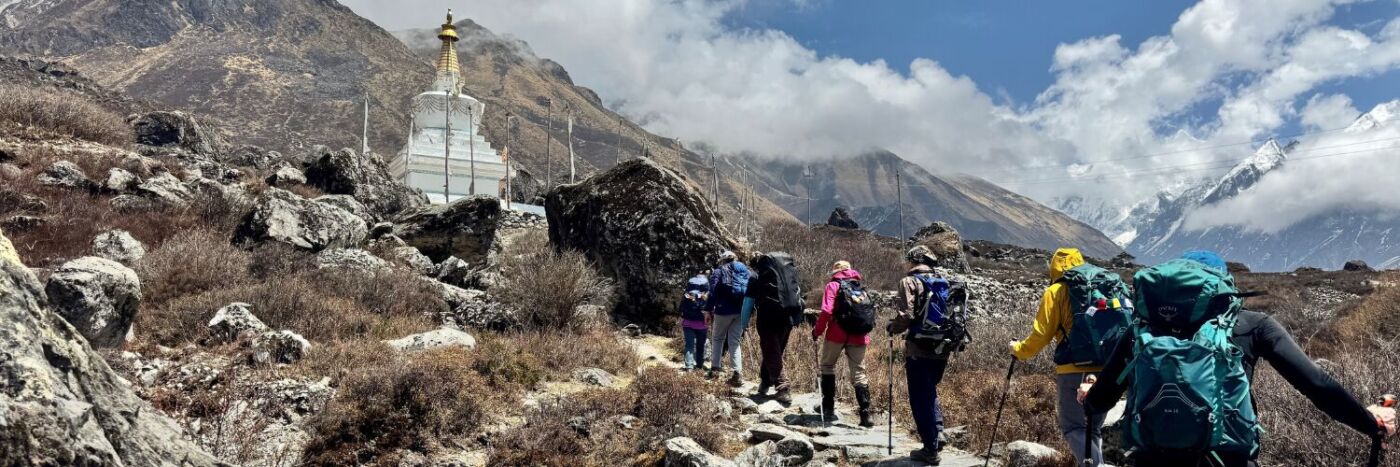
When the valley opens into the high mountains
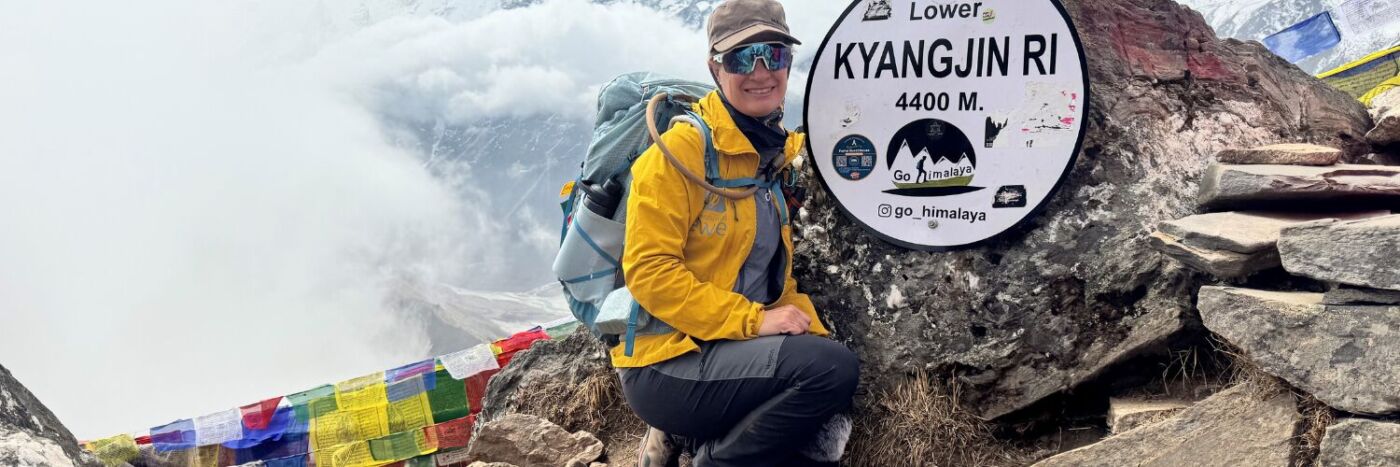
Beyond the forest, the landscape opens into yak pastures and stony trails, with snow-covered peaks filling more of your view. By the time we reached Kyanjin Gompa, we were surrounded by the mountains we’d spent days walking towards.
Here, you stay in the same lodge while heading out on acclimatisation hikes, gaining height before returning to eat and rest. These walks help prepare you for Yala, but they’re also a chance to spend time exploring this extraordinary landscape.
Higher on the trail we were fortunate to have one of the most serendipitous encounters of our expedition. We literally bumped into Leo Houlding – professional climber, adventurer, expedition leader and TV presenter – and his family as they descended from Yala Peak.
Leo stopped to chat with our team and shared his memories of meeting Junko Tabei. We’d travelled to Nepal to celebrate her legacy, and suddenly, on the trail, someone was bringing us his own recollections of her. It felt like a wonderful full-circle moment. The team hung on every word he spoke about her.
Then there was his daughter, Freya. What a star! So thoughtful, articulate and wise for her age. She wished us all the best for our summit attempt before leaving us with a wonderfully entertaining parting remark. I’ll leave that moment for you to discover in the film, More Than a Mountain!
You can plan a route and prepare for a climb, but you can’t arrange an encounter like that. It became part of our shared story before we’d even reached base camp, and another reason to appreciate the journey as it unfolded and the genuine privledges adventure travel extends.
Life together in the lodges
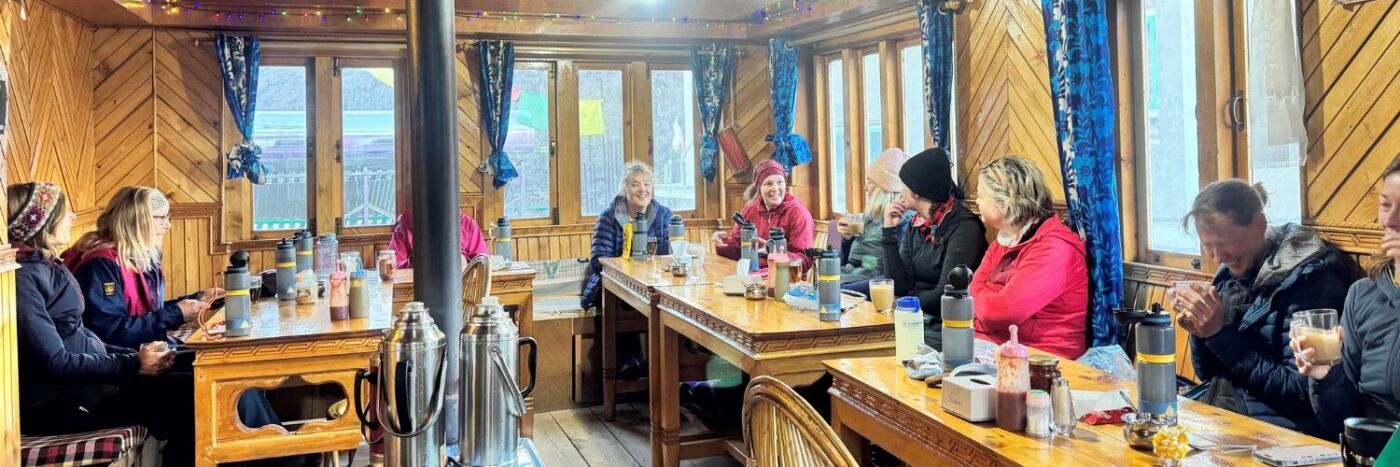
Some of my favourite memories are of spending time together in the guesthouses as we made our way to and from Yala Peak base camp. After a day on the trail, we’d gather around the lodge tables, warming ourselves beside the stove, hot drinks in hand, with time to chat.
Your accommodation is basic, with limited washing and toilet facilities, so you need to be comfortable with simple mountain living. But those shared evenings became a lovely part of our journey. Once boots were off and kit was sorted, we could settle in, reflect on the day’s walking and hear more about the women we were travelling alongside.
Conversations wandered from the mountains to life back home, with plenty of laughter and putting the world to rights. Helping one another, sharing stories and sitting together after a demanding day gave us time to grow closer as a team. Those evenings stay with me just as clearly as our time on the mountain.
Finding our rhythm at altitude
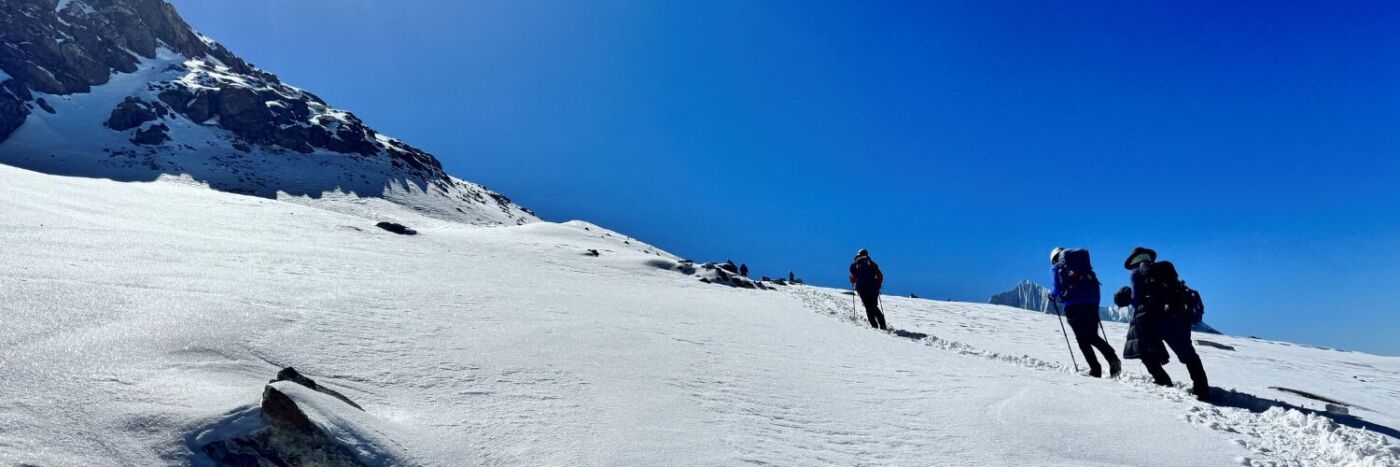
As we climbed higher through the Langtang Valley, we walked at a deliberately steady pace, giving our bodies time to adjust. With Jo and our local guides setting that rhythm, we could settle into the walking, take in our surroundings and concentrate on how we were feeling.
Around Kyanjin Gompa, our acclimatisation hikes took us higher into the mountains before returning to the lodge to eat and rest. These days were an important part of preparing for Yala, and an opportunity to explore more of the landscape we’d travelled so far to reach.
Having experienced the climb myself, I’d encourage you to arrive ready to embrace that pace. Fitness helps with the effort, but everyone responds differently to altitude. There’s no advantage in racing ahead or comparing yourself with someone else.
Just as importantly, let your leader know if you’re feeling unwell. A headache, nausea, dizziness or unusual exhaustion needs attention, even if you’re worried about holding others up. Looking after one another starts with being honest about how you feel.
Your team will guide the next steps: symptoms of altitude illness mean pausing further ascent, while worsening or severe symptoms require descent and appropriate care. Before you travel, discuss any relevant health concerns with a travel-health professional and make sure your insurance covers the climb, its maximum altitude and emergency evacuation. You can also read the UK travel-health guidance on altitude illness as part of your preparation.
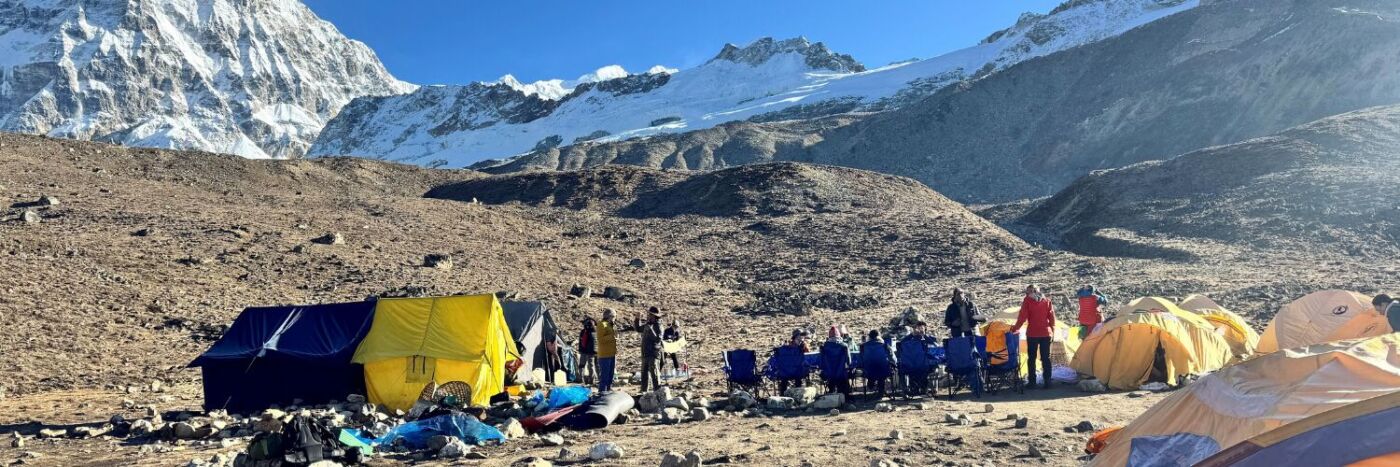
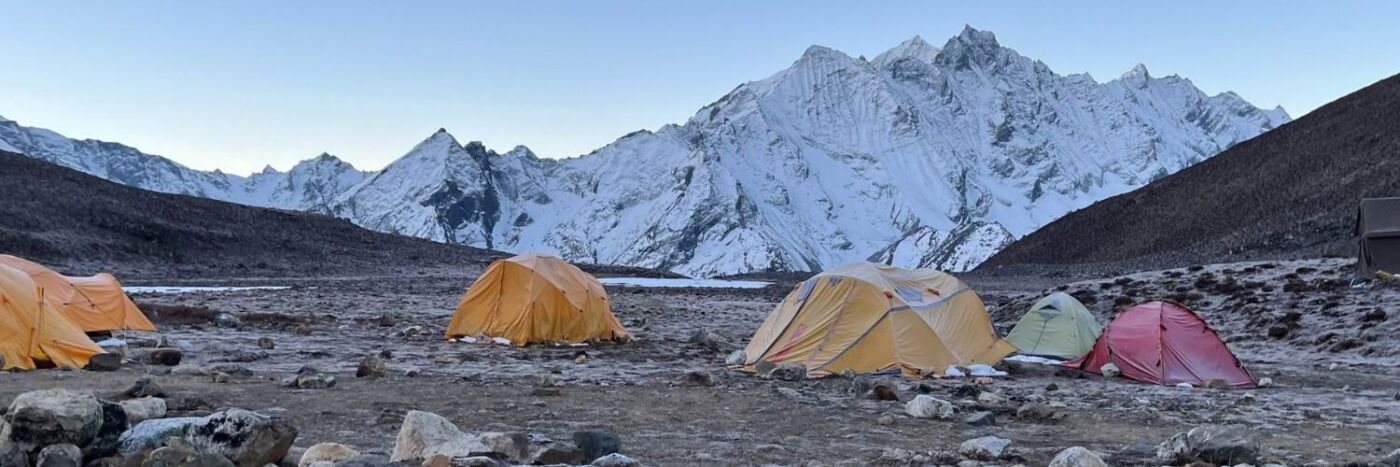
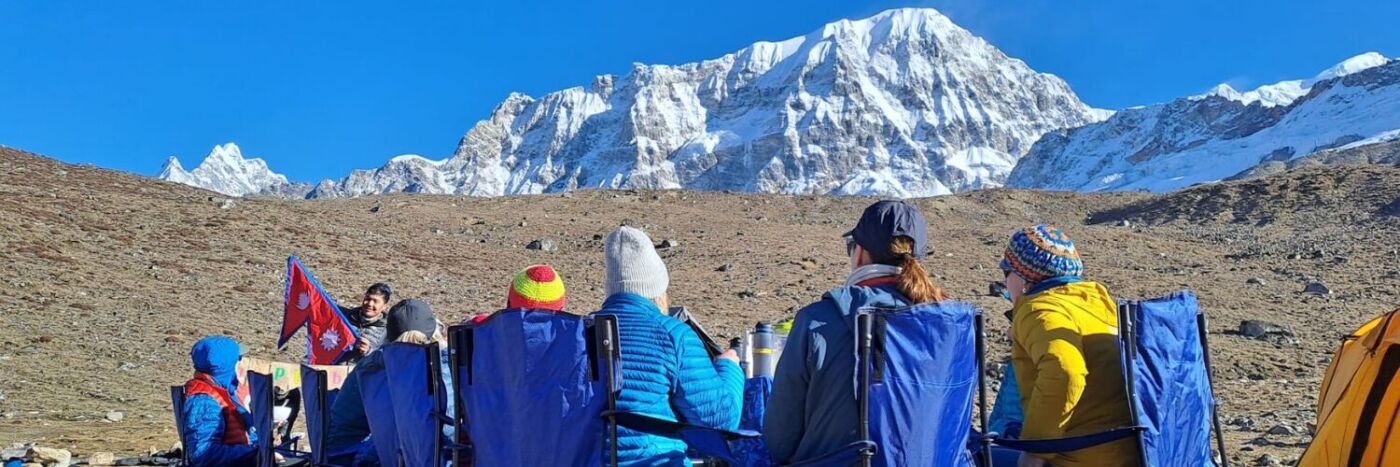
After five days of trekking, arriving at base camp was such a welcome sight. Our Nepalese crew had kindly set everything up ahead of us, with tents ready and somewhere to sit together and take in our surroundings.
And what surroundings. Camp sat in a vast mountain bowl, with jagged, snow-covered Himalayan peaks in every direction. I remember looking around, trying to absorb the sheer scale of it all. For the next couple of nights, this would be home. This is real. This is happening.
That afternoon, our local climbing guides helped the team prepare for the ascent. We practised walking in crampons, moving on fixed ropes and using jumars—handled ascenders that help you climb a rope on steeper ground. We also worked through the techniques for descending safely, taking time to ask questions and repeat the movements until the equipment felt more familiar.
Over dinner, we had our full summit briefing. There was nervous excitement around the table, and we turned in early, knowing the next day would ask a lot of us.
We left camp in darkness, headtorches lighting the ground ahead, following our guides at a steady pace. After all the anticipation, our attention narrowed to our footing, our breathing and the next few steps. The higher we climbed, the quieter the chatter became.
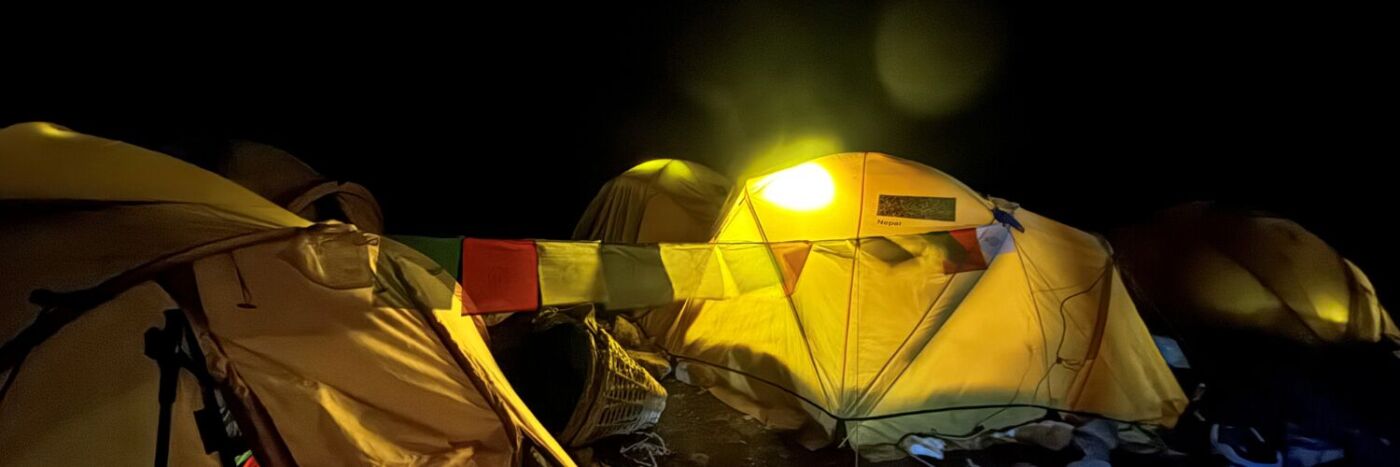
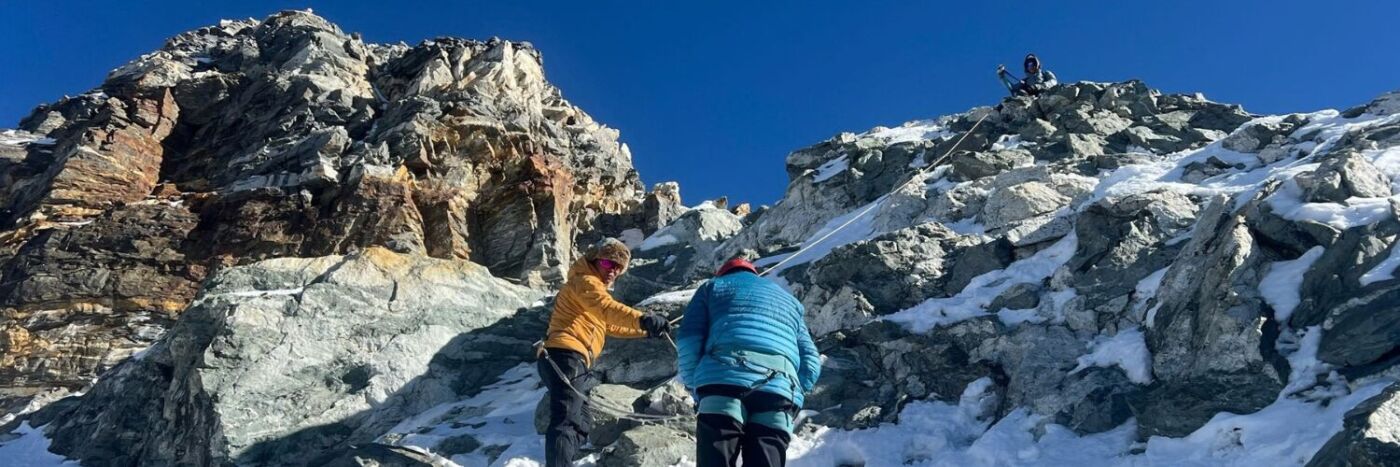
Daylight gradually revealed the mountains around us. As the terrain steepened, we put our afternoon’s practice to use, moving carefully over snow-covered slopes and rocky ground, with our climbing guides supporting us through the rope work.
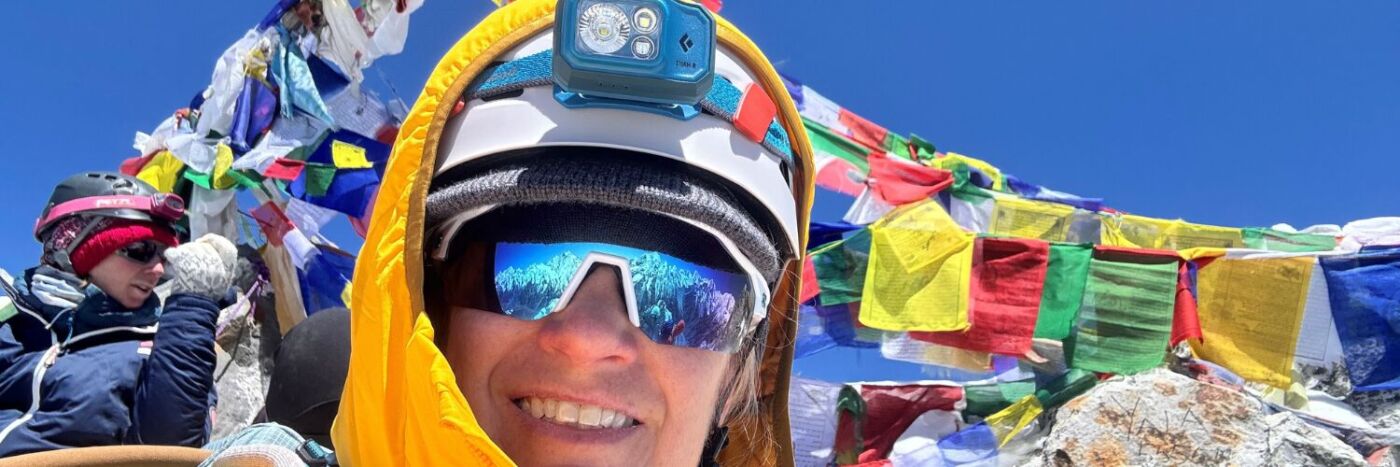
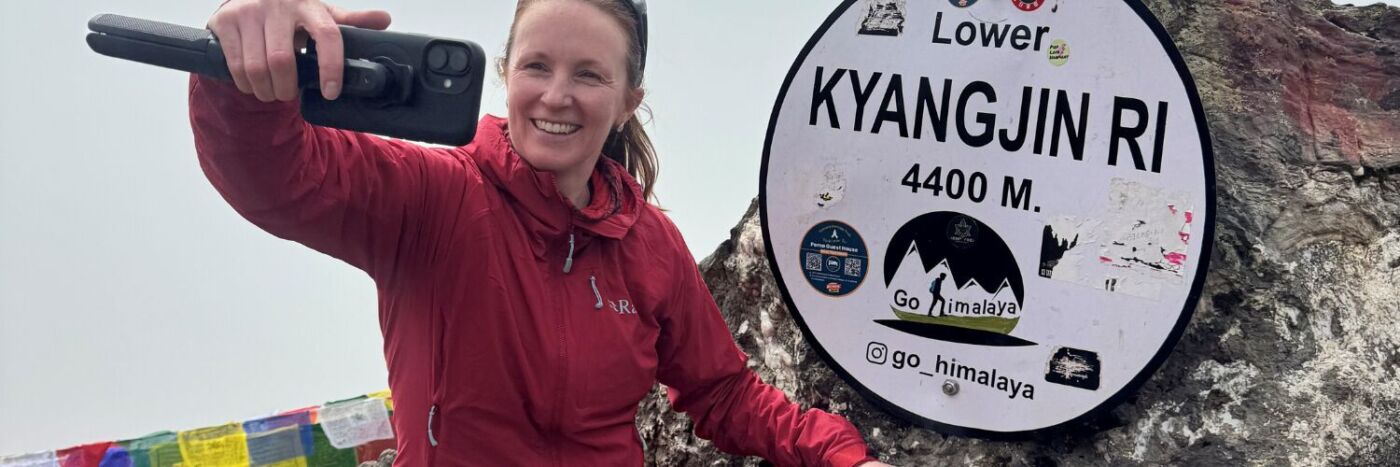
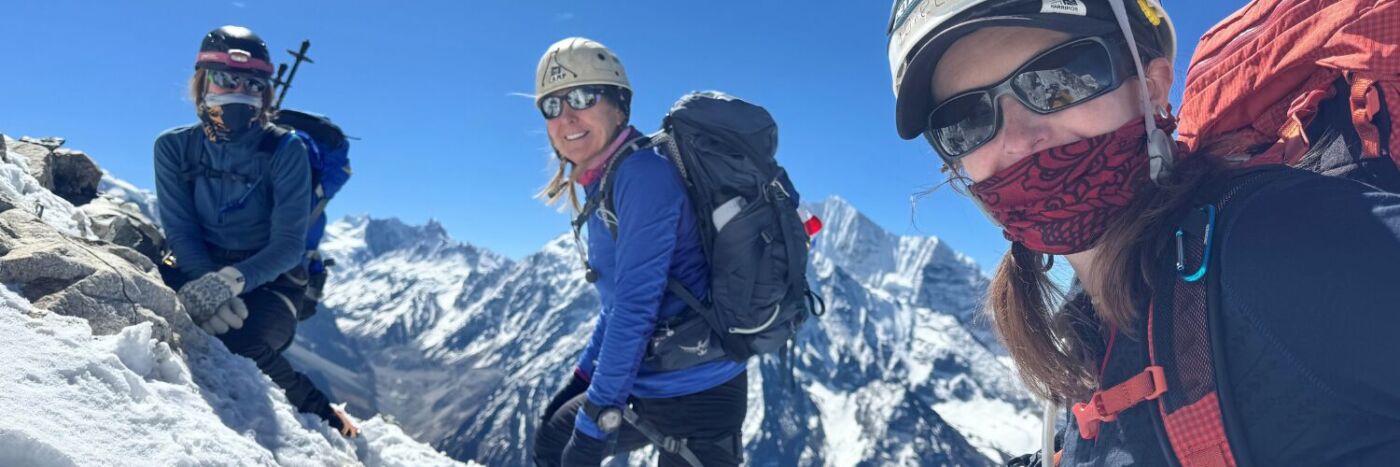
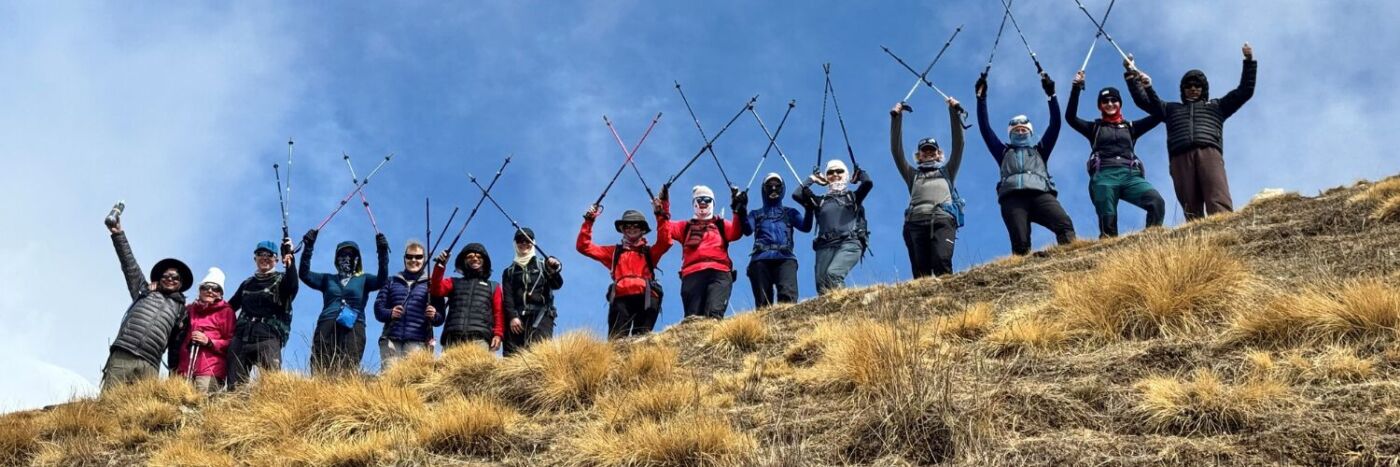
A final ridge traverse and a scramble on fixed ropes brought us to the top. One by one, the women stepped onto Yala’s small summit at 5,550 metres.
I’d joined this team to help document their experiences, and now we were huddled together in the place we’d spent days working towards. Looking around at them all, with prayer flags fluttering above us, I felt such admiration for what they’d achieved.
Then I turned to look beyond the summit, and the enormity of the Himalayas caught me completely.
It felt like sitting in a theatre, with rows upon rows of towering peaks stretching into the distance. Each had something happening around it: clouds gathering against a ridge, sunlight catching a rock face, wind lifting snow from a summit. I kept looking from one to another, trying to take it all in.
I felt small and expansive at the same time. Surrounded by nature at its finest, alongside people giving so much of themselves to be there. My thoughts returned to Junko and the tenacity it must have taken to climb here all those decades ago. Standing on that terrain brought her story closer in a way I hadn’t quite expected.
After around fifteen minutes, it was time to leave. One by one, the team began descending the fixed rope towards the ridge below. Being the last off the summit gave me a few precious moments to record a personal video for my young nephew and niece in Australia. I wanted to share something of the world spread out around me, hoping it might spark their curiosity to explore it for themselves one day when they are old enough.
Then it was time to concentrate on getting down and removing the fixed ropes. Summit day can take 12 hours or more, and you need energy in reserve for the return. On tired legs, careful footing and concentration matter every bit as much as they do on the ascent.
We were fortunate to reach the top together, but every summit attempt depends on the weather, conditions and the team’s wellbeing. Our itinerary includes a contingency day, and your guides will adapt plans when needed. You set out hoping to reach the summit, with everyone’s safe return guiding the decisions along the way.
The people who make Langtang feel like home
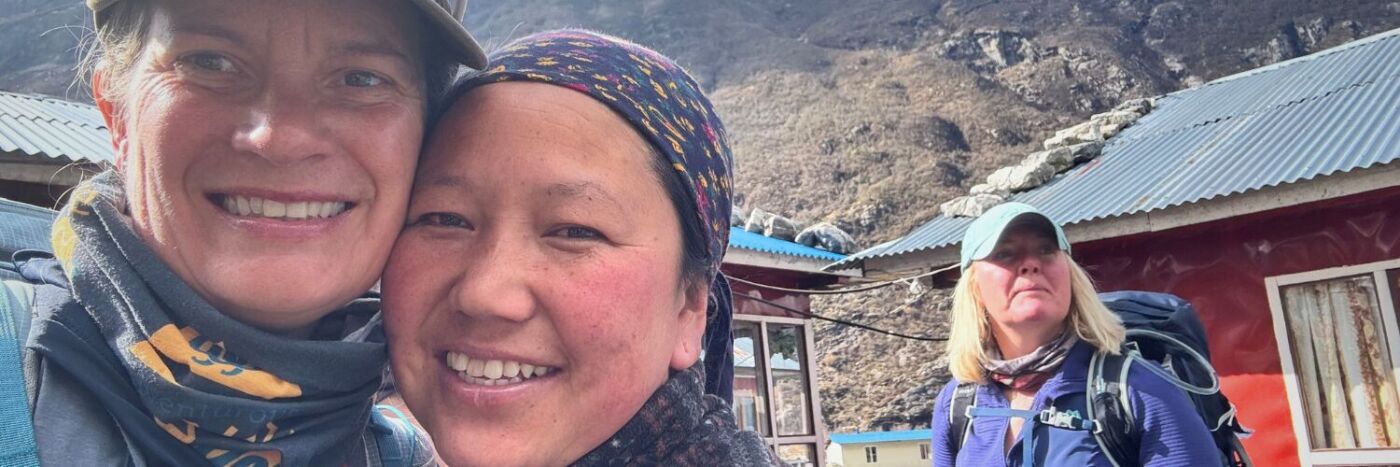
The people you meet along the Langtang trail are a huge part of what makes this trek so special. I was touched by the gentleness and warmth with which we were welcomed into their lodges and daily lives. A smile at the doorway, a meal prepared after a long day’s walking, time taken to make us feel at home and a warming hug goodbye to wish us well. In a valley that has endured such loss, that kindness sits alongside remarkable strength and resilience. It’s a privilege to spend time here, and those encounters stay with me just as vividly as the mountains.
Could Yala be your next Himalayan adventure?
Perhaps you’ve trekked to Everest Base Camp or completed the Annapurna Circuit, and Nepal has left you wanting more. Or you’re an experienced mountain walker dreaming of your first Himalayan summit? Yala Peak offers you the chance to explore the Langtang Valley, develop climbing skills and work towards a summit surrounded by mountains stretching into Tibet.
If crampons, jumars and fixed ropes are new to you, there’s time to learn. Before the ascent, your local climbing guides help you practise the techniques, handle the equipment and ask questions. You bring your trekking experience, fitness and willingness to learn; we help you prepare for the next step.
Having climbed Yala myself, I’d encourage you to look beyond what you already know how to do and consider what you’d like to work towards. With thoughtful preparation and experienced support, this could be your opportunity to move from trekking through the Himalayas to standing on a summit of your own.
It is a demanding expedition. We grade it as Extreme, reflecting the consecutive trekking days, high altitude and summit ascent. You’ll need to prepare for long mountain days and keep energy for the descent. If you’re unsure whether your experience is enough, feel free to get in touch. I’m more than happy to chat through what the journey involves and how you can build towards it.
Yala’s quieter setting also adds to its appeal. On our summit attempt, we didn’t see another group. We had the whole peak to ourselves, which made standing there together feel even more special. That solitude can’t be promised, but our experience shows what draws me to this corner of Nepal: space to explore, people to connect with and a mountain that gives you something worth working towards.
What ‘More Than a Mountain’ brings to the story
Our documentary brings together Junko Tabei’s legacy and the personal experiences of the women who joined the expedition.
It also shows the everyday reality of the journey: arriving in Nepal, walking through the valley, sharing lodge life, preparing equipment and working towards the summit. You see the adventure unfolding through the people taking part.
For me, helping document those experiences while climbing alongside the team made the project deeply personal. I knew the women in front of the camera through the days we were sharing.
The film premiered on the opening night of Kendal Mountain Festival in November 2025. And it now has a whopping eight film festival laurels:
- Best Short Documentary winner: Hollywood Best Indie Film Awards.
- Best Short Documentary: Luleå International Film Festival Sweden.
- Honourable mentions: Los Angeles Film & Documentary Awards; LA Film & Music Video Awards.
- Official selections: Kendal Mountain Festival; London Mountain Film Festival; Women in Film & Television, Cyprus; Dundee Mountain Film Festival; Lulea Film Festival, Sweden.
Each screening creates another opportunity to share Junko’s story and the experiences of our team.
You can find the trailer and screening information on Jo Bradshaw’s More Than a Mountain page, and the full recognition update on Tori James’s website. And the film will be launched on Adventurous Ewe’s YouTube channel soon. Watch this space!
Preparing for your own journey
Your Yala adventure begins well before you arrive in Nepal.
The walks you make time for at home help build the stamina and confidence you’ll draw on in the mountains.
Gradually extend your days on hills and uneven ground, carrying the daypack you’ll use on the expedition. Include back-to-back walks to get used to setting off again with tired legs, and give the descents as much attention as the climbs. Wear your boots regularly and try your layers in different conditions so your kit feels familiar when you need it.
You’ll also have our support as you prepare. Tell me about the walking you’ve done, what excites you about Yala and anything that makes you hesitate. Having climbed it myself, I can talk you through the experience and help you understand what to work towards.
That personal conversation is part of travelling with our small, family-run team. You don’t need to arrive with every question answered or every piece of kit bought. We’ll help you prepare so that, when departure comes, you can look ahead to Nepal with confidence and excitement.
Could Yala be your next adventure?
Whether you’re dreaming of your first Himalayan summit or returning to Nepal to explore somewhere different, Yala gives you plenty to work towards: new mountain skills, a demanding climb and time to get to know the Langtang Valley.
You’ll need to prepare for long days, simple accommodation and the flexibility that mountain travel asks of you. In return, you have the opportunity to share a journey shaped by the landscape and the people you meet along the way.
For me, those people are at the heart of it all. The warmth and generosity of the families who welcomed us into their lodges, and the knowledge, patience and care of our local guides and crew, made this expedition what it was. Their home became the place where we learnt, shared stories and worked towards our summit.
I’ll also carry with me the colours of the valley, our pause at Langtang village, evenings around the lodge tables and that chance meeting with Leo and Freya Houlding. And, of course, the women I stood beside on Yala’s summit, including Jo and Tori, whose encouragement helped me discover a new love for filming and develop the skills to capture our stories and shared moments. I’m so grateful to them and every woman in the team for their support, their openness and their willingness to be part of such a special documentary. Helping bring our journey to life through More Than a Mountain became one of the great joys of the expedition for me.
If Yala has sparked your curiosity, I’d love to support your journey too. Explore our Yala Peak Expedition itinerary, or email me at susan@adventurousewe.co.uk. Whether you’re ready to join or still wondering if it’s for you, we can chat through your questions and help you prepare for your own Himalayan adventure.
Thanks for taking the time to share a little of this journey with me. I hope it’s sparked your curiosity about Yala and the people who make it so special.
Sue