- Overview
- Map & Itinerary
- Essential Info
- Pics & Vids
- Dates & Prices
Highlights
-
Private Expedition for Aspire Life in support of Mind Dorset
-
8-day Lemosho route designed for better acclimatisation
-
Summit Africa’s highest peak at 5,895m
-
Led by a UK High Altitude Mountain Leader
-
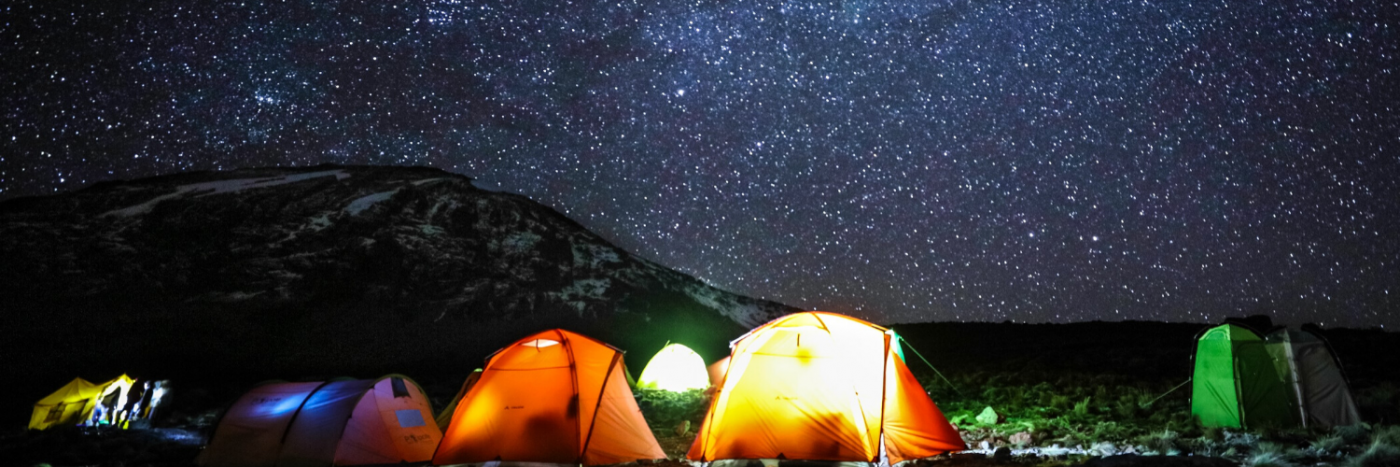
Camp under vast star-filled skies and the Milky Way
-
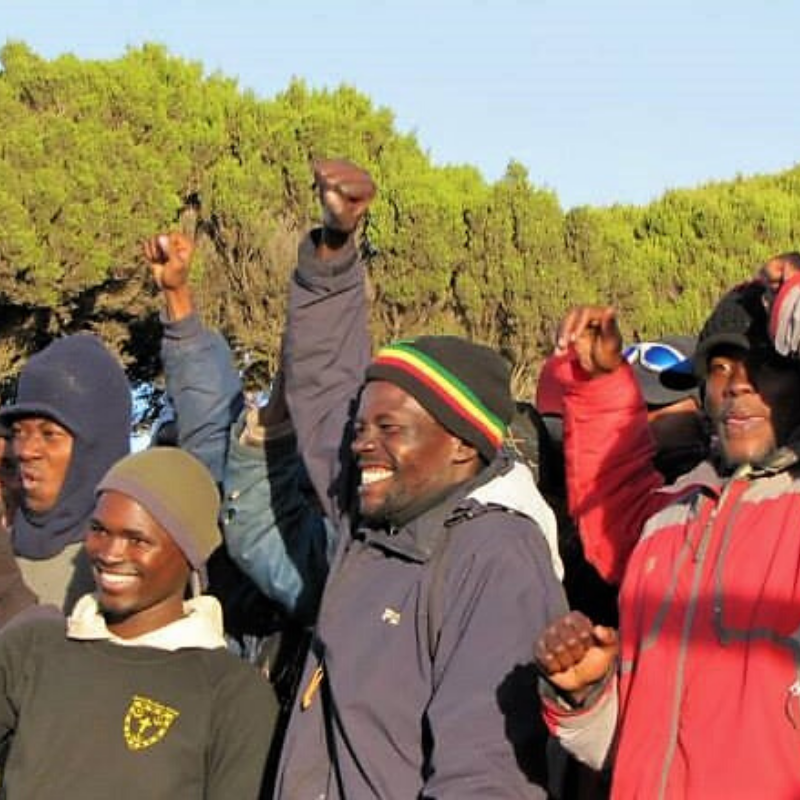
Experience unwavering support from a dedicated local crew
-
Free Water-to-Go bottle to reduce plastic use in Tanzania
- Optional extensions: 1–3 day safaris, cultural experiences or Zanzibar.
Overview
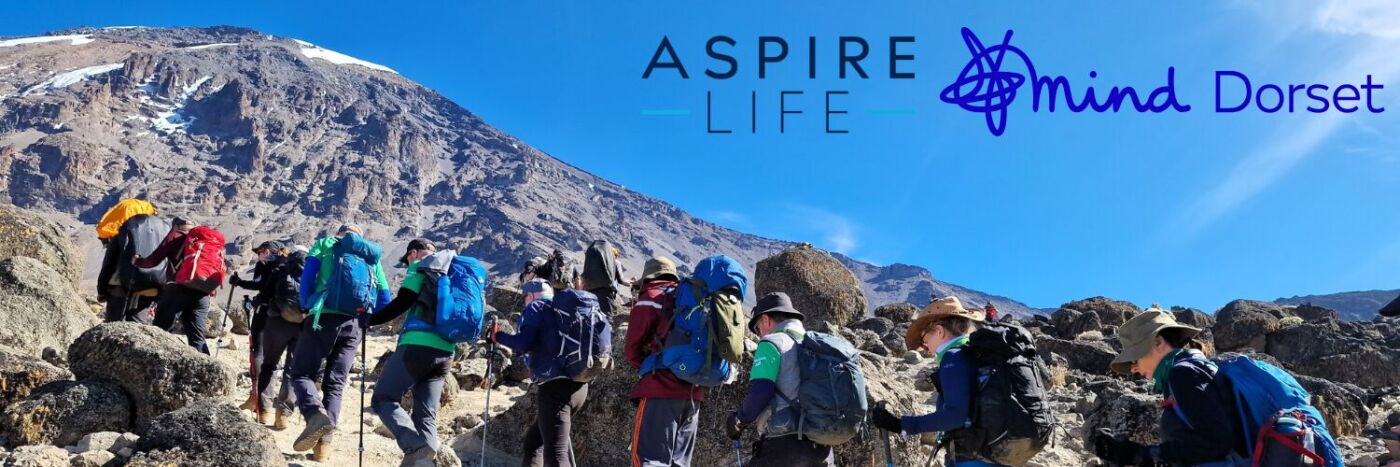
This private Kilimanjaro expedition has been created exclusively for colleagues of Aspire Life in support of Dorset Mind, bringing your team together for a powerful shared challenge with a meaningful purpose. A dedicated sponsorship package has been designed to help you make a genuine impact while taking on one of the world’s great mountain journeys.
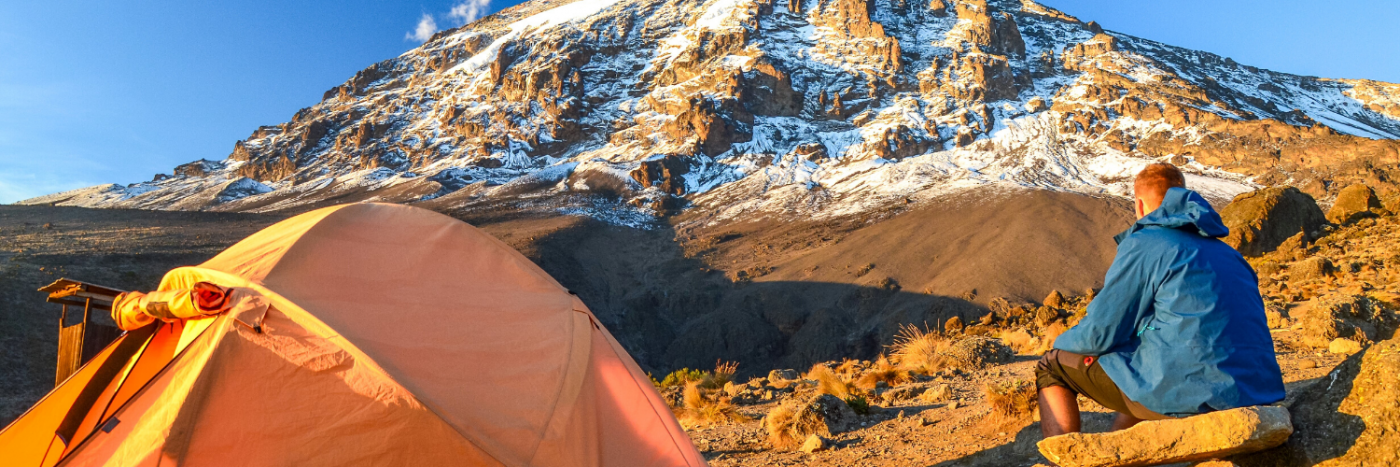
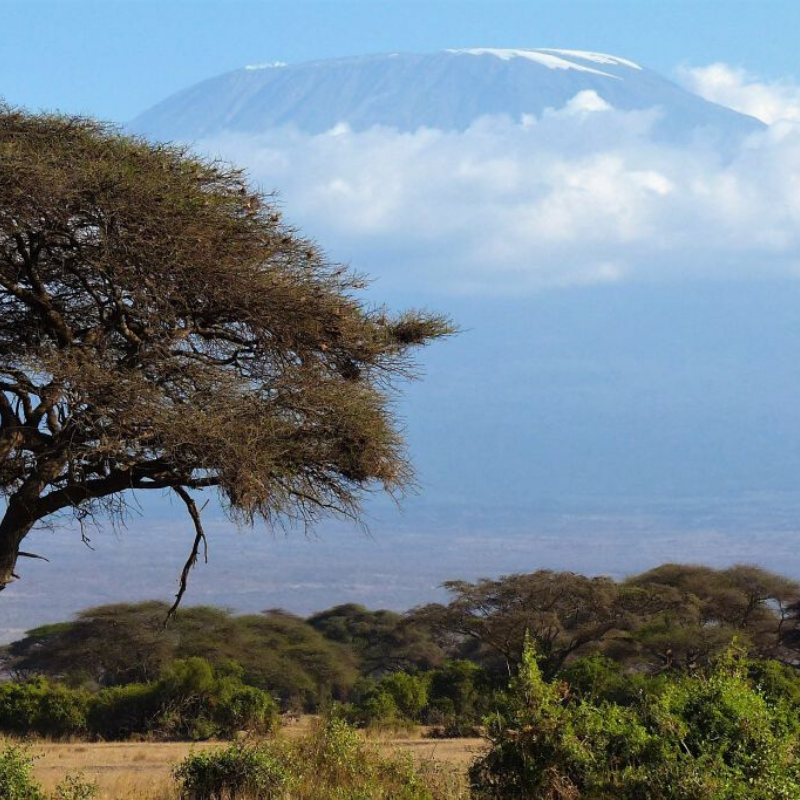
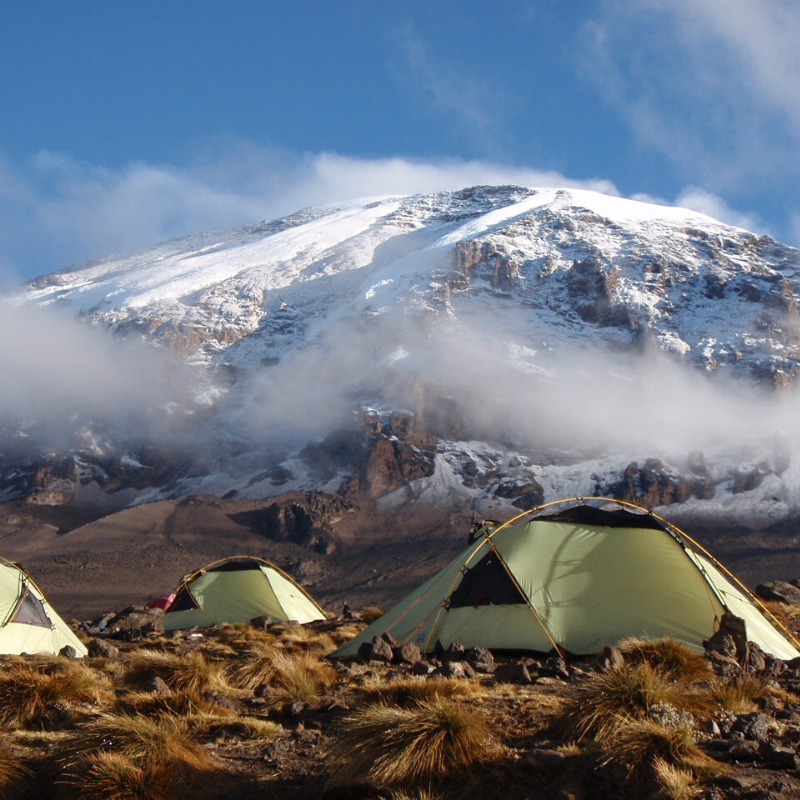
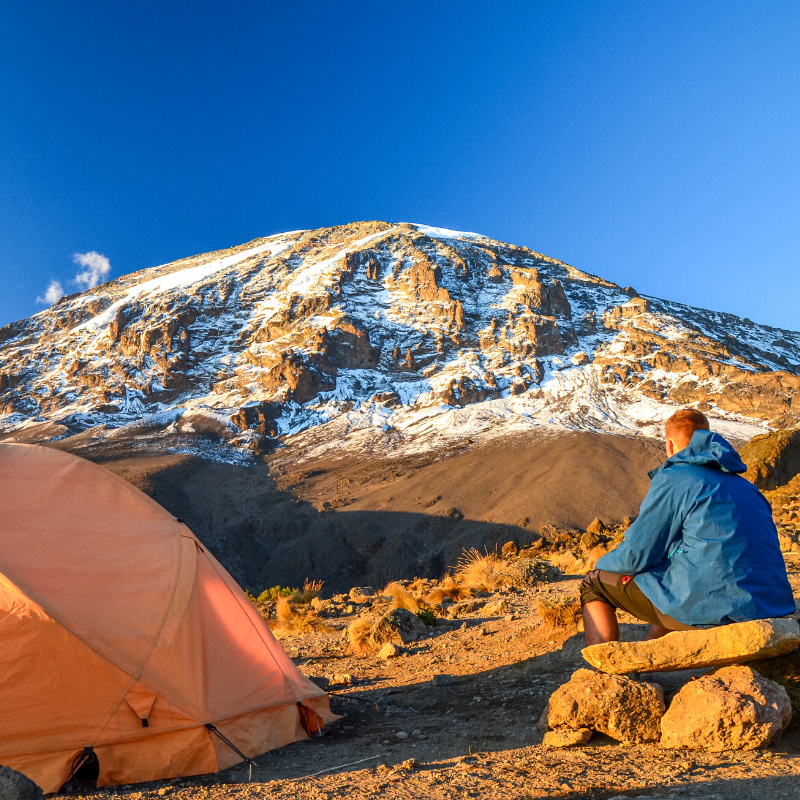
Kilimanjaro rises from the plains of northern Tanzania to 5,895m, its bright glaciers spilling from the summit of Kibo and its slopes shaped by three ancient volcanic cones – Shira, Mawenzi and Kibo. As the world’s highest freestanding mountain, it offers a trekking experience unlike anywhere else.
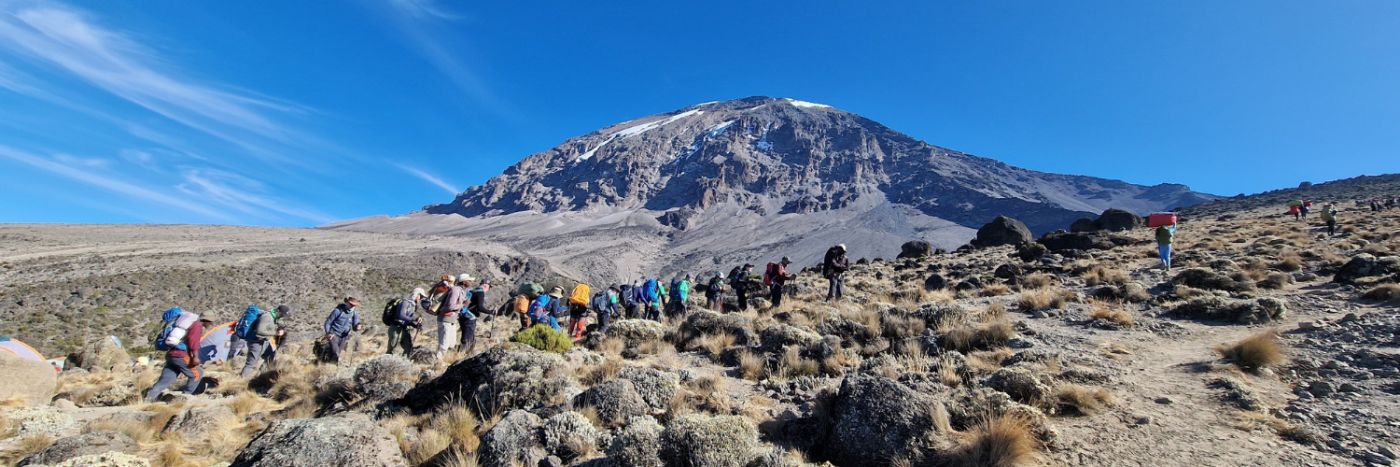
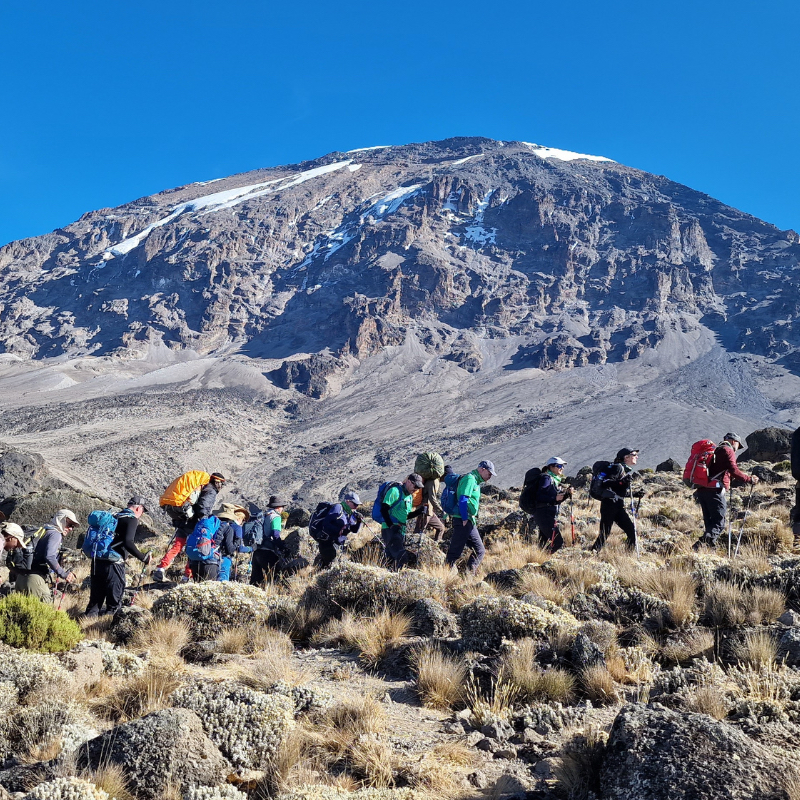
Your ascent follows a carefully designed 8-day route that allows you to acclimatise gradually as you move through five distinct climate zones: lush rainforest, heath, moorland, high alpine desert and finally the icy arctic terrain leading to the crater rim. It’s a journey where the landscape changes dramatically day by day, revealing the scale and beauty of the mountain.
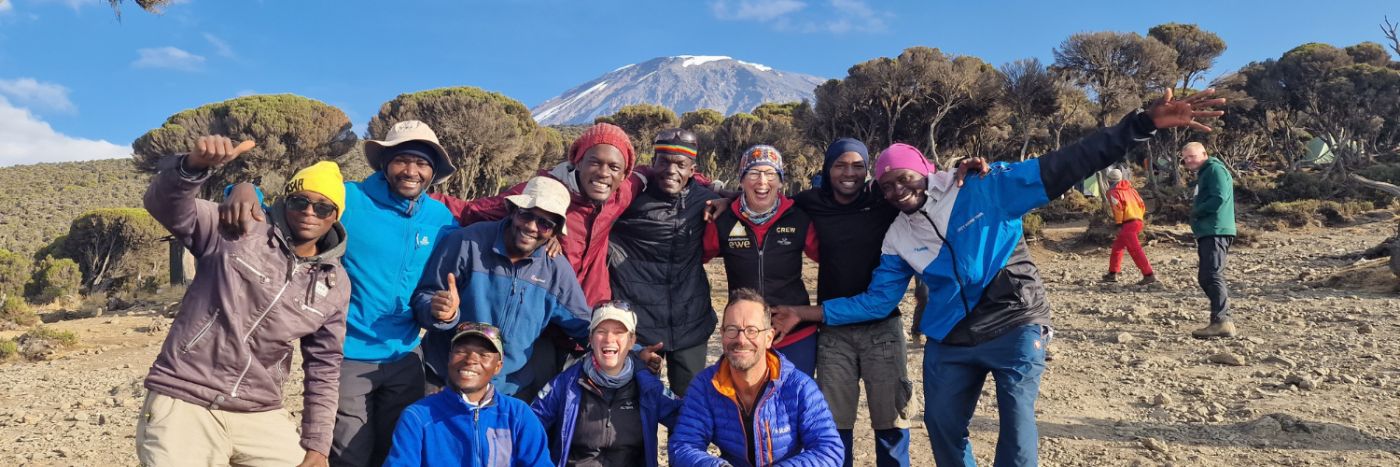
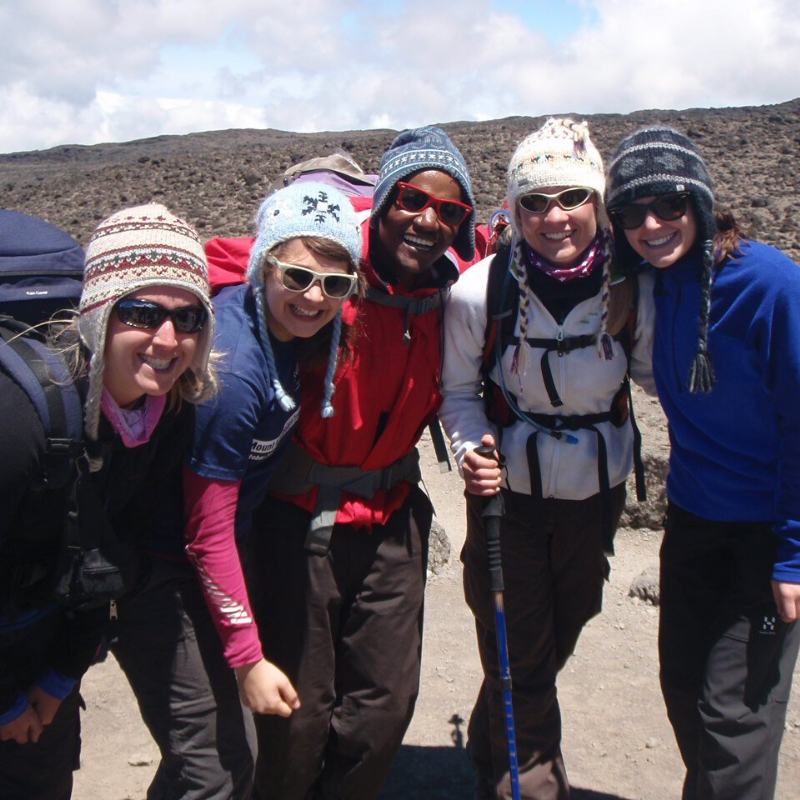
You’ll be supported throughout by a highly experienced UK High Altitude Mountain Leader and an exceptional local crew whose energy, warmth and knowledge bring the mountain to life. Reaching the summit at sunrise, with the glaciers glowing gold beneath you, is a moment that stays with you for years – a mix of pride, awe and quiet reflection.
With Adventurous Ewe’s commitment to porter welfare, responsible travel and environmental support through Cool Earth, you’ll climb Kilimanjaro in a way that respects the mountain, its people and the wider environment – making this an experience that’s both extraordinary and meaningful.
Costs & Sponsorship Structure
Deposit: £295 per person — paid on booking and non-refundable
Part Payment: £1,525 per person — paid by the participant 60 days before departure
Part Payment: £1,525 per person — paid by Mind Dorset 60 days before departure
Total Trip Cost: £3,345 per person
Sponsorship Pledge: £3,050 per person — to be raised by each participant and sent directly to Mind Dorset
Fundraising Timeline
80% of the sponsorship (£2,440pp) must be received by Mind Dorset no later than 60 days before departure, ensuring the charity contribution towards trip costs is fully covered.
The remaining 20% (£610pp) must be received within 30 days of the team returning.
Arrival at Kilimanjaro and trek preparations
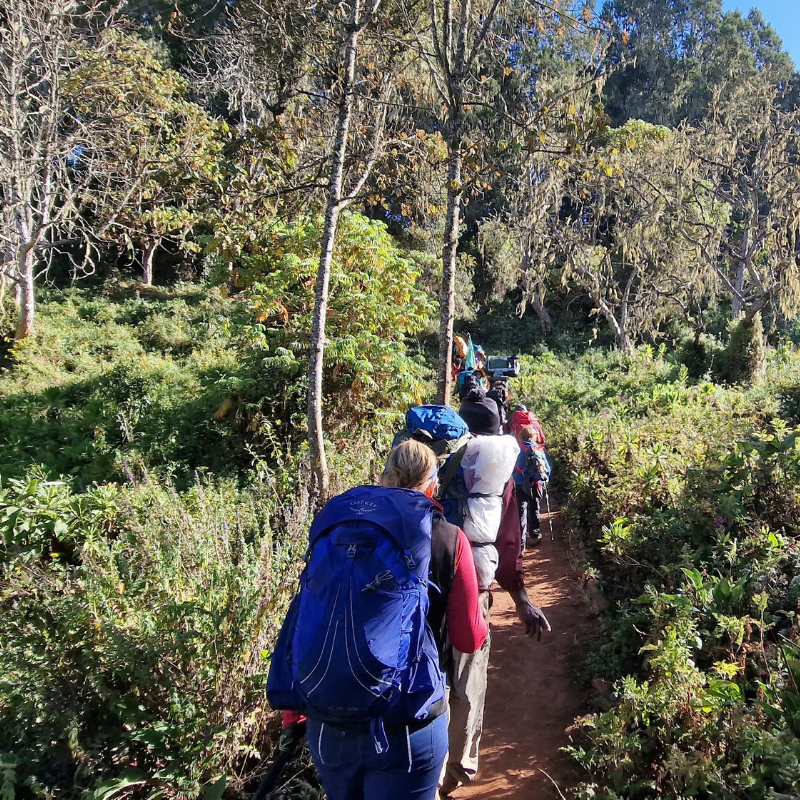
Begin the climb: Trek Lemosho Glades (2385m) to Big Tree Camp (2780m)
After breakfast at your hotel, you will be transferred to the quieter Londorossi Gate on the west side of Kilimanjaro. The road heads out of town passing between the slopes of Kilimanjaro and the horseshoe-shaped volcanic crater of Mt. Meru.
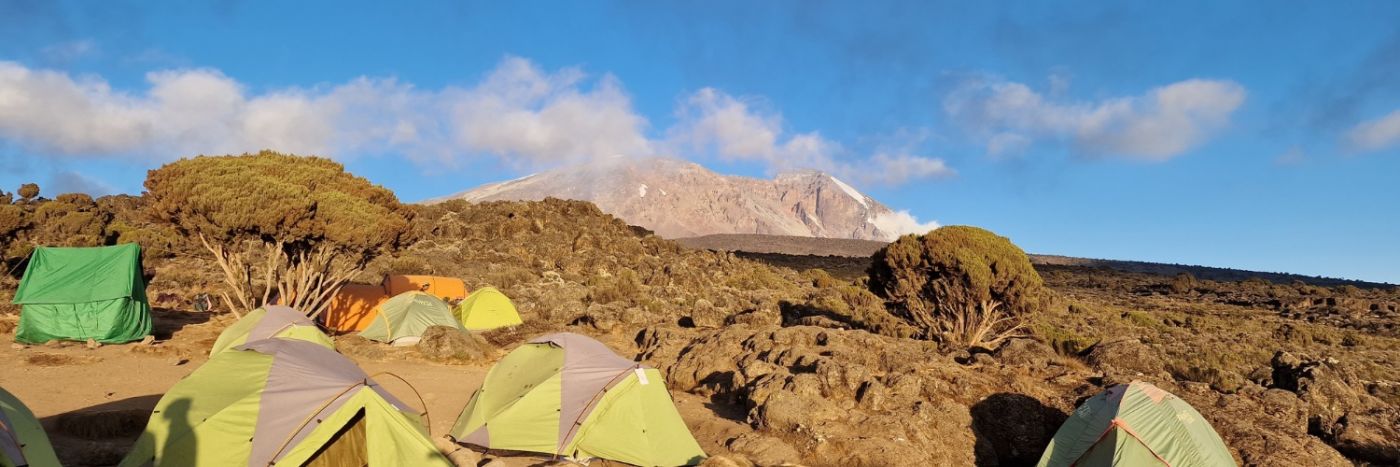
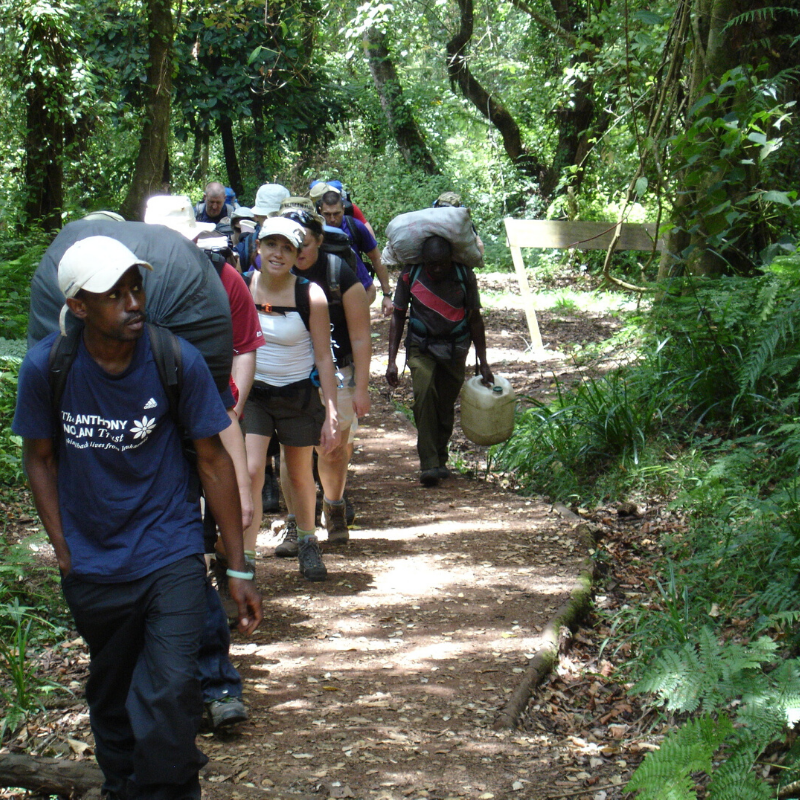
After completing the necessary registration formalities, it’s a short drive through farmland and plantations that thrive in this area with fertile soil of the mountain’s lower slopes to reach the Lemosho roadhead. The last 5km of the road to the park gate is along a track and all part of this great adventure. With meeting the local team and seeing the impressive sight of them organising all the food and kit, you’ll have lunch in the glades before starting your Kili trek. It’s the ideal first day on the mountain with slight gain in altitude taking approximately 4 hours through plantation pine forest and remnant rainforest, to arrive at camp mid to late afternoon. Your first camp on Africa’s greatest peak is at Miti Kubwa (Big Tree) camp at 2780 metres.
Distance covered: approx. 7kms / 4.3miles
Trekking time: approx. 4 hours
Included
Transfers: From hotel to Londorossi Gate
Accommodation: 3 season mountain tents (twin share basis)
Meals: Breakfast, lunch and dinner
Trek Big Tree Camp (2780m) to Shira 1 Camp (3500m)
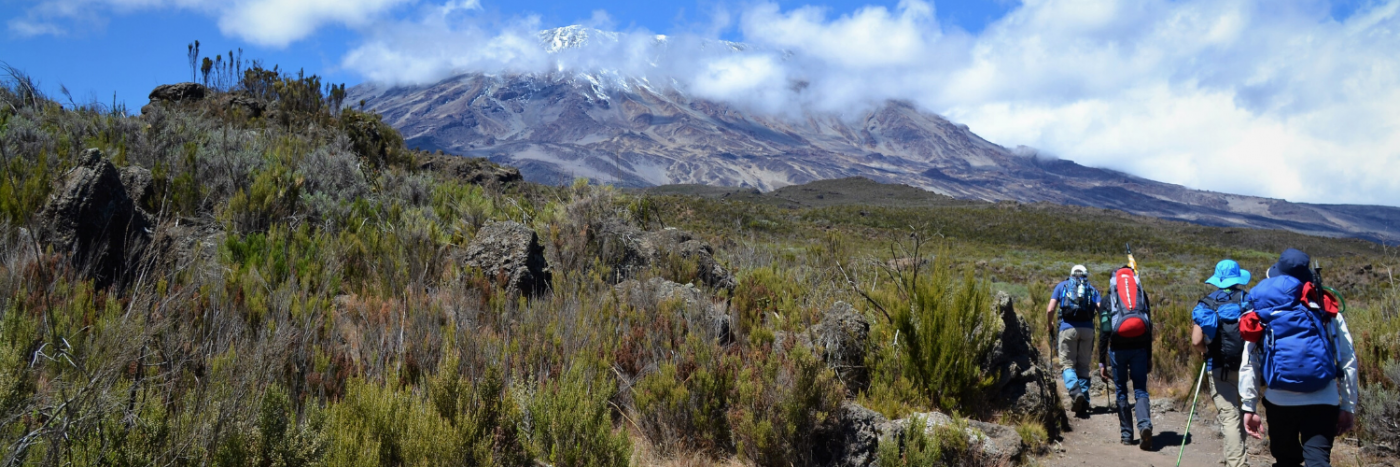
Today your route takes you across a plateau of grassy moorland and heather scattered with volcanic rock formations. Your destination for the day is Shira 1 Camp from where there are often views of Kibo Peak floating above the clouds. There is the chance of seeing some wildlife here, especially birds of prey, including the Auger Buzzard. The team will gain a reasonable amount of altitude on this day and parts of the route are fairly steep.
Distance covered: approx. 8.5kms / 5.3miles
Trekking time: approx. 7 hours
Included
Accommodation: 3 season mountain tents (twin share basis)
Meals included: Breakfast, lunch and dinner
Trek Shira 1 Camp (3500m) to Shira 2 Camp (3900m)
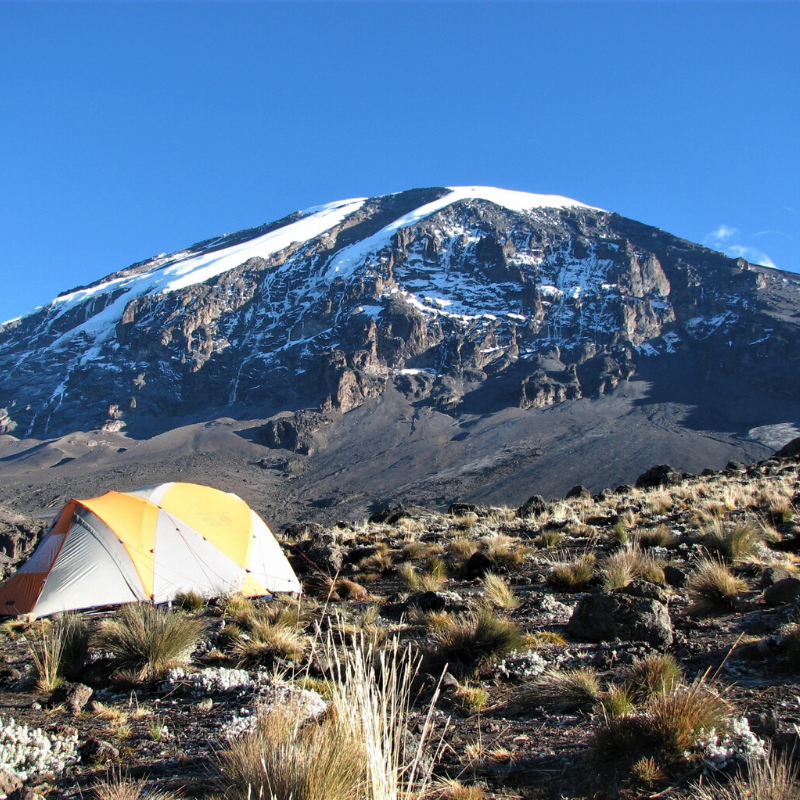
Today you will get the chance to view the Northern Ice fields from the western side of the mountain with some impressive views of Kibo. Your route continues across the Shira Plateau which is the remains of the Shira Caldera, Kilimanjaro’s oldest volcano (which last erupted around 700,000 years ago). This whole area was then submerged by eruptions from the much younger Kibo eruptions of 100,000 to 200,000 years ago. Enjoying a well-paced day of trekking with a steady climb gives you plenty of opportunities to adjust to the demands of hiking at altitude whilst also absorbing the stunning scenery of Africa’s highest peak! You are likely to see some interesting fauna and flora, particularly the White Naped Raven. To further aid your acclimatisation you will do a 200m ascent of Shira Cathedral (3872m), a huge buttress of rock surrounded by steep spires and pinnacles with vast views down to the rainforest below. Today’s destination is Shira 2 Camp where you will have full view of Uhuru Peak.
Distance covered: approx. 8kms / 5miles
Trekking time: approx. 5 hours
Included
Accommodation: 3 season mountain tents (twin share basis)
Meals included: Breakfast, lunch and dinner
Trek Shira 2 Camp (3900m) to Barranco Camp (3960m)
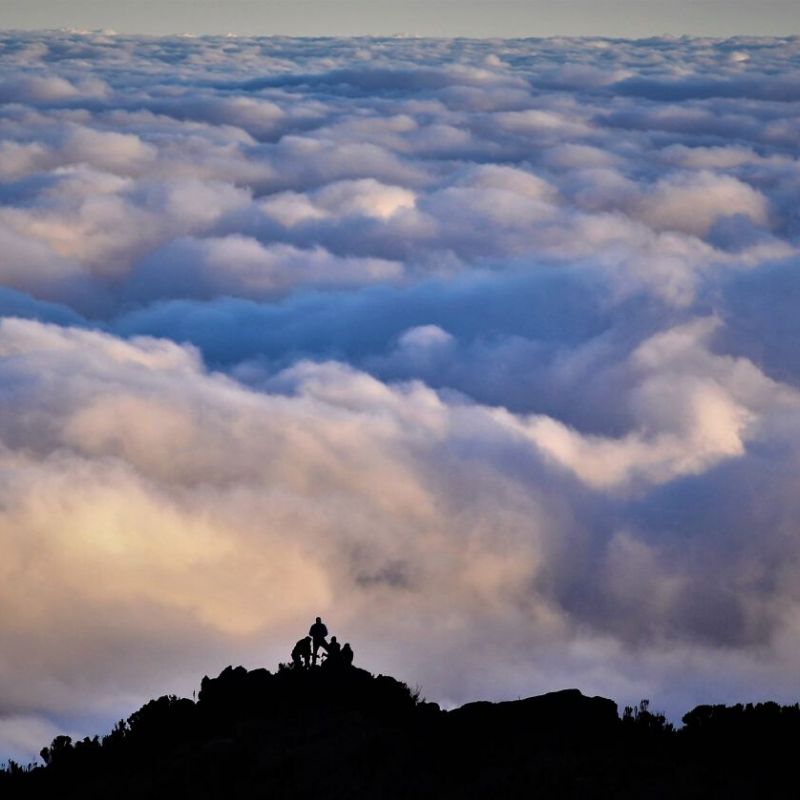
Today you will break the 4000m mark on your ascent as you enter the next climatic zone on Kilimanjaro, the low alpine desert. Your path traverses the lava ridges beneath the glaciers of the Western Breach, where you will be rewarded with far-reaching panoramic views. With reaching the distinct pinnacle of the Lava Tower (4640m), the highest point of the day, you will have lunch nearby to help with your acclimatisation. In the afternoon you will make a steep descent to your camp located at the base of the Great Barranco Valley (3960m) which is sheltered by towering cliffs and with extensive views of the plains far below. This is known as climbing high, sleeping low and is vital to helping with your acclimatisation.
Distance covered: approx. 10kms / 6.2miles
Trekking time: approx. 7 hours
Included
Accommodation: 3 season mountain tents (twin share basis)
Meals included: Breakfast, lunch and dinner
Trek Barranco Camp (3960m) to Karanga Camp (3963m)
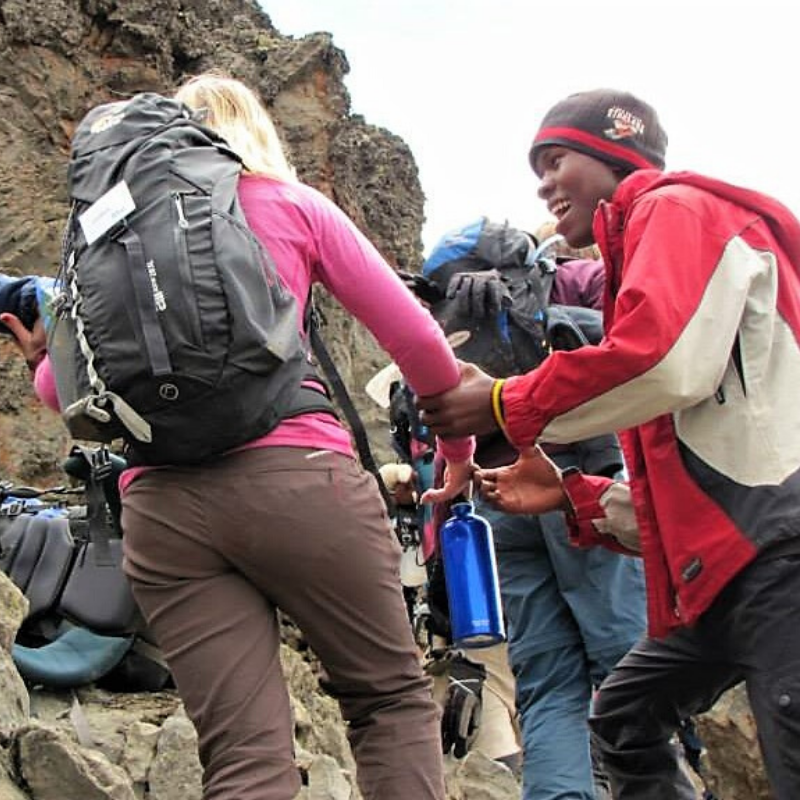
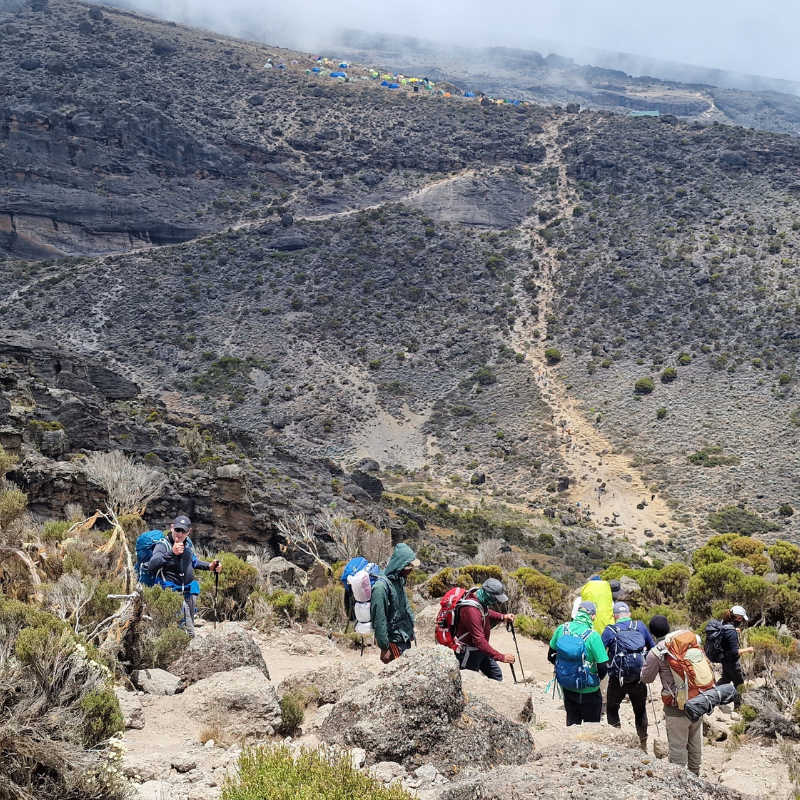
A short steep climb up the famed Barranco Wall following a line in this rock barrier will take you up onto the southern slopes of Kibo. Whilst the ascent is not technical there are a few sections where the Guides and support team will be there to help you negotiate some of the steeper areas. On a clear day you will be rewarded with some of the greatest views on Africa’s highest peak. Your path then leads along an undulating trail on the south-eastern flank of Kibo, with superb outlooks of the southern icefields. Passing underneath the Heim and Kersten glaciers, you will then head towards the Karanga valley to camp at Karanga set at 3963m. For those feeling strong there is a mid-afternoon acclimatisation trek to around 4200m before descending back to camp for the night.
Distance covered: approx. 5.5kms / 3.4miles
Trekking time: approx. 5 hours
Included
Accommodation: 3 season mountain tents (twin share basis)
Meals included: Breakfast, lunch and dinner
Trek Karanga Camp (3963) to Barafu Camp (4640m)
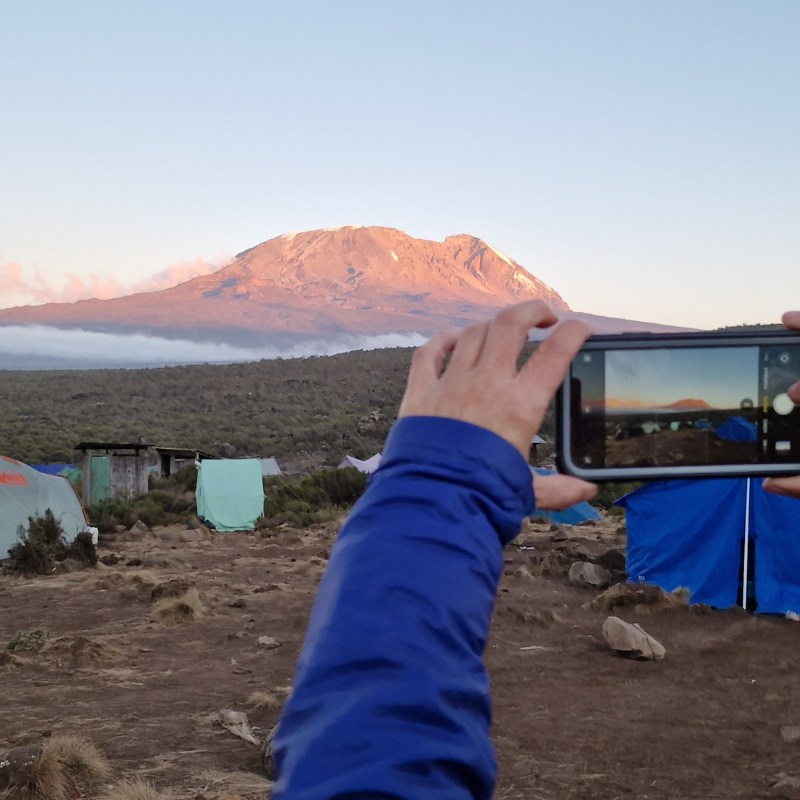
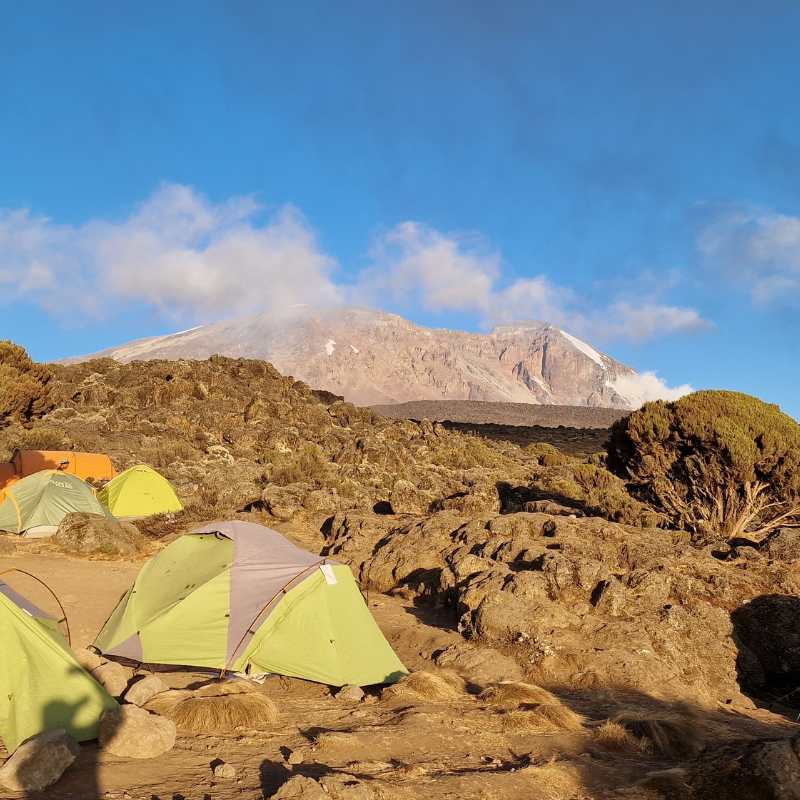
After a good night’s rest and breakfast, you will set off across the rugged volcanic wilderness to Barafu camp at 4640m. The climb takes you across desolate scree slopes with no vegetation. The views become more spectacular with the height gain above the clouds. You will overnight at Barafu camp. With Kibo rising above you to the north and good views of Mawenzi Peak, the eastern-most summit of Kilimanjaro it’s certainly a memorable camp location and will be your base for the final push to the summit. On arriving at camp you will have lunch and spend the afternoon resting as you prepare for a long night and day ahead. It is important to keep hydrated and warm. You will have an early dinner and then try to get some sleep as you will be getting up between 11pm and 12am to start the climb to the summit.
Distance covered: approx. 3kms / 1.9 miles
Trekking time: approx. 3 hours
Included
Accommodation: 3 season mountain tents (twin share basis)
Meals included: Breakfast, lunch and dinner
Trek Barafu Camp (4640m) to UHURU PEAK (5895m) & down to Millennium Camp (3790m)
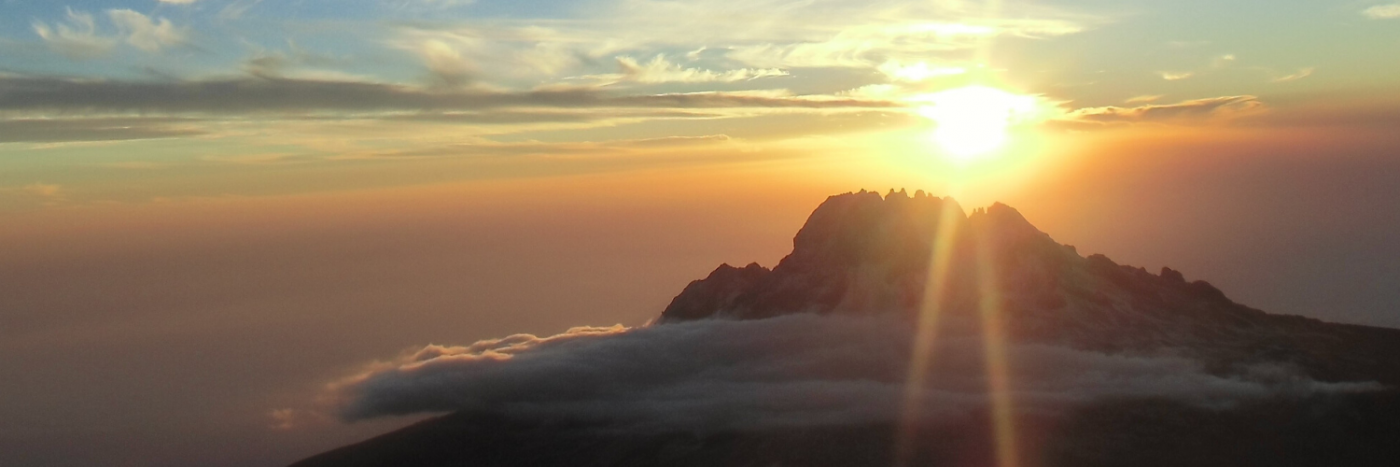
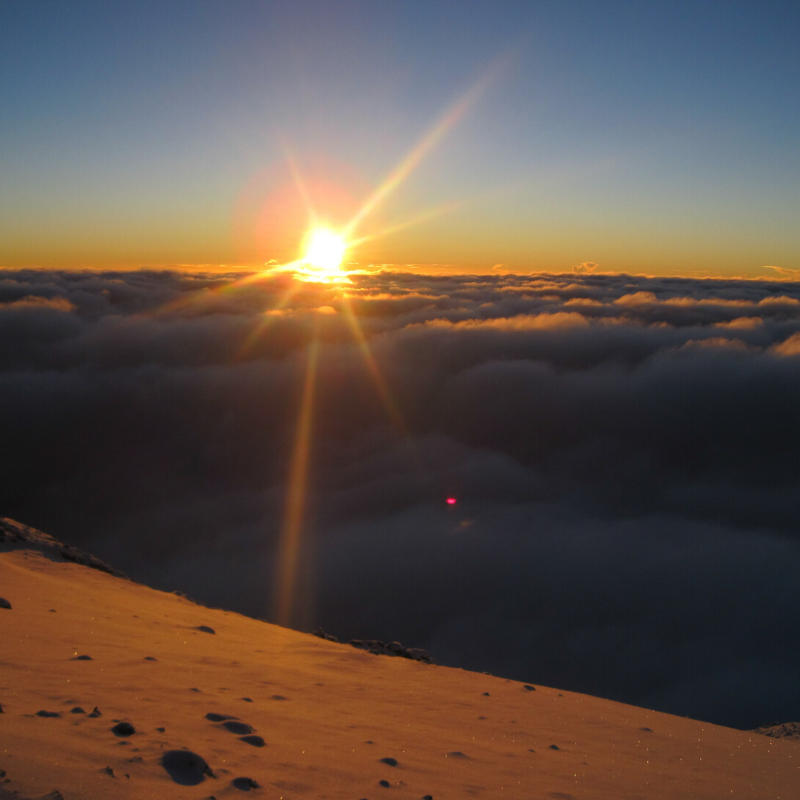
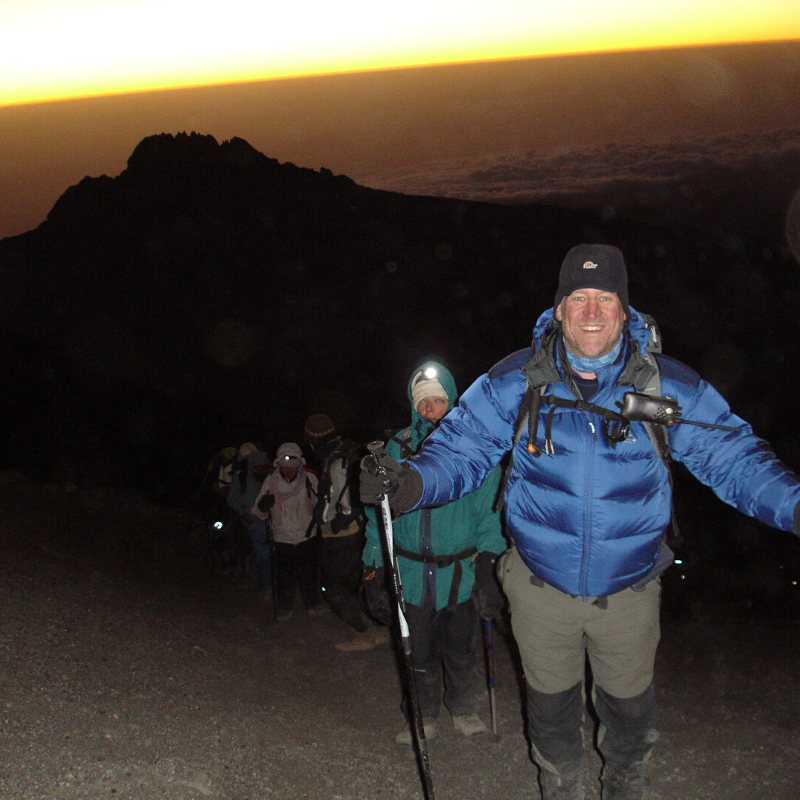
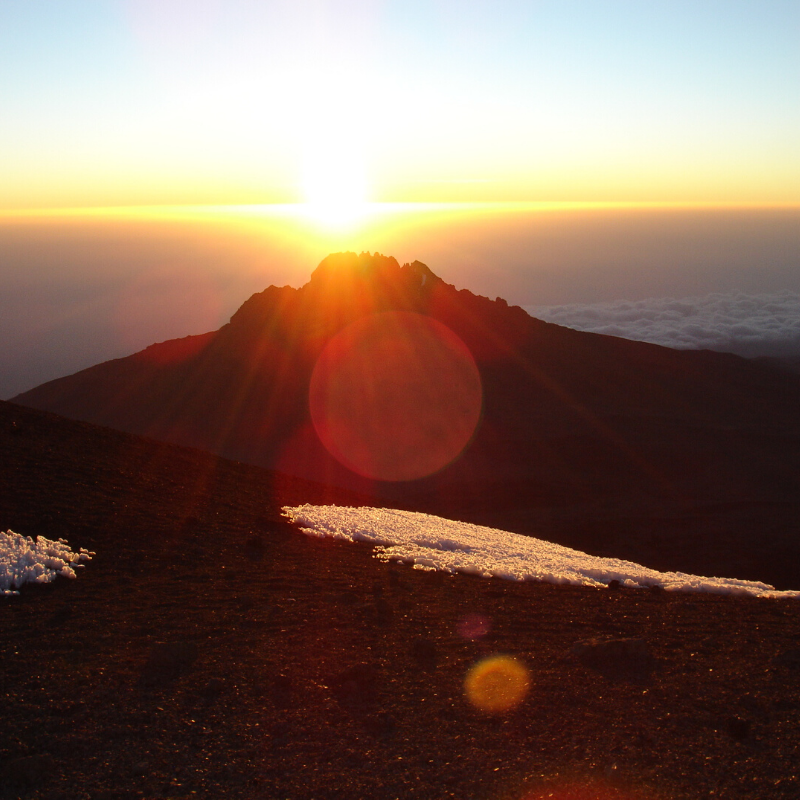
In the early hours of the morning under a star filled sky you will start your final push to the summit glaciers. Taking advantage of the best surface conditions (frozen scree and possible snow), your path will climb via some well-graded zigzags at a slow but steady pace reaching the iconic Stella Point (5735m), in around 5 – 6 hours. This is one of the toughest parts of your ascent but your torchlight trek will be rewarded with a spectacular sunrise over the jagged Mawenzi peak. With the bright white ice cliffs in the crater turned golden by the early sun, you will follow the crater rim for about
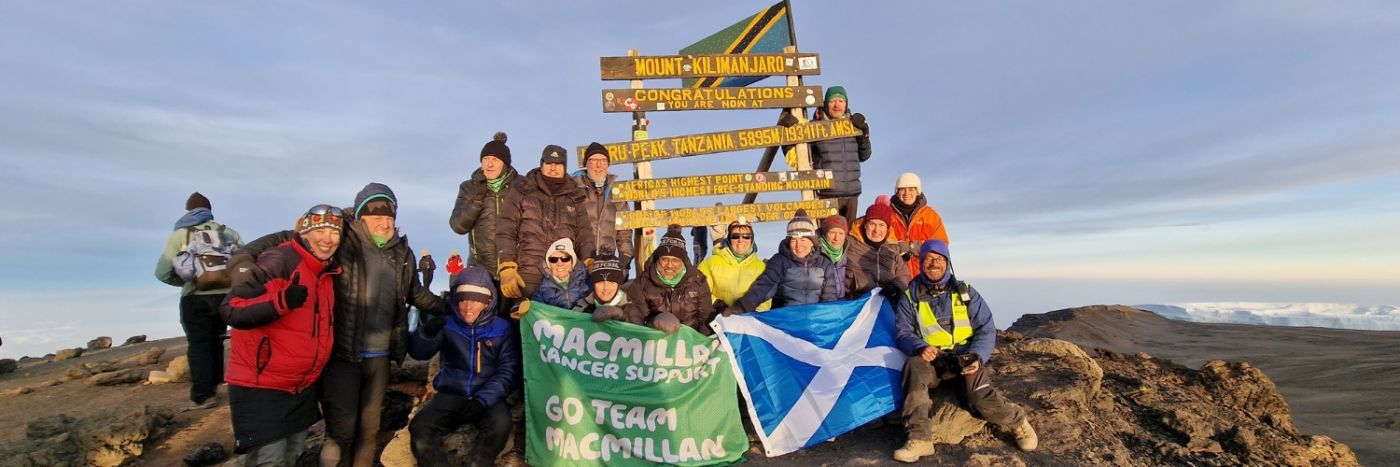
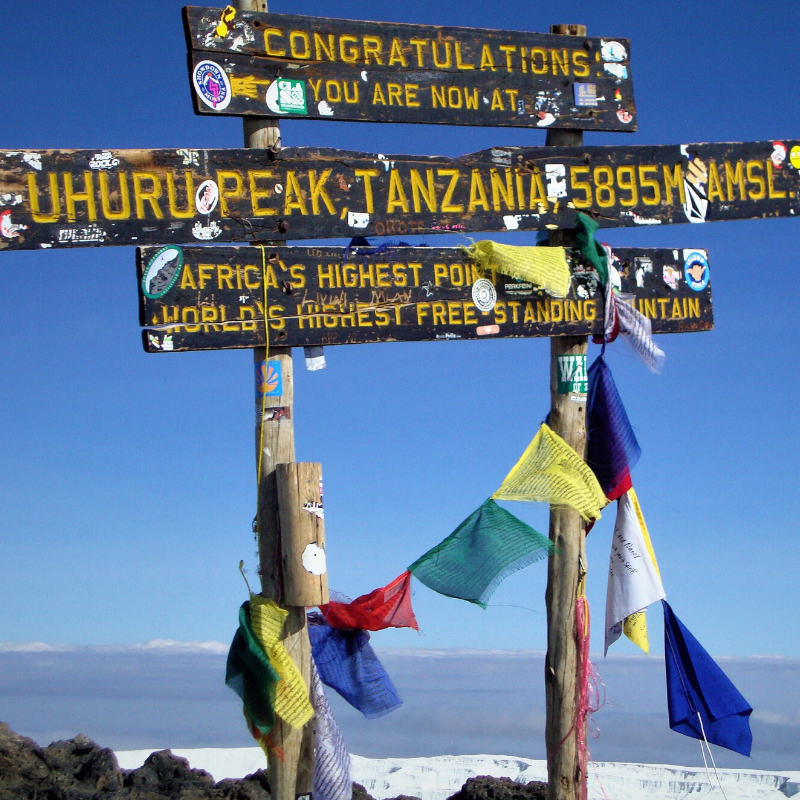
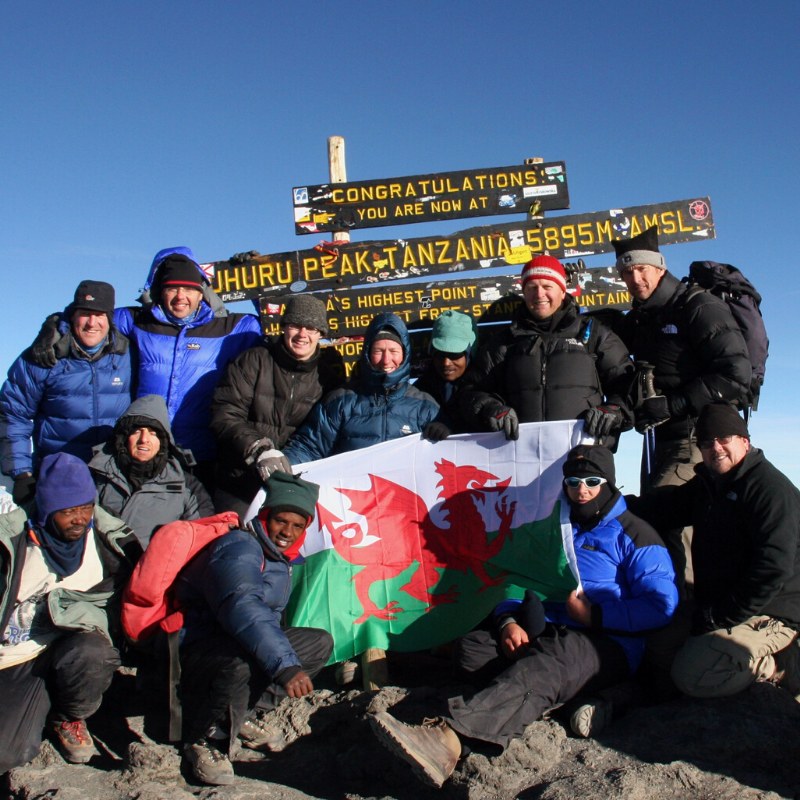
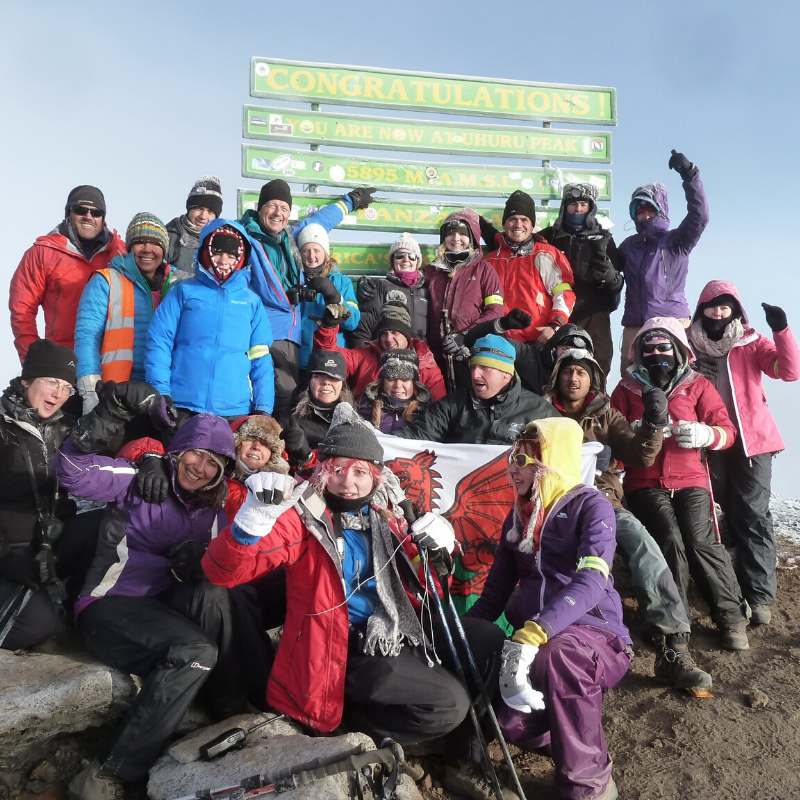
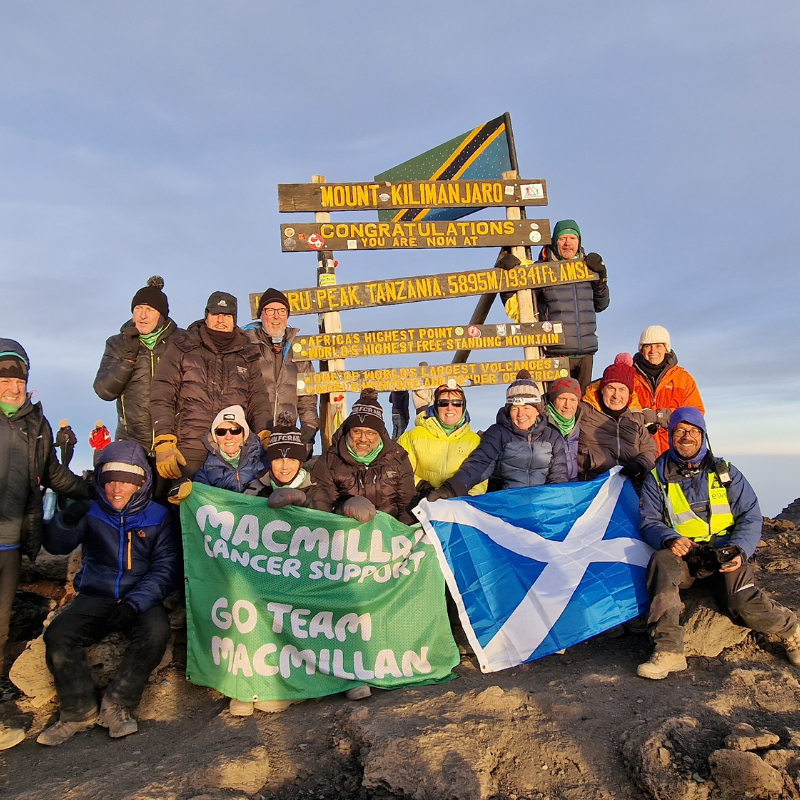
an hour on easier terrain to ascend to the highest point in Africa – Uhuru Peak (5895m). Congratulations! After enjoying your epic summit achievement and taking the obligatory photo, you will begin your descent by returning to Barafu camp for breakfast before continuing down to Millennium Camp for a well deserved rest.
Distance covered: approx. 13.4kms / 8.3miles
Trekking time: approx. 12 – 16 hours
Included
Accommodation: 3 season mountain tents (twin share basis)
Meals included: Breakfast, lunch and dinner
Trek Millennium Camp (3790m) to Mweka Gate (1630m)
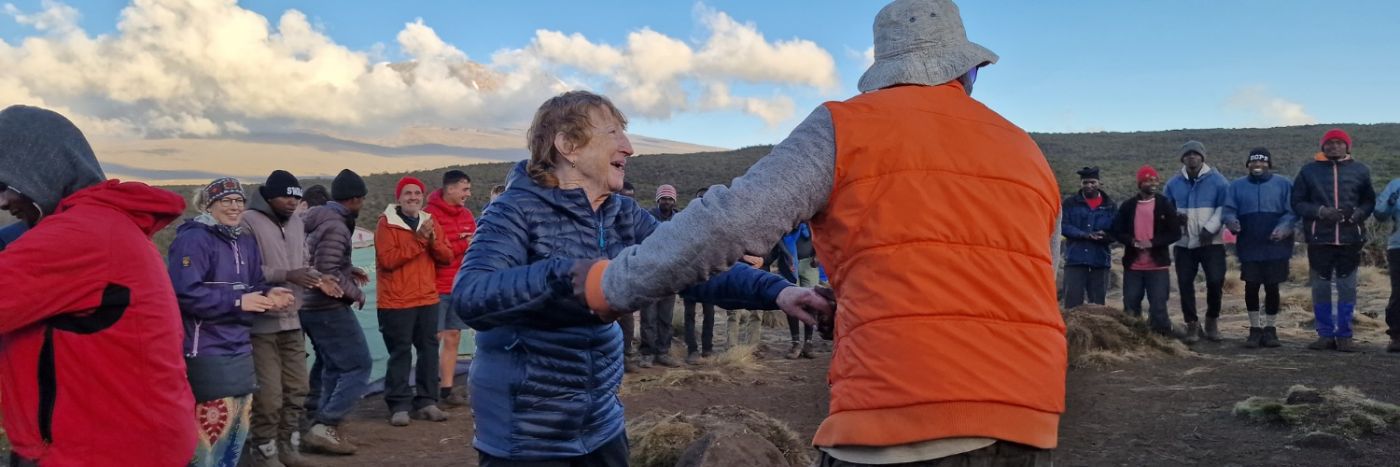
Before your last day on Kilimanjaro you will bid a fond farewell to your trusty local crew of porters who been a fundamental part of the team for the past week. Then a long yet gentle descent on a well-constructed path takes you down through lovely tropical forest alive with birdsong and the chance to catch a glimpse of Colobus monkeys. On arrival at Mweka Gate you will complete park formalities and receive certificates of ascent before being transferred back to your hotel. A shower and a beer (not necessarily in that order) will be a welcomed sight plus time to reflect on your Kili adventure amongst some new-found friends. That evening you’ll enjoy a celebratory dinner with your Guides and a well-deserved sleep in a hotel bed!
Distance covered: approx. 12.1kms / 7.5miles
Trekking time: approx. 6 hours
Included
Transfer: From Mweka Gate to hotel
Accommodation: Hotel (twin share basis)
Meals included: Breakfast, lunch and celebration dinner
Free morning (depending on your flight times)
*Option to extend your trip in Tanzania with Safari and Zanzibar packages available or you can return home.
Climbing Kilimanjaro is not only one of the world’s greatest trekking achievements – it’s also an opportunity to make a positive impact on the people and places you visit.
This trek has been thoughtfully designed to give you an incredible mountain experience while supporting local communities, conservation efforts, and responsible tourism practices in Tanzania. As you hike through five distinct climate zones to the Roof of Africa, you’ll gain a deeper appreciation of the mountain’s natural beauty, cultural heritage, and the people who call it home.
By choosing to trek with us, you’re helping to create sustainable income for local guides, porters, cooks and suppliers, many of whom rely on mountain tourism for their livelihoods. All crew are treated fairly, paid properly, and offered ongoing opportunities for training and development.
Kilimanjaro National Park itself is part of a growing national commitment to sustainable tourism. As a UNESCO World Heritage Site, the park is protected under Tanzanian law, with entry fees helping to fund conservation efforts, ranger programmes, and education for surrounding communities.
“Kilimanjaro National Park plays a vital role in conserving biodiversity and water catchment areas that supply much of northern Tanzania.”
– UNESCO World Heritage Centre
The park’s authorities are also actively investing in reforestation, trail management, and stricter waste reduction policies to preserve this fragile ecosystem for generations to come.
You’ll also be contributing to a more responsible approach to travel by:
-
Trekking with a local, community-based crew who know the mountain best
-
Reducing single-use plastic with your free Water-to-Go bottle
-
Staying in locally owned accommodation pre and post trek
-
Supporting our environmental charity partner, Cool Earth
-
Travelling in a small group, minimising impact and maximising connection
This is adventure with purpose – a chance to challenge yourself, support others, and see the world differently.
We’ve crunched the numbers to work out the total carbon footprint of the Kilimanjaro Trek, and plant or protect enough trees to suck 2x as much back out the atmosphere.
What’s the number?
It works out on average at 251kg of CO2 emissions per person, including all local transport, accommodation, food, activities, leaders, crew and office operations.
The only thing not included is travel to Tanzania. Given that our beloved guests travel from all parts of the UK for this adventure we have no way of reliably knowing their travel plans therefore we’re unable to include an individual number in the figure on display here.
What does the number mean?
To give you a snapshot of the numbers:
- Driving 1000miles/1609km would be approx. 281kg of CO2 in an average car (or 140.5kg per person if there was 2 of you).
- A return economy class flight London – New York would be approx. 1,619kg (1.66 tonnes) per person.
- 10 trees in a temperate forest are estimated to remove approx. 250kg of CO2 from the air over a period of 5 – 10 years.
What are we doing about it?
Our adventures are relatively low-carbon by design, and we’re working to develop long term carbon reduction plan. Following much research into climate change organisations, we carefully selected to support the environmental charity, Cool Earth. They’re a sustainable operation and work with rainforest communities across the globe to halt deforestation and it’s impact on climate change. We invest 1% of our revenue into supporting critical conservation projects world-wild with Cool Earth.
On a local level here in the UK, we’re an ongoing business member of the Snowdonia Society, plus Jim and Sue, together with some of our local leaders, also help the Society with their local projects such as planting native trees in Snowdonia. This is to help preserve the landscape and enhance wildlife habitat here in Snowdonia.
Want to know more?
We believe that with great travel, comes even greater responsibility. Tourism is one of the most important and largest industries on the planet. It employs more people worldwide than any other, with millions of families relying on tourism for their daily needs. At Adventurous Ewe we believe that our type of small scale, positive impact tourism can bring benefits to many communities, help preserve the environments we travel to see, and provide real and positive social exchanges. Here is our plan to do our part towards helping reduce factors that we can contributing to climate change as part of Tourism Declares a Climate Emergency.
When you join us for the Kilimanjaro Trek, you’ll receive all your essential trip details through our free mobile travel app – making it easier (and greener) to stay organised.
You’ll have 24/7 access to your itinerary, live updates, kit list, weather forecasts, contact details, and handy ‘know before you go’ info – all in one place, right on your phone.
No need to print reams of paper or carry documents around – it’s simple, smart, and better for the planet.
A’ppy days.
As a small family-run business, we take pride in offering a personal, professional, and friendly service from the moment you join.
We understand that everyone comes to the Mt Kilimanjaro Trek with different goals, backgrounds, and experience levels – so we’re here to provide the right level of support for you, every step of the way.
Whether you’re a seasoned trekker or taking on your first big mountain, you’ll be guided with care, encouragement, and expert advice.
Between them, Jim and Sue have spent decades exploring and leading adventures across the globe. With over 35 successful Kilimanjaro summits to their names, they’re perfectly placed to help with any questions – big or small – as you prepare for this life-changing journey.
Flights are not included in your Kilimanjaro adventure, giving you the flexibility to:
-
Depart from your preferred airport
-
Use frequent flyer points
-
Extend your stay in Tanzania
We’ll share recommended flight details to help you align with the included group airport transfer in Tanzania. You’re also welcome to book your flights through our trusted Flight Agent, who is ATOL and ABTA protected, for added peace of mind.
If you’re arriving outside of the recommended flight window, you’ll need to arrange your own way to the hotel. We’re happy to help organise a private airport transfer at an additional cost.
Travelling with others? If there are three or more of you, we can look at shared transfers – a great way to keep costs down and reduce your carbon footprint.
To enter Tanzania, your passport must be valid for at least 6 months from your date of arrival and have at least one blank page for entry stamps.
For the latest and most accurate information, please refer to the official government travel advice:
-
British citizens: UK Foreign Travel Advice – Tanzania
-
Australian citizens: Smartraveller – Tanzania
If you’re travelling from another country, please check with your government or local Tanzanian Embassy for up-to-date passport and entry requirements.
To enter Tanzania, you must have a valid visa. Most visitors, including those from the UK and Australia, will need a tourist or business visa. If you’re travelling to work or volunteer, you’ll also need a work permit, which must be arranged in advance with the support of your employer or volunteer organisation. For more information, visit the Tanzanian Prime Minister’s Office or the Tanzanian Immigration Department.
How to Apply
The easiest way to apply is online through the Tanzania eVisa portal before you travel.
Apply for an eVisa
Please note: It’s no longer possible to obtain a visa through the Tanzanian High Commission in London.
Alternatively, single-entry tourist or business visas can be issued on arrival at main ports of entry in Tanzania, provided all immigration requirements are met. You may be asked to show proof of your return or onward journey. Multiple-entry visas are not available on arrival.
Border Checks
At immigration, you may be required to show your return or onward flight confirmation. If you’re transiting through Kenya, you may also need a Kenyan visa unless you remain airside and your luggage is checked through to your final destination.
Zanzibar Travel Update
From 1 October 2024, all travellers to Zanzibar must purchase mandatory inbound travel insurance valid for up to 92 days from the Zanzibar Insurance Corporation. This insurance has coverage limits, so be sure to also hold comprehensive travel insurance for your trip.
Please note, entry requirements can change at short notice. We strongly recommend checking the latest guidance with your local Tanzanian embassy or consulate before travel.
Travel Insurance
Travel insurance is a mandatory requirement for all Adventurous Ewe trips. You must have comprehensive cover in place that includes:
-
The full value of your trip
-
Medical cover (emergency, evacuation and repatriation)
-
High altitude trekking up to 5,895 metres
-
Personal liability
-
Cancellation and curtailment
-
Loss or theft of luggage and personal belongings
-
Flight delays
For UK residents, we’ve partnered with Campbell Irvine Direct to offer a tailored insurance policy for adventure travel. To get a quote, visit:
Campbell Irvine for Adventurous Ewe
You must notify us of your Travel Insurance details no later than 8 weeks prior to departure.
Global Rescue Membership
For added peace of mind when trekking in remote areas, we highly recommend Global Rescue. Their short-term membership includes:
-
Emergency field rescue from the point of illness or injury
-
Medical advisory support and access to appropriate care
-
Evacuation and repatriation to your home hospital if required
-
No claims process – services are covered in full through the upfront membership fee
Learn more about Global Rescue
Zanzibar Insurance Requirement
Please note: If you’re extending your trip to Zanzibar, you must purchase inbound travel insurance from the Zanzibar Insurance Corporation (ZIC). This is mandatory and valid for up to 92 days, but the coverage is limited. You’ll still need to maintain your own comprehensive travel insurance for full protection during your trip.
Vaccinations
We strongly recommend that you consult your GP or a travel health specialist at least 8 weeks before departure to ensure you have the most up-to-date advice for travel to Tanzania.
A Yellow Fever vaccination certificate is required if you are arriving from a country where yellow fever is present, or if you’ve transited through an airport in a high-risk area for more than 12 hours – this includes Nairobi (Kenya) and Addis Ababa (Ethiopia).
Recommended vaccinations include:
-
Polio
-
Tetanus
-
Typhoid
-
Hepatitis A
Malaria is present in Tanzania, so malaria prophylaxis is essential. Please consult your GP or travel clinic for advice on the most suitable medication.
Dengue fever is also a known risk and is transmitted by daytime-biting mosquitoes. There is currently no vaccine or preventative medication, so the best protection is to avoid mosquito bites. We recommend using DEET-based insect repellent, wearing long sleeves and trousers, and sleeping under a mosquito net where available.
For the most accurate and up-to-date information, please check:
If you’re travelling with any medication, including over-the-counter items, please check for restrictions or regulations via the Tanzanian Embassy before departure.
Severe Allergies
If you have a severe allergy, please inform us at the time of booking so we can support you as best as possible. While we will do everything we can to accommodate your needs, we cannot guarantee an allergen-free environment on this trip.
You must carry your own allergy treatment, including adrenaline auto-injectors (e.g. EpiPens), as these are not carried as standard by Adventurous Ewe leaders or crew.
Please make sure your trip leader is informed about:
-
Your allergy
-
Where you store your adrenaline pen or other medication
-
Any specific actions they may need to take in case of an emergency
Your safety is our priority, and clear communication helps ensure everyone is prepared.
Safety and Well-being
At Adventurous Ewe, your safety and well-being – along with that of our leaders, guides, crew, and the communities we visit – is at the heart of everything we do.
The Kilimanjaro Trek is intentionally challenging. It’s designed to push you beyond your everyday comfort zone and help you achieve something extraordinary. With that comes the need for individual preparation, but rest assured, you’re in expert hands every step of the way.
We operate with a robust Safety Management System, backed by detailed risk assessments, policies and emergency protocols tailored to high-altitude trekking.
You’ll be accompanied throughout by:
-
A qualified local Mountain Guide
-
A UK High Altitude Mountain Leader
All guides are Remote First Aid trained and have extensive experience leading teams on Kilimanjaro. They are ultimately responsible for your safety throughout the trek.
During your expedition:
-
ICOM radio communication is maintained between the Guides, local crew, and our base office in Moshi
-
Your UK Leader will carry a Garmin InReach device for emergency use and real-time communication
-
We maintain 24-hour contact with the Adventurous Ewe UK office
-
The Tanzanian National Park rescue service has emergency vehicles on standby at key exit points
-
A member of staff will carry medical supplies and oxygen, should they be required
If you need to leave the group and descend early, our local team will support you with your return, including arranging transfers, accommodation, and medical care if needed. Please note that any costs incurred due to early descent are the responsibility of the individual and must be settled before departure from the hotel.
We recommend reviewing the latest travel safety advice via the UK Foreign, Commonwealth & Development Office before departure:
FCDO Tanzania Travel Advice
And while out on the trail, we kindly ask that you use alcohol-based hand sanitiser regularly to help prevent the spread of germs and keep your fellow flock feeling fit.
Your Leader Team & Crew
Your group will be led by one of our UK Mountain Leaders who is a highly experienced high-altitude guide. Handpicked for their knowledge, professionalism, and calm, confident leadership style – they also bring a good dose of humour and encouragement to the trail. All UK Leaders are Remote First Aid qualified and are there to support you every step of the way.
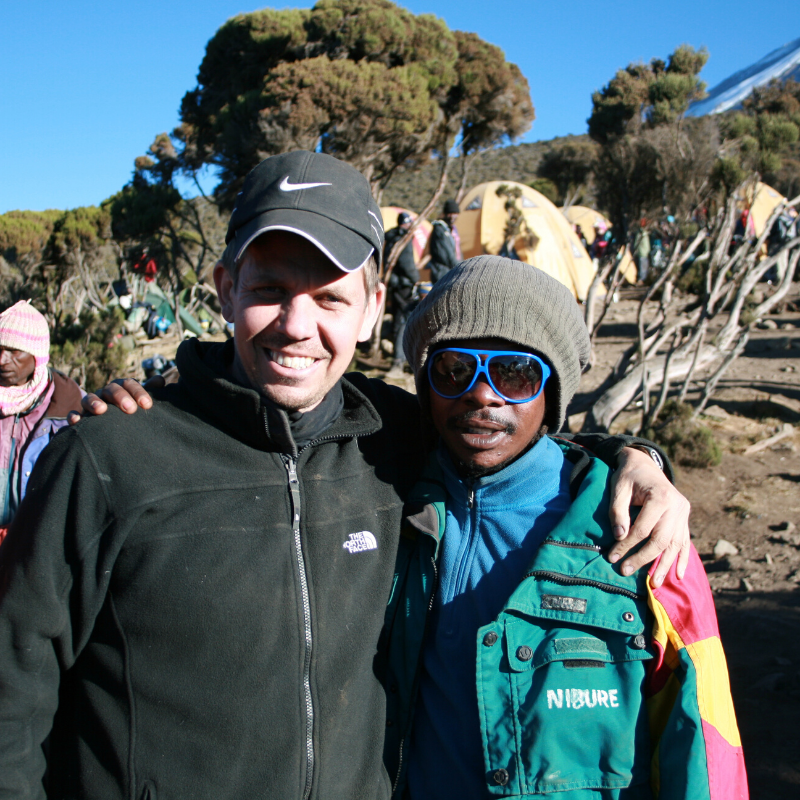
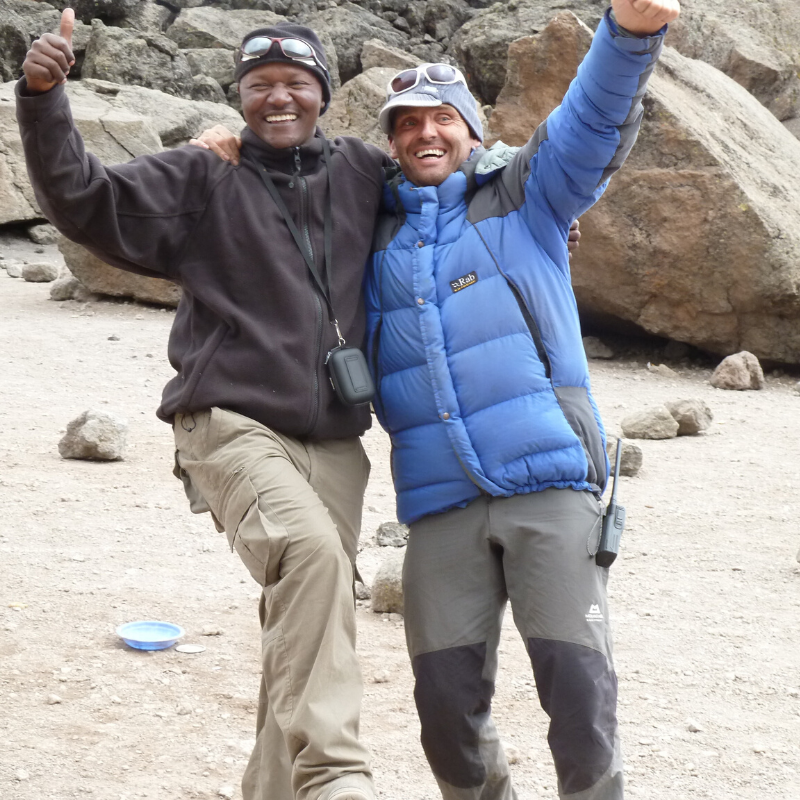
Our local Tanzanian Guides are equally exceptional – experienced, passionate, and dedicated to providing you with the best possible experience on the mountain. For them, guiding on Kilimanjaro isn’t just a job – it’s a calling. They’re known for their warmth, charisma, and attention to detail, often going above and beyond to ensure every trekker feels supported and uplifted.
Each local guide has completed extensive training and certification, both locally and internationally, including with the Kilimanjaro National Park Authority and Training Expertise UK.
We maintain a trekker-to-crew ratio of 1:4, ensuring you’re always well-supported. On summit night, this increases to 1 Assistant Guide for every 2 trekkers to provide close supervision and motivation during the toughest part of the climb.
Your leaders are equipped with radio, mobile, and Garmin InReach communication devices, and maintain contact with our Moshi base and Adventurous Ewe HQ to ensure 24-hour support.
Porter Welfare
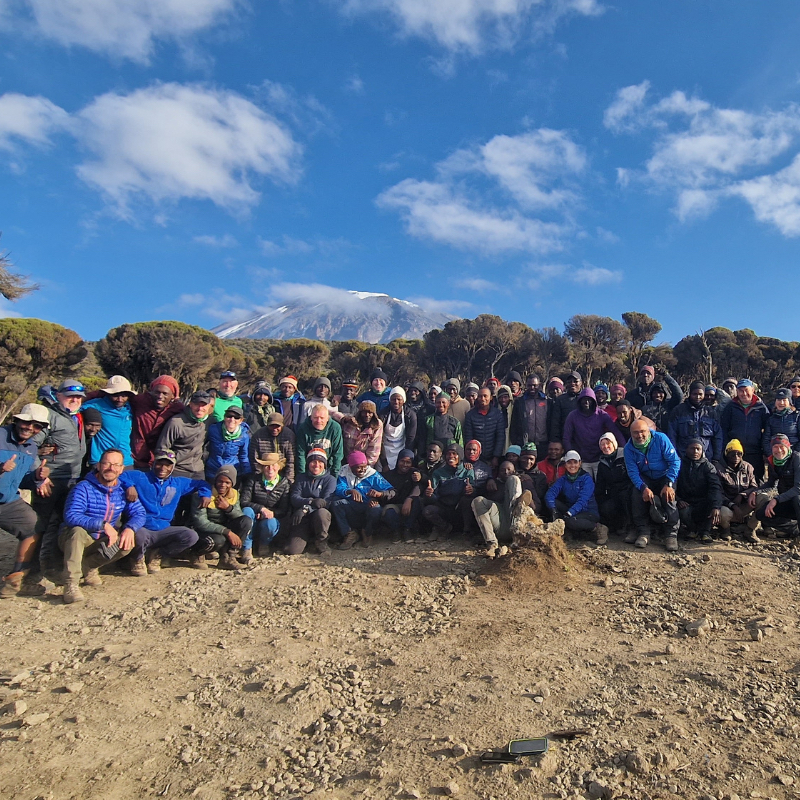
Our porters are the backbone of every Kilimanjaro expedition. We believe in treating them with the respect, care, and fairness they deserve – not just because it’s the right thing to do, but because it’s at the core of how we operate.
We ensure our crew are:
-
Well-fed, well-equipped, and properly paid
-
Provided with appropriate clothing and shelter
-
Given opportunities for career progression and additional training
When we’re on the mountain, we’re one team – you, the guides, and the crew – all working together with a shared focus on safety, well-being, and success.
This is a private bespoke trek exclusively for Aspire Life in support of Mind Dorset.
To ensure a safe, supportive and enjoyable experience for all, the minimum group size for this Kilimanjaro adventure is 6 people, with a maximum of 20 participants.
Travelling as a team not only strengthens camaraderie on the mountain but also makes this an incredible shared journey in support of a powerful cause. Whether you’re taking part for personal challenge, connection, or to champion mental health awareness, you’ll be supported every step of the way by our experienced crew.
If you have any questions about the group, travel arrangements, or fundraising, please feel free to get in touch:
📧 info@adventurousewe.co.uk
📞 01492 588 069
Climbing Kilimanjaro is a physically and mentally demanding challenge, reaching a high altitude of 5,895m, but with the right preparation and mindset, it’s absolutely achievable.
This trek is graded ‘Extreme’ due to the altitude, duration, and terrain, and requires a good level of fitness, stamina, endurance, and determination. Even if you consider yourself fit, altitude affects everyone differently. There’s no reliable way to predict how your body will acclimatise – and even past high-altitude experience doesn’t guarantee the same response every time. That’s why our 8-day Lemosho route is carefully chosen to provide the best possible acclimatisation, increasing your chance of a safe and successful summit.
You’ll be fully supported by our qualified and experienced local guides and your UK Mountain Leader, whose encouragement and expertise are key to getting you to the top. The trek also includes ‘trek high, sleep low’ days to help your body adjust gradually.
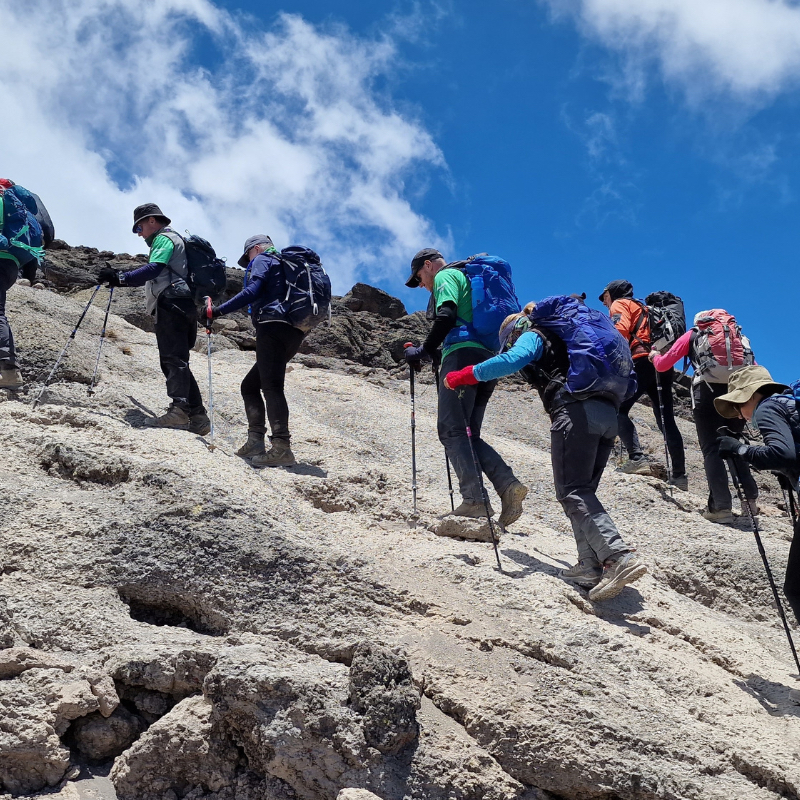
Most trails on Kilimanjaro are well-defined, though sections of rainforest can be muddy and slippery in poor weather – good boots and trekking poles are recommended. One of the most talked-about moments of the trek is the Barranco Wall – a steep but non-technical scramble that climbs 257m above the valley floor. Though it may seem daunting, it’s often a highlight of the climb, and your guides will be positioned at key points to support you every step of the way.
The final summit push to Uhuru Peak is the most demanding part of the trek, taking place overnight on loose scree and steep slopes. You’ll be supported with a 1:2 guide-to-trekker ratio, and your crew’s relentless encouragement can make all the difference when the going gets tough.
You should also be prepared for:
-
Basic camp conditions (minimal washing facilities and basic toilets)
-
Cold temperatures, especially at higher altitudes
-
Disrupted sleep, reduced appetite, and early starts
-
Camping and trekking at altitude, which can feel physically harder
But remember – everyone on your team is in it together, and with shared determination and group support, this experience becomes far more than just a physical challenge.
Your day begins between 06:00–06:30 with a friendly wake-up and a hot cup of tea or coffee brought to your tent. You’ll have access to warm water in bowls most mornings to freshen up before breakfast.
After a hearty hot breakfast and filling your water bottles, the group sets off on the day’s trek as a team. Your Trek Leader sets a steady, manageable pace, while assistant guides and your UK Leader move through the group offering support and encouragement. You’ll stop regularly for short breaks to rest, hydrate, and enjoy a snack, with a longer lunch stop partway through the day.
On arrival at camp, you’ll be welcomed with a hot drink and time to relax, followed by a briefing from your leader about the next stage of the journey. Your main kit bag and tents will already be waiting for you, having been carried and set up by our incredible porter team.
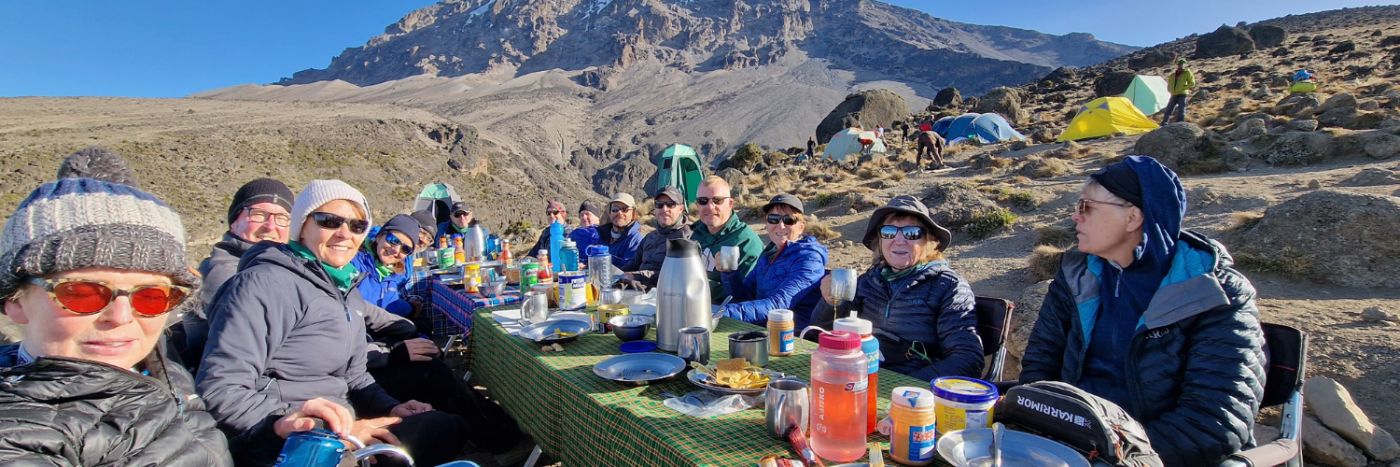
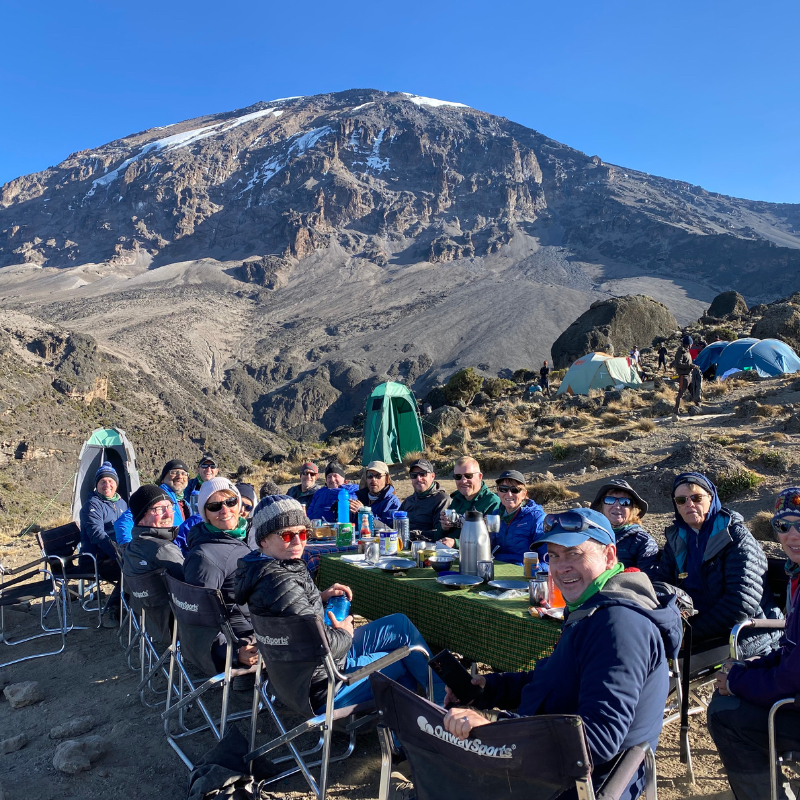
All meals – breakfast, lunch, and dinner – are freshly prepared and served by your dedicated kitchen crew, often in impressive remote conditions. Watching the efficiency and care of the mountain team is an inspiring part of the Kilimanjaro experience and a reminder of the strong support behind every step you take.
Climbing Kilimanjaro is a demanding but achievable challenge with the right preparation. To help you get mountain-ready, you’ll receive a bespoke training and tips programme when you join the trek. This has been designed specifically for this expedition and includes guidance on building the fitness, strength and stamina needed to take on the altitude and terrain of Africa’s highest peak.
Your training plan will cover:
-
Aerobic fitness for endurance on long trekking days
-
Strength and core training to help with balance, posture, and carrying a loaded daypack
-
Back-to-back outdoor walks to build stamina and prepare your body for consecutive days on your feet
-
Tips on hill training, using trekking poles, and getting used to your kit
The more you train, the more confident and comfortable you’ll feel – both physically and mentally – on the mountain.
We’ll also share advice on hydration, nutrition, altitude awareness, and mental preparation, helping you arrive at the trailhead feeling ready for anything.
Remember, it’s not about being the fastest – it’s about being prepared, pacing yourself, and enjoying the journey.
Our motto is: Train hard, smile harder and enjoy the journey!
A detailed kit list will be provided when you register for the Kilimanjaro Trek, along with plenty of packing tips, gear advice, and insider know-how based on decades of experience on the mountain.
Having the right kit can make all the difference between a challenging but enjoyable adventure and an uncomfortable one. Key items include:
-
Well-worn-in waterproof hiking boots
-
A good quality waterproof jacket and trousers
-
A very warm sleeping bag rated for sub-zero conditions
We know quality gear can be costly, especially if you may not use it again. That’s why we offer access to Kilimanjaro kit rental packages through Expedition Kit Hire, which we’ll share more details about once you’re on board.
You’ll also receive exclusive Adventurous Ewe discount codes for recommended independent outdoor retailers and Expedition Kit Hire, helping you get the best gear for less.
To help you prepare, check out our guide:
Top Tips for Kilimanjaro: Your Essential Packing & Preparation Guide
And remember, one of our golden rules – train in your kit before the trip to make sure it works for you when it really counts.
Once you ascend above 2,500 metres, your body begins to adapt to the reduced oxygen levels. To support this natural adjustment, your Kilimanjaro trek is carefully structured to allow for gradual acclimatisation, giving your body time to adapt safely as you climb.
Despite a steady pace and acclimatisation-focused itinerary, you may still experience some symptoms of altitude exposure, such as:
-
Headaches
-
Tiredness
-
Shortness of breath
-
Nausea or loss of appetite
-
Disturbed sleep
-
Cough or palpitations
-
Mild swelling in hands or face
Everyone responds to altitude differently. Most trekkers will notice some discomfort, and while many manage well with rest and hydration, a small number may require extra care and monitoring – which will be provided by your experienced UK Mountain Leader and Local Guide.
During your pre-trek briefing, altitude and how to manage it will be discussed in detail. The most important thing is not to fear it, but to respect it. Learn the signs and symptoms of Acute Mountain Sickness (AMS) and always report any illness to your leader immediately. Our team is highly trained in managing high-altitude conditions – you’re in very capable hands.
How to Support Acclimatisation
To minimise the risk of AMS and improve your experience on the mountain:
-
Drink 3–5 litres of water daily to stay hydrated
-
Avoid alcohol, limit tea and coffee
-
Walk slowly – even in camp
-
Stay warm, especially overnight
-
Eat well, even if your appetite is low
All Adventurous Ewe treks that spend time at altitude follow our Standard Altitude Safety Policy.
Please note that this trek includes five or more nights above 3,500m, where the risk of AMS is real. Left untreated, AMS can become life-threatening. For this reason, your Leader may, in some cases, decide to delay or stop your ascent if your symptoms require it. This is always done in the interest of your health and safety, and we ask that you respect this decision.
Medication and Medical Considerations
Certain medical conditions or medications can reduce your ability to acclimatise. If you have any concerns about pre-existing conditions (e.g. heart or respiratory issues), we strongly recommend speaking to your doctor before booking.
The only proven medication to help prevent AMS is acetazolamide (Diamox). If you plan to carry Diamox:
-
Consult your GP first to confirm it’s safe alongside any other medication you’re taking
-
Understand the correct dosage and potential side effects (e.g. tingling fingers, metallic taste)
-
Trial it at home first, to ensure no adverse reactions
Diamox is available on prescription only from a medical professional.
Altitude is a challenge – but with the right support, mindset, and preparation, it’s one you can safely overcome. We’re here to guide you every step of the way.
One of the most unique aspects of trekking Mount Kilimanjaro is the incredible transition through five distinct climate zones – from lush rainforest to arctic summit. It’s often said that climbing Kilimanjaro is like walking from the equator to the North Pole in just one week.
As you gain altitude, you’ll notice a clear shift in temperature, rainfall, vegetation, and wildlife. Conditions can range from hot and humid at the base to freezing cold near the summit.
Seasonal Weather Patterns:
-
January–February: Warmest and generally clear
-
April–May: Wettest months (rainy season)
-
June–July: Coolest, with crisp clear skies
-
August–September: Driest and most stable weather
Due to its location near the equator, Kilimanjaro doesn’t experience significant seasonal temperature changes. Instead, temperature is driven primarily by altitude and time of day.
At the base, you can expect daytime temperatures around 21°C to 27°C, while nighttime temperatures at the summit (Uhuru Peak) can plummet to between -7°C and -29°C.
Kilimanjaro’s towering height means it generates its own weather systems, making conditions highly unpredictable. You may encounter sunshine, heavy rain, strong winds, snow, and freezing cold temperatures – sometimes all in one day.
That’s why it’s essential to be prepared for a full range of weather conditions. A detailed kit list and clothing guide will be provided once you’ve booked, so you can pack smart and stay comfortable.
We also recommend checking the latest mountain-specific forecast in the lead-up to your trek.
Check the Kilimanjaro mountain weather forecast
9 nights: Hotel (2 nights), camping (7 nights)
At the start of your expedition you have one night at a comfortable hotel near Moshi town with swimming pool and views of Kilimanjaro. You will return to this hotel for your final night of accommodation at the end of the trek.
Whilst on the mountain there are 7 nights camping. We use high quality, spacious 3 person mountain tents which are of expedition quality. Only 2 people and their bags stay in each tent to help with warmth and also that most altitude related symptoms manifest themselves at night therefore sharing a tent is highly recommended. If you are travelling by yourself, you will be paired up with another single member of the team of the same sex. Single hotel rooms and single tents are available for a supplementary cost. You will need to bring your own sleeping bag and matt, although you can hire these items if you prefer. We also have a dining tent with a table and chairs for meal times. The crew will set up and pack down all tents so you will be looked after very well.
We take along our own portable toilets and toilet tents. These are kept nice and clean, and loo roll is provided to help us provide the best levels of hygiene that we can on the mountain. There are long drop toilets at each campsite which are maintained by the National Park Authority – but we recommend its best to avoid these!
For more info or to request a single room and or tent, please get in touch with us at info@adventurousewe.co.uk.
Food
All meals are included in the cost of your trip, except for lunch on your final day, when you’ll have some free time to explore Moshi or relax at the hotel.
Staying well-fed and hydrated plays a crucial role in your success on Kilimanjaro. Our amazing mountain kitchen crew – led by your head chef – work tirelessly to prepare fresh, nourishing meals at altitude. Every ingredient is carried up the mountain by porters, and it’s always impressive to see what they can create in such remote conditions.
The menu is designed to support high-altitude trekking, with a focus on hydration and carbohydrates, using locally sourced ingredients wherever possible.
Here’s what you can expect on a typical day:
-
Breakfast: Hot drinks (tea, coffee, or hot chocolate), porridge, eggs, sausages, toast with jam, honey or marmalade
-
Lunch: Usually three courses – starting with soup, followed by a hot main (e.g., cheese toast or chicken), and fresh fruit or a sweet treat
-
Afternoon tea: Served at camp on arrival (around 3–4pm), including hot drinks and snacks like popcorn, peanuts or biscuits
-
Dinner: Another three-course meal with soup to start, a carbohydrate base like rice, pasta or potatoes served with meat or vegetarian options, and a dessert of fruit or something sweet
If you follow a vegetarian or special diet, please let us know at the time of booking so we can accommodate your needs.
We recommend bringing your own personal trail snacks – especially for summit night – such as flapjacks, nuts, dried fruit or high-energy sweets. These are great to have in your pockets for a quick boost. Flavoured electrolytes or rehydration tablets are also useful to help maintain energy levels and water intake. Check out our Top Tips here.
Water
You’ll be provided with purified and treated water throughout the trek.
While staying at the hotel, drinks are at your own cost, and it’s important to avoid drinking tap or stream water unless it’s been treated. We strongly encourage the use of reusable water purification solutions, such as a filter bottle.
To support this, you’ll receive a free Adventurous Ewe Water-to-Go bottle at the start of the trek – helping you stay hydrated while reducing plastic waste.
Adventurous Ewe has partnered with Water-to-Go, a filtration system that eliminates over 99.99% of all microbiological contaminants from any non-salt water source – for more info please click here. Adventurous Ewe trekkers will receive a free Water-to-Go bottle when departing for our Kilimanjaro Trek, and better still, 15% of the purchase value for replacement filters will be donated to our environmental charity partner, Cool Earth.
Please note that if the water freezes it will clog up the filter – in this event, defrost before use by sitting the filter in lukewarm water for 10-15 minutes.
Please help us reduce the volume of single use plastic in this pristine environment.
For your Kilimanjaro adventure, you’ll need two bags: one for the mountain, and one for your day-to-day use.
1. Main Kit Bag (Duffel or Soft Rucksack)
This is the bag that your porter will carry during the trek. It must be made of soft material (no hard suitcases or wheeled luggage) and should weigh a maximum of 15kg – though we recommend aiming for 12–14kg to ensure comfort for your porter. Porters also carry their own gear and shared supplies, and their total load must not exceed 20kg, as per Kilimanjaro National Park regulations.
Your kit bag should include everything you need on the mountain, such as your sleeping bag, clothing, and gear not required during the trekking day.
2. Daypack (30–35 litre rucksack)
This smaller pack will be your carry-on bag during the flight and your day bag on the trek. You’ll carry it yourself each day and it should include:
-
Waterproof jacket and trousers
-
Warm mid-layer
-
Sun hat, beanie and gloves
-
Sun cream and sunglasses
-
Snacks and personal medication
-
Reusable water bottle, filter bottle, hydration bladder (minimum 2 litre capacity)
-
First aid kit and personal medication
- Mobile phone (camera), power-bank and charging cable
Luggage Storage
Any clothing or items not needed for the trek can be left securely at the hotel in Moshi in a clearly labelled foldaway bag. This is especially useful for spare travel clothes or anything you’d like post-trek.
Baggage Allowance for Flights
Check your airline’s specific baggage allowance before flying, as this can vary between carriers.
Plastic Bag Ban in Tanzania
Please note that plastic carrier bags are strictly banned in mainland Tanzania. This applies to both hand luggage and checked baggage. The ban includes plastic packaging used for shopping or transporting goods.
Permitted items include:
-
Ziplock bags used specifically for toiletries (these must remain in your personal possession and not be discarded in-country)
-
Plastic used for medical, industrial, or food packaging is currently exempt
For full details, you can view the official notice here:
👉 Tanzania Plastic Bag Ban – NEMC Brochure
Let’s help keep Tanzania beautiful by avoiding single-use plastics wherever possible.
Costs & Sponsorship Structure
Deposit: £295 per person — paid on booking and non-refundable
Part Payment: £1,525 per person — paid by the participant 60 days before departure
Part Payment: £1,525 per person — paid by Mind Dorset 60 days before departure
Total Trip Cost: £3,345 per person
Sponsorship Pledge: £3,050 per person — to be raised by each participant and sent directly to Mind Dorset
Fundraising Timeline
80% of the sponsorship (£2,440pp) must be received by Mind Dorset no later than 60 days before departure, ensuring the charity contribution towards trip costs is fully covered.
The remaining 20% (£610pp) must be received within 30 days of the team returning.
Whilst in Tanzania, the land of safaris, and rich with wildlife, beautiful beaches and friendly people, why not extend your stay having climbed the slopes of the country’s highest mountain?
We have numerous trip extensions you can choose from depending on your time, budget and what you’d wish to do? Either journey through various cultural, natural and wildlife experiences in some of Tanzania’s most renowned National Parks or kick back on Tanzania’s magical coastline along the Indian Ocean and venture to the tranquil island of Zanzibar with sleepy coastal villages steeped in centuries of Swahili culture and plenty of options for snorkelling or diving. The choice is yours…..
- Ngorongoro Crater 1-day Safari
- Tarangire National Park and the Ngorongoro Crater 2-day Safari
- Tarangire & Lake Manyara National Parks combined with the Ngorongoro Crater 3-day Safari
- Lake Eyasi cultural experience of the Hadzabe, Tarangire National Park and the Ngorongoro Crater 3-day Safari
- Zanzibar 2 or 3 day beach extension
For more info, simply get in touch with us at info@adventurousewe.co.uk
Your Adventurous Ewe Leader/s and Crew will have a satellite & mobile phones and radios communications in case of emergencies. The team are trained to deal with these situations. Please ensure you listen to your Leader during these times and refrain from putting any posts on social media. Should you find yourself unable to continue with the trek, your Leader and crew will make the necessary arrangements.
Your Emergency Contact at Adventurous Ewe HQ is Jim Young on +44(0)7747 346 588.
Cool Earth
We are very excited to have teamed up with leading climate change charity Cool Earth, who share our mission to protect the planet’s precious environment in a sustainable manner. The future of rainforest protection is where everyone makes a difference to climate change! We invest a % of our revenue into supporting critical conservation projects around the world through Cool Earth. You are most welcome to help make a difference too by sparing a few pennies. Please give what you can and help save the world’s rainforests today by clicking here. Just £2.50 will save 10 trees and lock up 10 tonnes of CO2. Together, we can all make a difference in helping preserve this precious and wonderful planet. Thank-ewe
| Departure & Return | Duration | Availability | Deposit | Total Cost* | (*Total cost includes the deposit) |
| Feb 08, 2027 Feb 17, 2027 |
10 Days | Available | £295.00 | £3345.00 | Book Now |
What's Included?
Pre-trip:
- Personalised trip support
- All trip info supplied via our mobile travel app, so you have access to live updates 24/7
- Discount on personal kit from specialist outdoor retailers
- Financial Protection for your booking via ABTOT
- Public liability insurance
- Risk assessment and emergency management planning
- Monthly payment plan available.
On your trip:
- UK Mountain Leader
- Qualified Local Mountain Guides and Assistant Guides (ratio of 1 Guide per 2 trekkers on summit night/day)
- All other crew including porters and kitchen crew
- Pre & post trek accommodation near Moshi town (twin share basis)
- All campsites on the mountain with 3 Season mountain tents (2-person tents)
- Breakfast, lunch and dinner during your expedition
- Katadyn filtered water throughout the trek
- Transfers as required for the expedition
- All applicable local taxes, park fees, camping fees & rescue fees
- Luggage transfers each day of the trek via porters
- Portable flush toilets with a toilet tents
- Supplemental Oxygen & Pulse Oximeter
- Full back-up support including first-aid qualified staff and first-aid supplies
- Fair wages for the mountain crew as approved by the Kilimanjaro National Park Authority (KINAPA), Kilimanjaro Association of Tour Operators (KIATO)
- All safety management, risk management and emergency evacuation
- Complimentary shuttle transfer to Moshi town on your free day
- All trip management before, during and post trek.
What's Not Included?
Currently not included but can be organised at an additional cost
- Return flights from the UK to Kilimanjaro International Airport. We will provide you with the recommended flights for this trip in order for you to take up the airport transfers included in Tanzania or you can book your flights through our Flight Agent who is ATOL & ABTA protected
- Any trip extensions or additional night’s accommodation
Items not included
- Travel insurance – mandatory
- Visa – Tanzanian single entry tourist visa
- Vaccinations
- Kit and equipment as listed on your kit list (kit hire available)
- Tips for local crew – recommended minimum of $US300pp – $US350pp
- Single room supplement
- All meals are provided other than one lunch
- Personal spending money for hotel drinks, souvenirs, boot cleaning, etc.
- Any associated costs with leaving the expedition early including any airline surcharges if you opt to change flights
- Any increases in government taxes or park fees. This will be at your expense
If anyone needs to leave the group at any point during the trip (for reasons such as an early descent from Kilimanjaro due to altitude sickness or other reasons), all expenses incurred until re-joining the group on the itinerary described in these Trip Notes are the responsibility of the individual(s) concerned and must be paid to our local operator before leaving Tanzania. Adventurous Ewe will provide as much assistance as possible for anyone needing to leave the group at any stage.
Sustainable and Responsible Travel
Adventurous Ewe is committed to delivering our trips in a responsible and ethical manner with sustainability at its core. We respect and aim to operate our adventures to benefit local people, their economy and the environment! Your Kilimanjaro experience is fully supported by qualified, encouraging guides who are there to ensure your trip is a safe and successful one. As a Climate Conscious Tour Operator, we will provide a FREE WTG bottle on your departure to help reduce the impact of single use plastic in Tanzania.
Plus, our commitment to the rights and fair treatment of porters and trekking guides and support of our environmental charity partner, Cool Earth, means you can rest assured knowing you’re doing the trek of a lifetime the ethical and meaningful way.
Some of the ethical features embedded in our Kilimanjaro Trek are:
- Using local crew who are qualified Leaders, support crew and drivers who are all extremely knowledgeable and experienced and armed with a big friendly smile
- Ensure fair wages, ethical treatment and further education for porters and guides
- Staying in smaller-scale locally owned accommodation
- Buying locally produced food and drink, and dining in locally owned restaurants
- Minimising plastic waste wherever possible
- Careful management of limited energy and water resources
- Offering real life experiences which promote cross-cultural understanding
- Operating with a ‘leave no trace’ ethos – take only memories, leave only footprints
- Adventurous Ewe will make a financial contribution to the environmental charity, Cool Earth, as part of our business partnership.
Tips for sustainable travel on this trip
- Leave no trace: We do all we can to ensure we leave no rubbish behind in the wild and beautiful places we visit; we ask that you do the same. If there are no recycling facilities in-country, we’d ask you to consider bringing recyclable materials home with you.
- Plastic waste reduction: Please bring your own re-usable water bottle on this trip. Your complimentary Adventurous Ewe Water-to-Go bottle is ideal.
- Your packaging waste: If bringing some snacks or new items/clothing from home, please remove as much packaging as possible and recycle or responsibly disregard this rubbish in your home country.
Together, we can all make a difference in helping preserve this precious and wonderful planet.
 Difficulty
This was a trip of a lifetime and exceeded all expectations. It was certainly tough and very challenging, but that’s what I signed up for. The leadership team were excellent, so supportive and encouraging. They provided all the information that I needed, and the daily briefings, hints and tips were invaluable. The crew were exceptional and could not do enough for you throughout the trip and especially during summit night.
I would have no hesitation in recommending Adventurous Ewe and the team to anyone thinking about taking on Kilimanjaro or any other trip with Adventurous Ewe.
Jim Pettigrew, Kilimanjaro 2022
This is one for the bucket list…Kilimanjaro, a challenge as tough mentally as it was physically, but unbelievably rewarding when you get to the top.
And if you’re going to do it, do it through Adventurous Ewe, the No1 company for global trekking awesomeness. 💚💚💚
Bill Leckie, Kilimanjaro 2022